

GDPR Consent Management Platform: What EU-Facing Teams Should Require in 2026
A GDPR consent management platform is easy to buy and surprisingly easy to get wrong. Plenty of tools can throw a banner on a page. Far fewer can stop non-essential tracking before consent, give users a real reject path, pass choices into tags and ad systems, and leave behind records your privacy team can defend.
If you are reviewing vendors this year, that is the standard to use. The legal test is still familiar, but regulators and large platforms have become more explicit about what good implementation looks like.
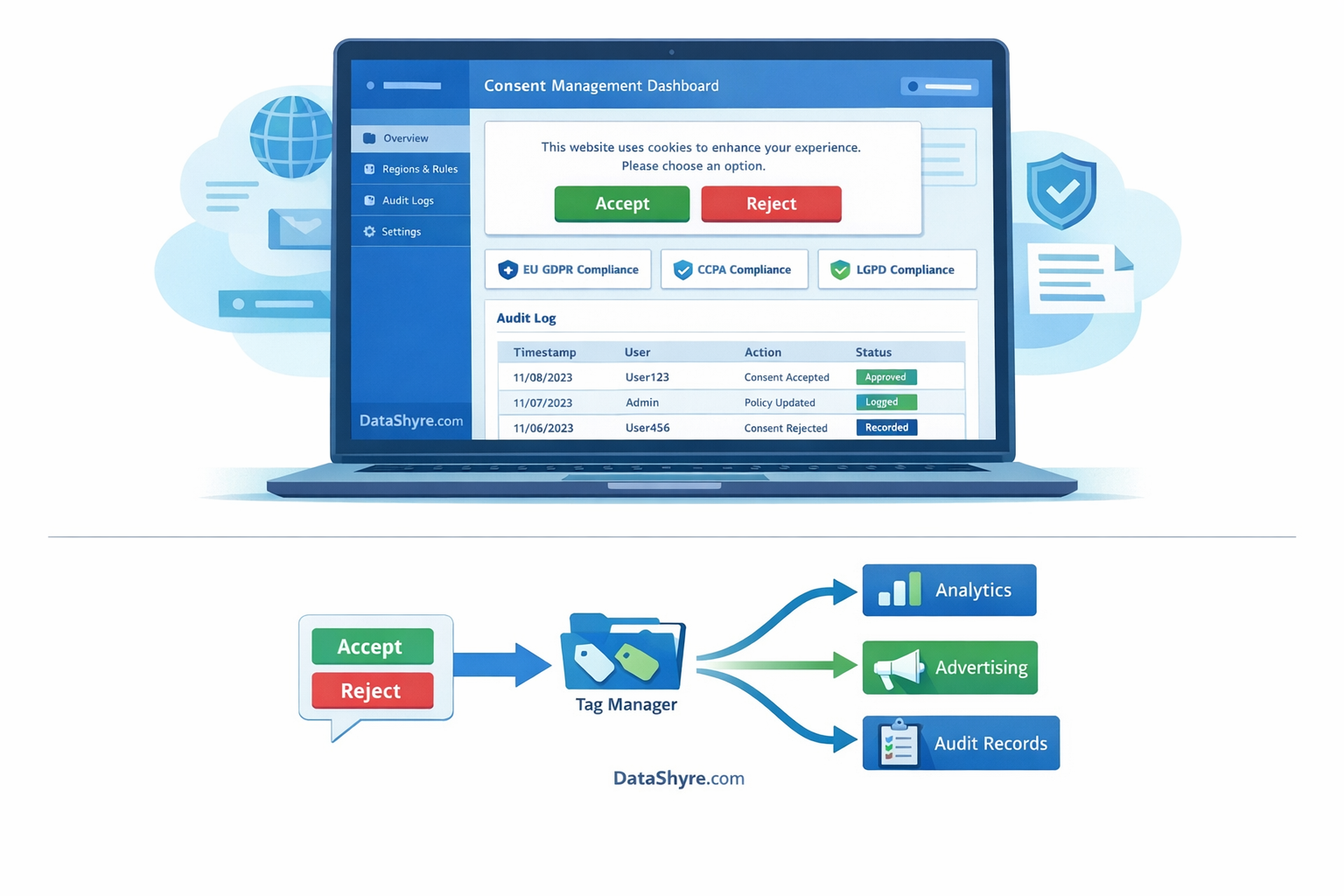
The banner matters, but the control layer behind it matters more.
If you want the broader buying framework first, start with our consent management platform checklist and consent management platform best practices. For UX inspiration, these GDPR cookie consent examples show what cleaner implementations look like.
What regulators still expect
The European Data Protection Board says valid consent still has four core elements: it must be freely given, specific, informed, and unambiguous. That sounds obvious, but it rules out a lot of lazy CMP behavior.
For example, France’s CNIL says continuing to browse a site is not a valid way to collect consent. The UK ICO’s final 2026 guidance on storage and access technologies also makes clear that the rules cover cookies and related tools such as pixels, fingerprinting, and scripts.
William Malcolm, Executive Director for Regulatory Risk at the ICO, put the point plainly: users should have “meaningful control” over how their information is used.
That is the baseline for any GDPR consent management platform. If a tool makes refusal harder than acceptance, or lets marketing tags fire before a choice is made, the design is already drifting away from the standard.
The six checks that matter most
1. Prior blocking is real, not just promised
Your CMP should stop non-essential technologies before consent in the regions where prior consent is required. Ask vendors to prove this in a browser session. Do not accept a slide deck or a generic compliance claim.
A lot of teams miss this because the interface looks fine. Then you inspect the page and discover analytics, ad, or session replay scripts already loaded. That is not a banner problem. It is an enforcement problem waiting to happen.
2. Rejecting is as easy as accepting
CNIL’s position remains especially useful here: the refusal path should be simple, visible, and comparable to the acceptance path. If the product buries rejection behind an extra layer while the accept button sits bright and immediate on page one, I would treat that as a red flag.
This is where GDPR consent management platform evaluations often get practical fast. Good vendors can show equal-choice designs, category-level controls, and language that avoids nudging people into one outcome.
3. Consent signals flow into your stack
A banner without downstream enforcement is just decoration. The platform should pass consent state into your tag manager, analytics setup, ad tooling, and audit trail.
Google’s own requirements raised the stakes here. Publishers using Google Ad Manager, AdSense, or AdMob in the EEA, UK, and Switzerland must use a Google-certified CMP when serving ads. In Google’s announcement, product management director Peentoo Patel wrote, “we’re now requiring publishers to use a Google-certified CMP.”
So if your business depends on Google’s ad ecosystem, your CMP choice is partly a legal decision and partly an implementation dependency.
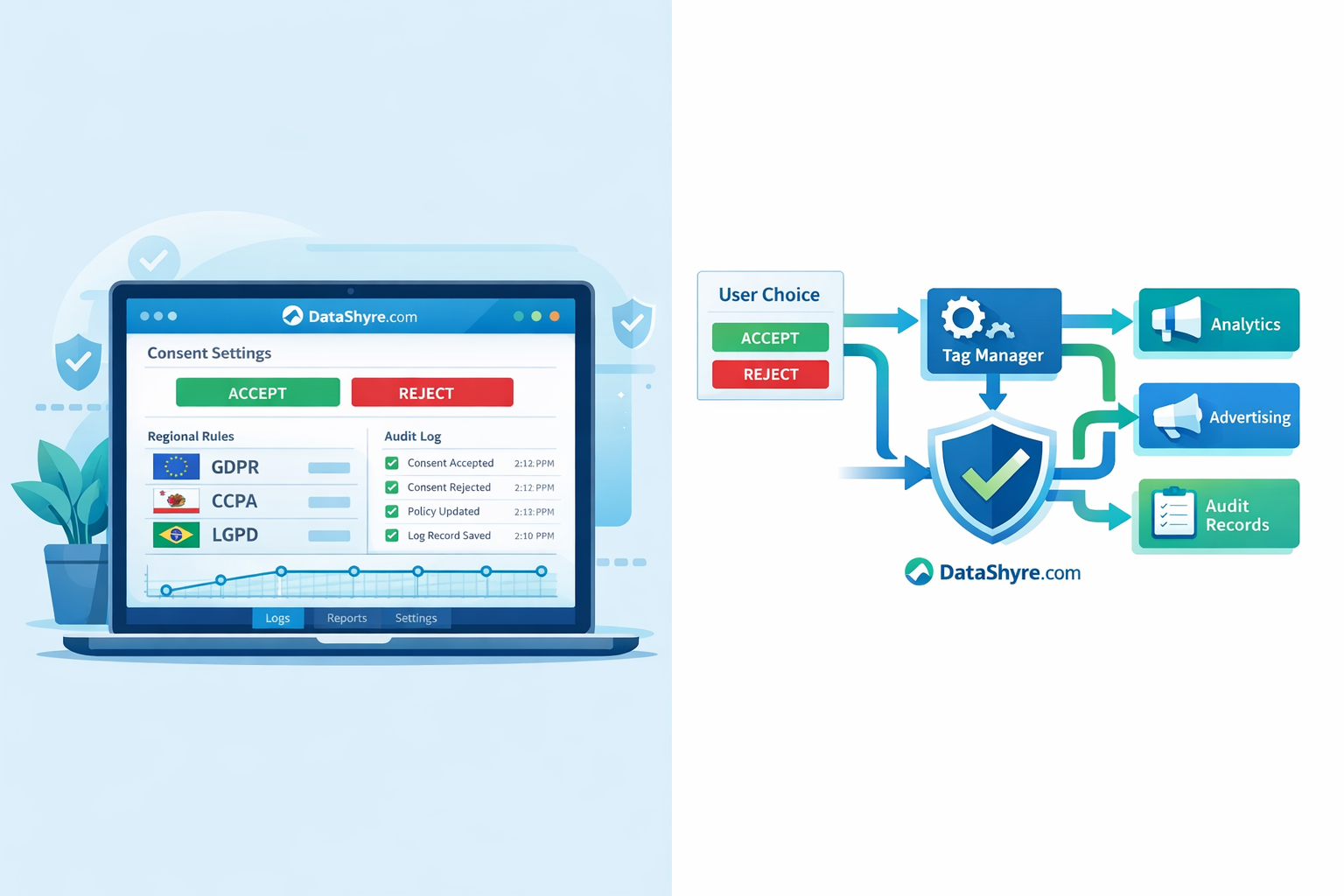
The hard part is not collecting a choice. It is enforcing that choice everywhere else.
4. Withdrawal is easy and persistent
Users should be able to revisit and change choices without hunting through a footer maze. That means a persistent privacy link, a working preference center, and consent changes that actually update downstream behavior.
A decent CMP handles withdrawal as a normal user action, not an edge case.
5. Proof is exportable
You need records that answer basic questions quickly: what the user saw, what they chose, when they chose it, what policy version applied, and which categories or vendors were involved. If legal, marketing, and engineering cannot extract that evidence without custom work, the platform is weaker than it looks.
6. Regional logic is configurable
Many organizations need one platform to handle EU consent, UK rules, and separate opt-out logic elsewhere. A good vendor supports that without forcing you into one banner pattern for every market.
That matters because unclear standards usually become messy implementations. As EDPB Chair Anu Talus said after her 2023 election, “Grey areas are in no one’s favour.” In practice, the control layer has to match how data actually moves through your stack.
A simple buying test
When you shortlist vendors, ask each one to show four things live:
- A first visit from an EU user before consent is given.
- A rejection flow that is as easy as acceptance.
- The exact audit record created for that visit.
- How the consent state changes tag behavior in GTM or the equivalent.
If the demo gets fuzzy on any of those, keep looking.
Bottom line
The right GDPR consent management platform is not the one with the prettiest banner. It is the one that turns legal requirements into working controls: prior blocking, equal choice, reliable downstream signaling, and usable proof.
That is also why procurement, legal, and implementation teams should review the same demo together. The pretty part is easy. The evidence trail is where the real decision lives.
A final note: this is operational guidance, not legal advice. For edge cases, especially around ad tech or multi-jurisdiction programs, get counsel involved early.
Sources
- European Data Protection Board
- CNIL
- UK Information Commissioner’s Office
- Google Ad Manager Help
- Google Ad Manager Blog