

Consent Management Platform: 7 Checks Before You Buy
A consent management platform should do more than throw a banner across your homepage. In 2026, it needs to block the right tracking before consent, pass user choices into your tag stack, and keep records a privacy team can actually use. If you are evaluating vendors right now, the fastest way to cut through the pitch is to check whether the product handles EU and UK consent rules, California opt-outs, and Google ad-tech requirements without fragile custom work.
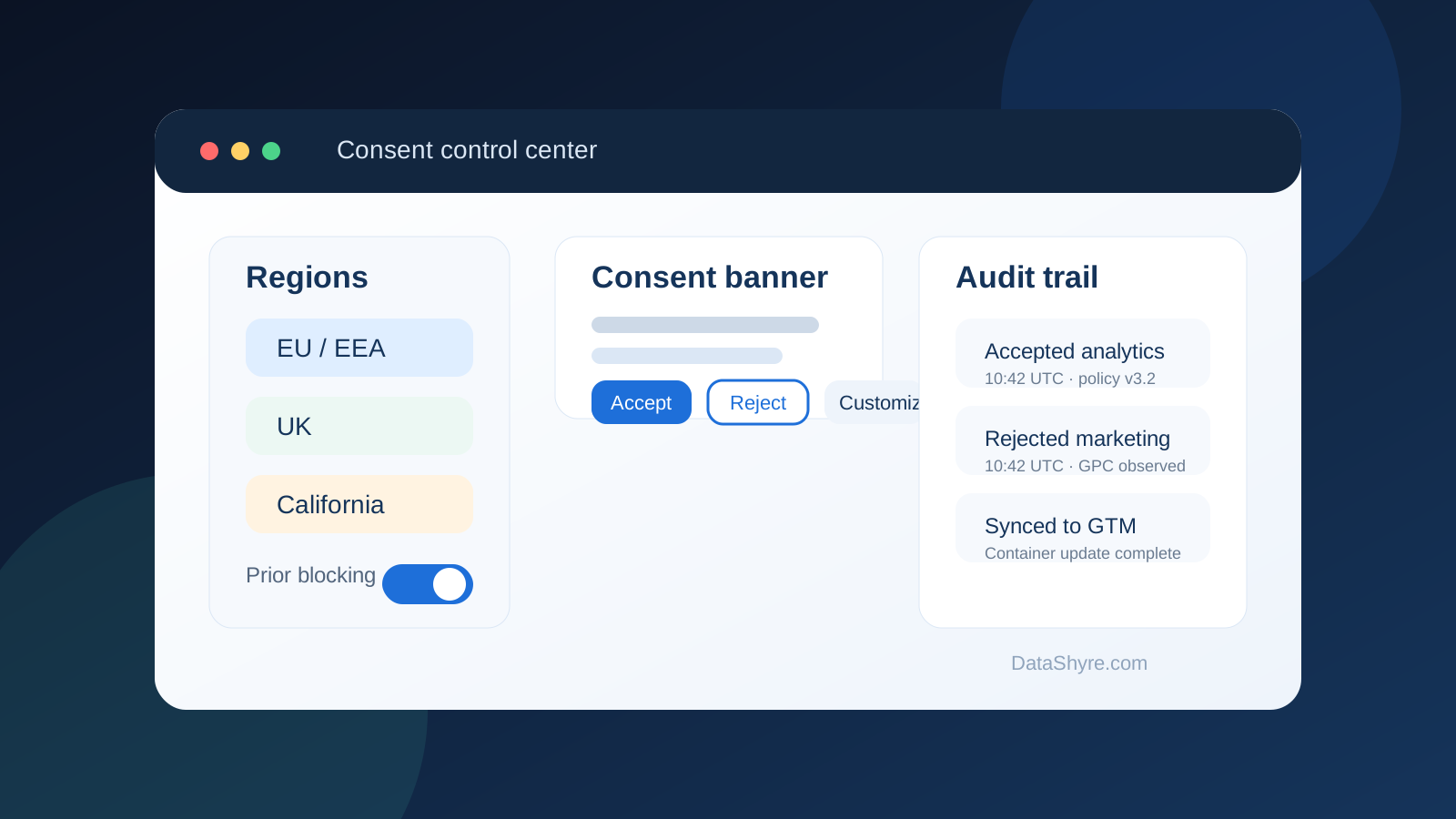
An effective CMP is part legal control layer, part implementation layer.
If you need the setup basics first, our guides to cookie consent, cookie consent manager, and Google Tag Manager cookie consent cover the groundwork.
TL;DR
- A CMP is useful only if it controls what fires, not just what the banner says.
- For EU and UK traffic, non-essential cookies and similar technologies usually need prior consent.
- California programs often need opt-out handling, including Global Privacy Control, rather than an EU-style copy-paste banner strategy.
- Google ad-supported publishers in the EEA, UK, and Switzerland need to think about certified CMP requirements.
- If a tool cannot prove what happened by region, category, and timestamp, keep shopping.
Why the bar is higher now
The legal standard is not new, but the operating detail is much clearer. The European Commission says valid consent must be freely given, informed, specific, and expressed through a clear affirmative act. That sounds simple until you map it to scripts, tags, vendors, and region-specific behavior.
The UK ICO sharpened that picture on April 29, 2026 when it published final guidance on storage and access technologies. The guidance makes clear that the rule set reaches beyond classic cookies to pixels, fingerprinting, scripts, and similar technologies. In the same announcement, ICO executive director William Malcolm said the goal is to give people “meaningful control” over how their data is used.
That matters because many companies still buy for design and ignore control. A polished banner can still fail if analytics, ad, or personalization tags load before the user has made a choice. EDPB Chair Anu Talus made the broader point neatly when she said consent models should offer “real choice.” That principle should shape product selection, not just legal review.
There is also a California wrinkle. The California Privacy Protection Agency’s updated CCPA regulations took effect on January 1, 2026, and the California Attorney General continues to say that Global Privacy Control must be honored as a valid opt-out request where the law applies. So a consent management platform that only manages opt-in banners can leave a US privacy program half-finished.
The 7 checks that matter most
Use this list during demos and procurement calls. It is short on purpose.
1. Prior blocking actually works
The tool should prevent non-essential technologies from loading before consent in the regions where prior consent is required. Ask the vendor to show this in-browser, not on a slide.
2. Consent state flows into downstream systems
A CMP should pass signals into GTM, analytics, ad platforms, and internal workflows. If consent choices stay trapped in the interface, your controls are cosmetic.
3. Regional logic is configurable
EU, UK, and California traffic should not all see the same logic. You need rules that adapt by geography, legal basis, and data use case without maintaining separate stacks.
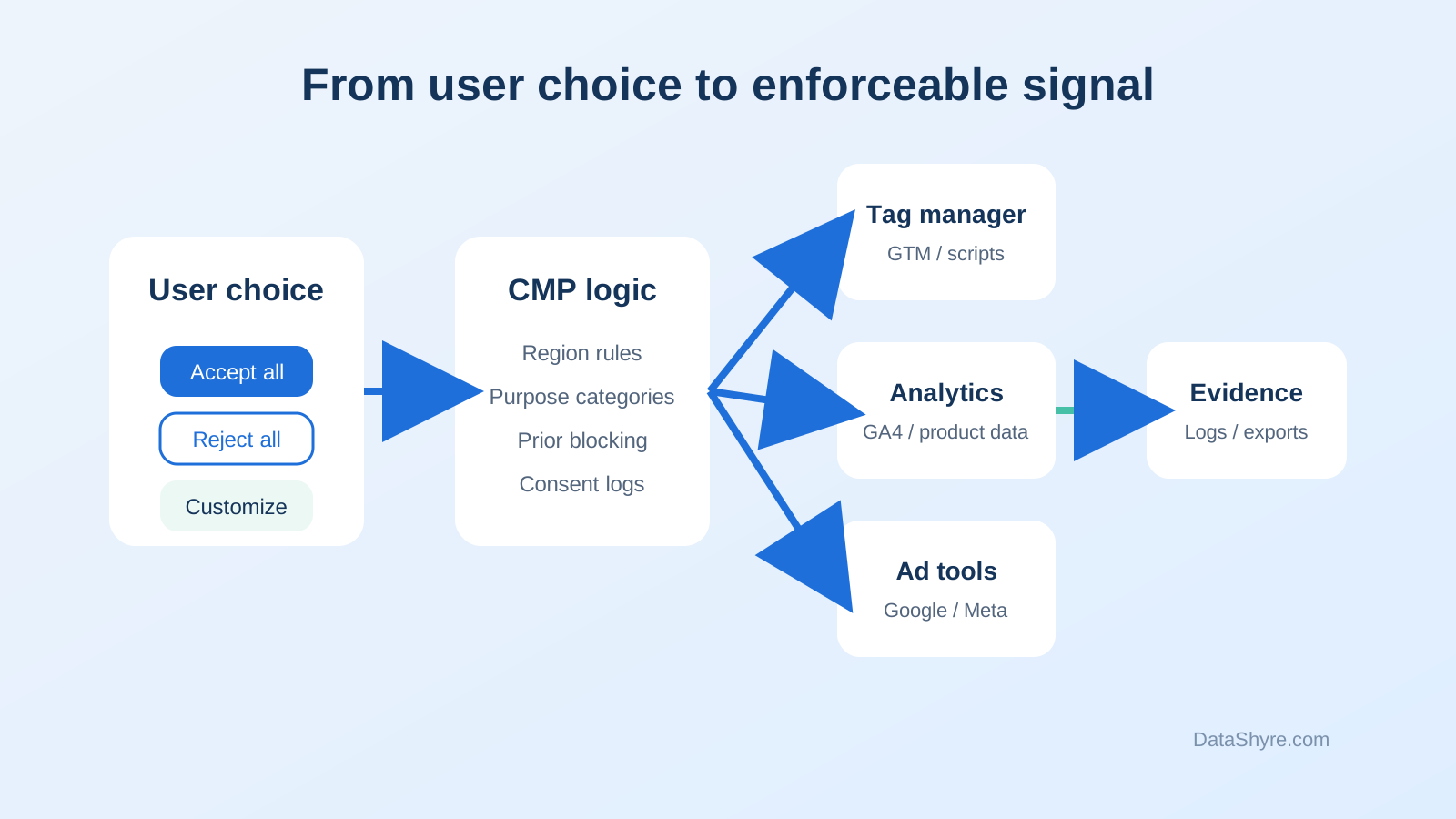
The real job is connecting the user choice to every tool that touches data.
4. Refusal and withdrawal are easy
Users should be able to reject as easily as they accept, then revisit their choice later. If refusal is hidden, downgraded, or routed through extra clicks, the setup is risky.
5. Audit logs are exportable and useful
A good vendor records the consent state, timestamp, policy version, and user action in a way operations teams can review. If support has to say “trust us,” that is a bad sign.
6. Google and publisher requirements are covered
If you serve personalized ads in the EEA, UK, or Switzerland, ask whether the vendor meets Google’s CMP certification and IAB TCF requirements for your setup. This is one of the quickest ways to rule vendors in or out.
7. The platform helps you spot drift
Sites change. New pixels appear. Tags get reconfigured. A consent management platform should help you detect when the live site no longer matches the declared consent logic.
One practical red-flag table
| Question | Good answer | Weak answer | |—|—|—| | Can you show prior blocking live? | Yes, in browser and by region | “It should work” | | Can users reject as easily as accept? | Yes, same level of friction | Reject is buried in settings | | Do you support GPC and California workflows? | Yes, with clear mapping | “We mainly do GDPR” | | Can we export consent evidence? | Yes, with timestamps and versions | Screenshots only | | Can you surface new trackers after site changes? | Yes, with scanning or alerts | Manual checks only |
Where teams still get caught out
The most common failure is buying for appearance instead of behavior. Another is assuming GDPR configuration will cover California automatically. It will not. The third is underestimating ad-tech dependencies. Google’s publisher guidance has pushed many teams to replace old banner tools that never needed to integrate deeply with the rest of the stack.
There is a broader enforcement signal too. In its 2025 sanctions summary, the CNIL said 21 entities were sanctioned for tracker-related breaches, including storing trackers without consent, giving people insufficient information, or failing to respect refusal or withdrawal. That is a reminder that the gap between banner copy and live behavior is exactly where regulators look.
FAQ
What is a CMP?
A CMP is software that collects a user’s privacy choices, applies those choices to tracking technologies and vendors, and keeps a record of what happened.
Is a CMP the same as a cookie banner?
No. The banner is one interface layer. The product behind it should also handle categories, region logic, downstream signaling, evidence, and later changes to the user’s choice.
Do all businesses need the same CMP setup?
No. A publisher serving ads in Europe, a SaaS company with light analytics, and a retailer handling California opt-outs may all need different configurations. The right tool is the one that matches your data flows, not the fanciest demo.
Bottom line
If you are buying now, treat your CMP as operational infrastructure, not design garnish. Ask for proof of blocking, proof of downstream signaling, and proof that users get a real exit path. That is the difference between a banner that looks compliant and a system that holds up when someone asks hard questions.
Sources
- European Commission
- UK Information Commissioner’s Office
- European Data Protection Board
- California Privacy Protection Agency
- California Department of Justice
- Google Ad Manager Help
- CNIL