

Best Privacy Tools in 2026: 5 Smart Buys for Consent, Requests, and Data Mapping
Teams searching for best privacy tools are usually not asking for one giant suite. They are trying to fix the weak point that keeps showing up in real work: a banner that still leaks trackers, a preference that never reaches downstream systems, a request workflow that lives in inboxes, or a data map that was already stale when the spreadsheet was finished.
That framing matters more now than it did a few years ago. California’s Department of Justice says covered businesses must honor a user-enabled Global Privacy Control signal as a valid request to stop the sale or sharing of personal information, and the California Privacy Protection Agency announced a joint investigative sweep with Colorado and Connecticut in September 2025 over businesses that appeared not to process those signals correctly. If you want the broader backdrop first, our explainers on California consumer privacy and GDPR vs. CCPA are good primers.
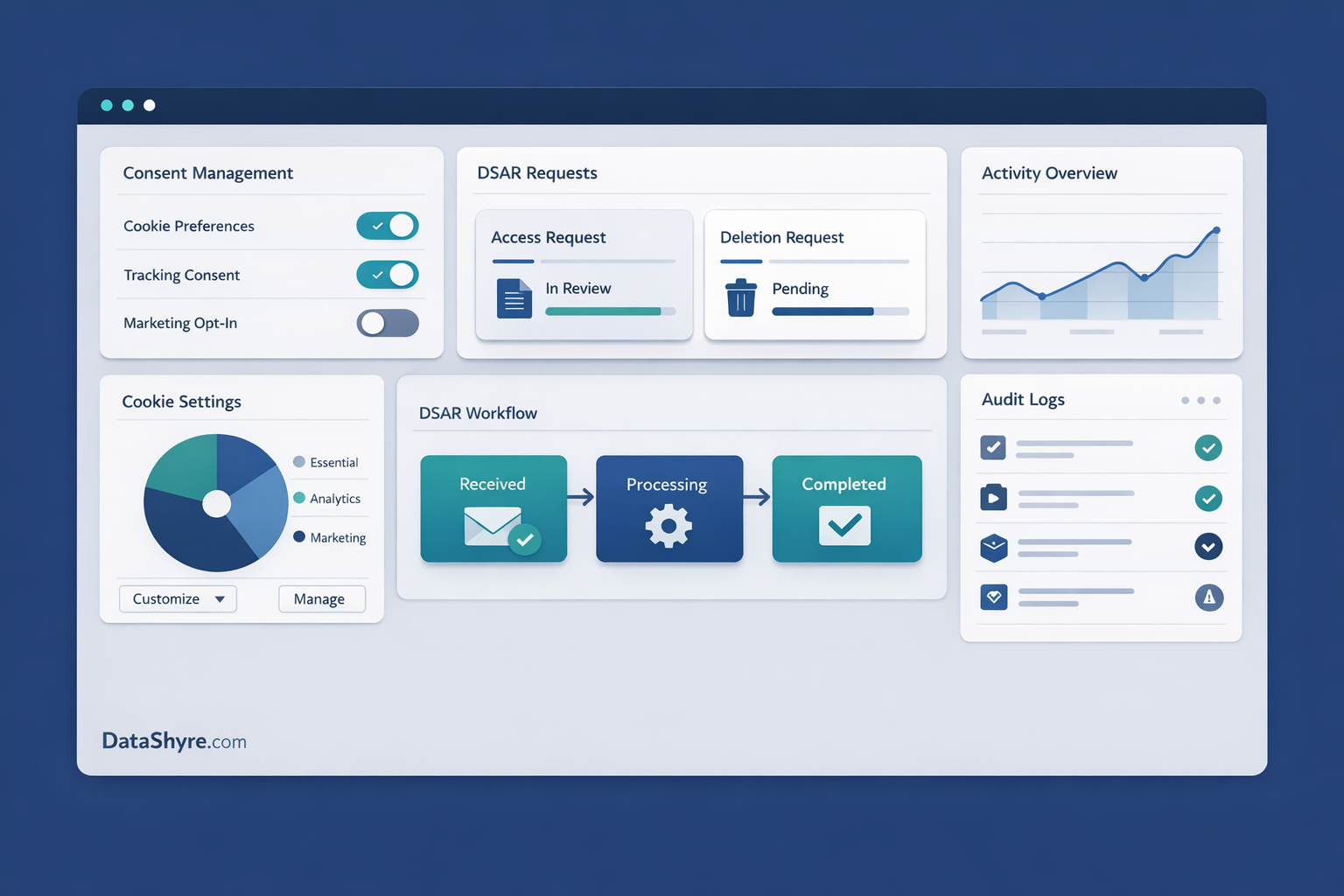
How to shortlist the best privacy tools
Start with the workflow most likely to fail under scrutiny.
- If the main risk sits on the website, prioritize scanning, blocking, consent logs, and banner control.
- If privacy choices need to follow people across brands, devices, or apps, focus on preference synchronization and downstream enforcement.
- If your privacy team is buried in manual work, look harder at request automation, audit records, and live data mapping.
That is why the best tools in this category are rarely the ones with the most modules. The better buy is usually the one that removes brittle manual work where your privacy program is weakest.
1. Usercentrics Cookiebot CMP for fast website consent rollouts
Usercentrics Cookiebot CMP makes sense when the biggest problem is still the website layer. Its current materials emphasize quick setup, automated scans, cookie and tracker categorization, and banner customization across common CMS and commerce stacks.
That is a practical fit for lean web and marketing teams. If you need to clean up the banner experience, document what fires, and stop treating consent as a once-a-year website project, a website-first CMP is often the cleanest place to start.
2. OneTrust for large, multi-surface consent programs
OneTrust is stronger when consent has to travel farther than one domain. Its consent and preference materials focus on discovering cookies, trackers, SDKs, and third parties, then syncing consent across domains, apps, and systems so users do not have to keep repeating the same choice.
That wider footprint is the reason large organizations keep it on shortlists. Leanne White, Data Privacy Manager at Samsung, said OneTrust helped provide the “best possible experience.” Short quote, useful signal: the real value is consistency when privacy choices have to work across a messy digital estate.
3. Osano for mid-market teams that need auditability without a giant rollout
Osano is a good middle ground for teams that want consent management plus clear records without buying a platform that demands a long implementation program. Osano’s current CMP materials stress support for websites and mobile apps, straightforward consent withdrawal, and detailed logs for audits.
That last point matters. Many teams do not fail because they forgot to show a banner. They fail because they cannot prove what happened after the banner. Osano’s centralized audit logs and preference history make it easier to answer the next question from legal, procurement, or a regulator without turning it into a reconstruction exercise.
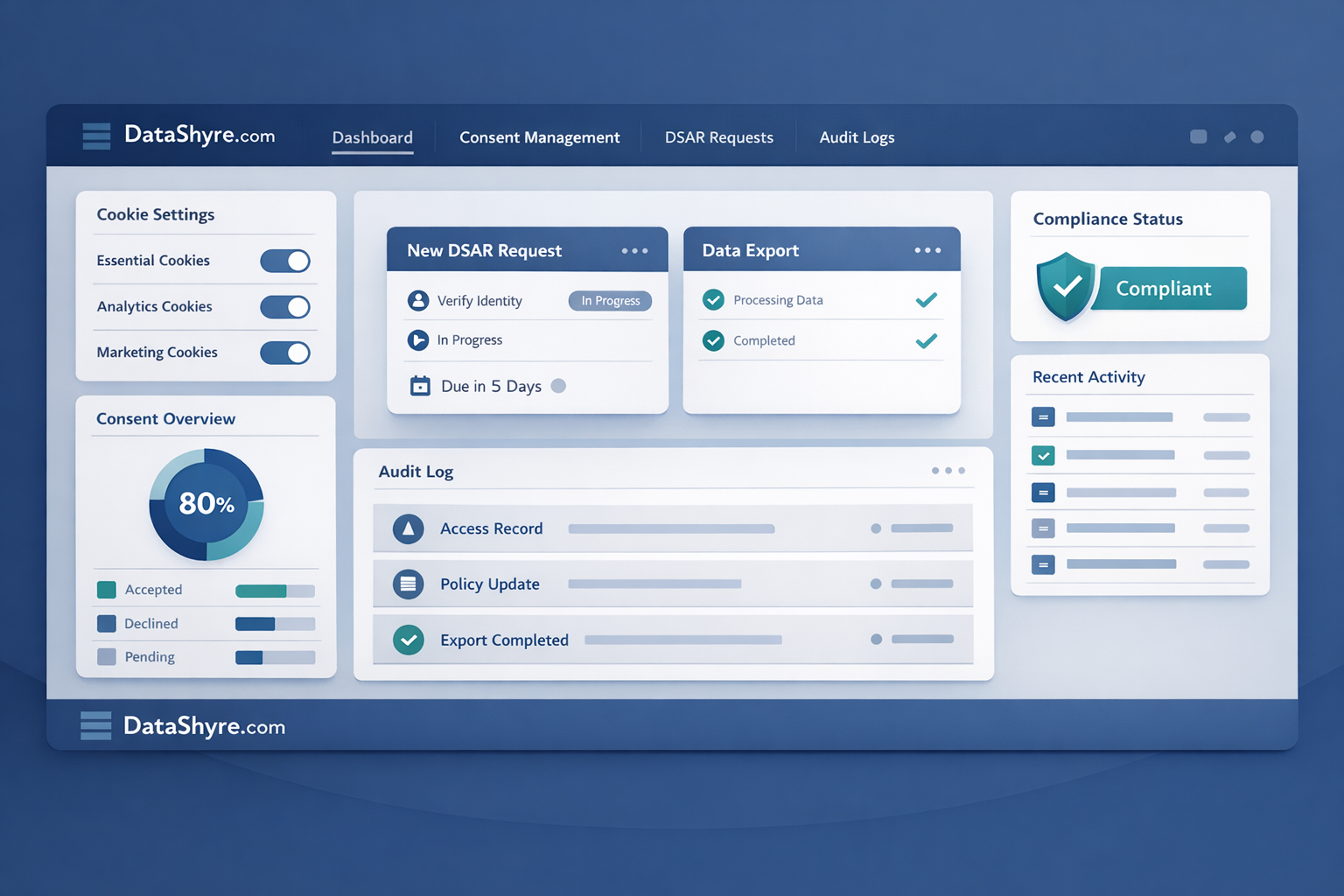
4. Transcend for systems-level consent enforcement
Transcend is the pick when the hard part is not collection but enforcement. Its current platform language is blunt about the job: collect and enforce user consent across websites, apps, systems, and regions, while honoring signals such as GPC and other do-not-sell controls.
That is the difference between a polished front end and a trustworthy operating model. Ryan O’Leary, Research Director for IDC’s Security and Trust Program, described strong consent management as something that “eliminates a chunk of risk.” That line lands because it gets past interface talk and points at the actual business case: fewer downstream mistakes.
5. DataGrail for live data mapping and RoPA upkeep
DataGrail stands out when the privacy team lacks a current map of systems, processes, and risk. Its Live Data Map product is built around AI-powered system detection, data discovery, and RoPA support so teams can maintain a more current inventory instead of refreshing static spreadsheets on a slow loop.
Adrienne Komogorov, Senior Associate Counsel and DPO, said the approach makes ongoing mapping “as simple as it gets.” That is probably the right lens for buyers here. If your biggest privacy problem is that nobody fully trusts the map, better system detection can be more valuable than another banner feature.
What to ask before you buy
- What exactly gets blocked, suppressed, or rerouted before consent is present?
- Can the product sync preferences across anonymous and known-user states?
- How does it honor GPC and other regional opt-out signals in practice?
- What logs, receipts, or exportable records are available when someone asks for proof?
- How much of the rollout depends on custom engineering that your team will need to maintain later?
Those five questions will usually tell you more than a polished demo. They expose whether the tool is solving a real operational bottleneck or just making the top layer look cleaner.
Bottom line
The best privacy tools in 2026 are the ones that fix the failure point you can already see. For some teams that is website consent. For others it is cross-system enforcement, auditability, or living data maps. Buy for the weak spot first. The shortlist usually gets clearer from there.
Sources
- California Department of Justice
- California Privacy Protection Agency
- Usercentrics
- OneTrust
- Osano
- Transcend
- DataGrail