
Executive Summary
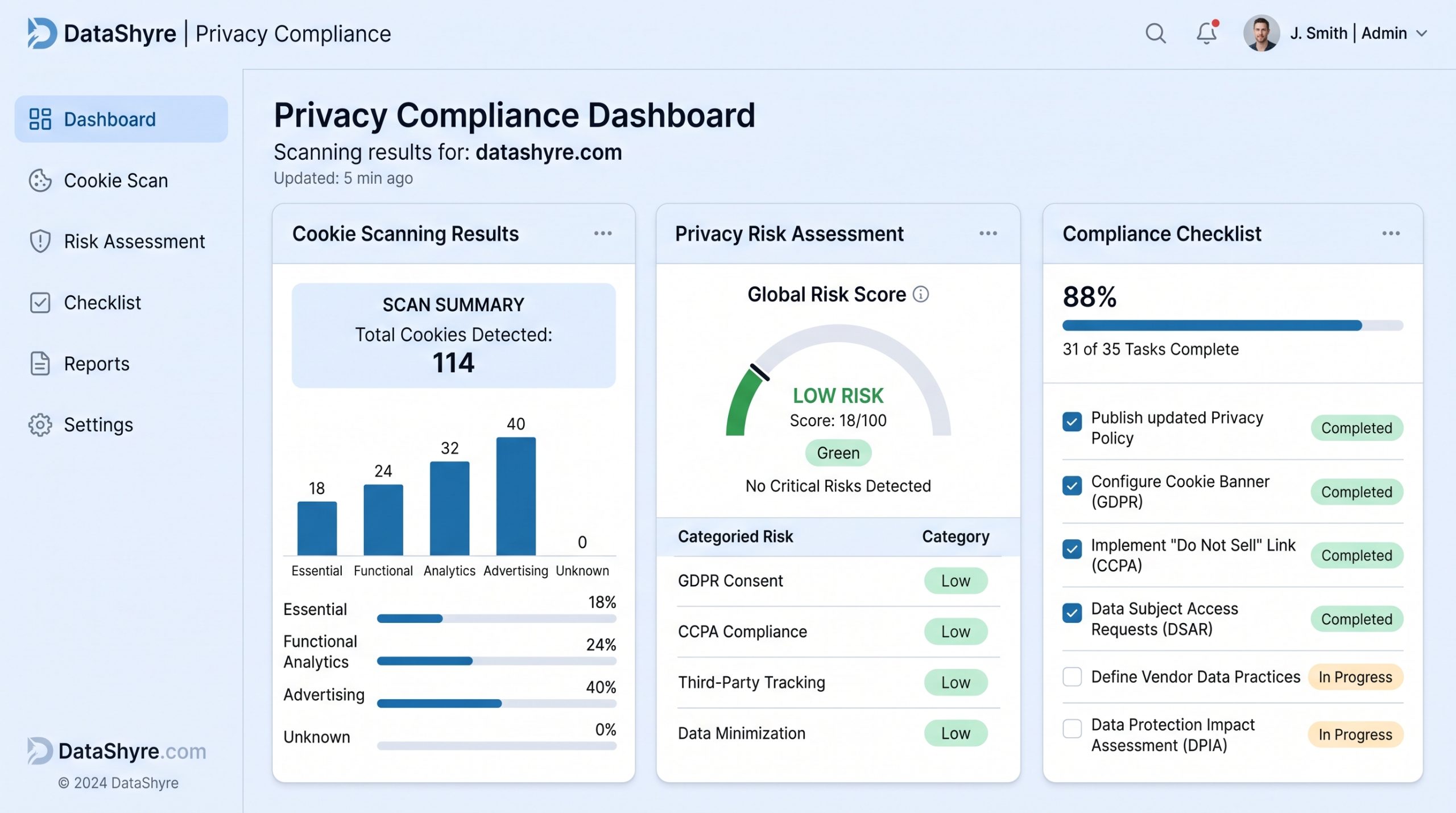
Website privacy checkers are indispensable tools for maintaining GDPR compliance in 2026, providing automated scanning capabilities to detect cookies, tracking technologies, and compliance risks before regulatory authorities do. This guide covers how these scanners work, key EDPB requirements, and implementation best practices for 2026.
Why Website Privacy Checkers Matter in 2026
- Proactive Compliance – Identify privacy issues before they trigger regulator investigations or fines
- Continuous Monitoring – Adapt to dynamic website changes that may introduce new tracking risks
- Evidence-Based Decisions – Provide actionable data for privacy budget allocation and vendor management
- Regulatory Alignment – Support adherence to EDPB guidance on cookie rule scope and consent validity
How Website Privacy Checkers Work
Modern privacy scanners employ multiple techniques to assess website compliance:
Cookie and Tracker Detection
- Deep Scanning Technology – Identifies first-party and third-party cookies, localStorage, sessionStorage, IndexedDB, and fingerprinting techniques
- Runtime Behavior Analysis – Detects scripts and trackers that load before explicit user consent is obtained
- Categorization Engine – Classifies detected technologies by purpose (necessary, functional, analytics, advertising) and provider
Compliance Assessment Framework
- Regulatory Rule Mapping – Checks findings against GDPR Article 5(3) ePrivacy Directive requirements
- Consent Timing Validation – Verifies that non-essential cookies are blocked prior to consent
- Dark Pattern Identification – Flags misleading designs, pre-ticked boxes, or unequal Accept/Reject button prominence
- Withdrawal Mechanism Testing – Ensures users can easily revoke consent as easily as giving it
Reporting and Remediation
- Risk Scoring – Assigns compliance risk levels based on regulator enforcement trends and fine patterns
- Actionable Recommendations – Provides specific steps to resolve identified issues
- Continuous Monitoring Alerts – Notifies of new tracking technologies introduced via website updates
EDPB Guidance for Website Cookie Compliance in 2026
The European Data Protection Board provides critical interpretation that privacy scanners help implement:
Broad Scope of the “Cookie Rule”
The EDPB applies a maximalist interpretation to Article 5(3) of the ePrivacy Directive, covering:
- Traditional HTTP cookies and similar tracking technologies
- URL and pixel tracking mechanisms
- Local processing and certain device fingerprinting techniques
- Information stored in RAM or CPU cache (even if ephemeral)
Requirements for Valid Consent
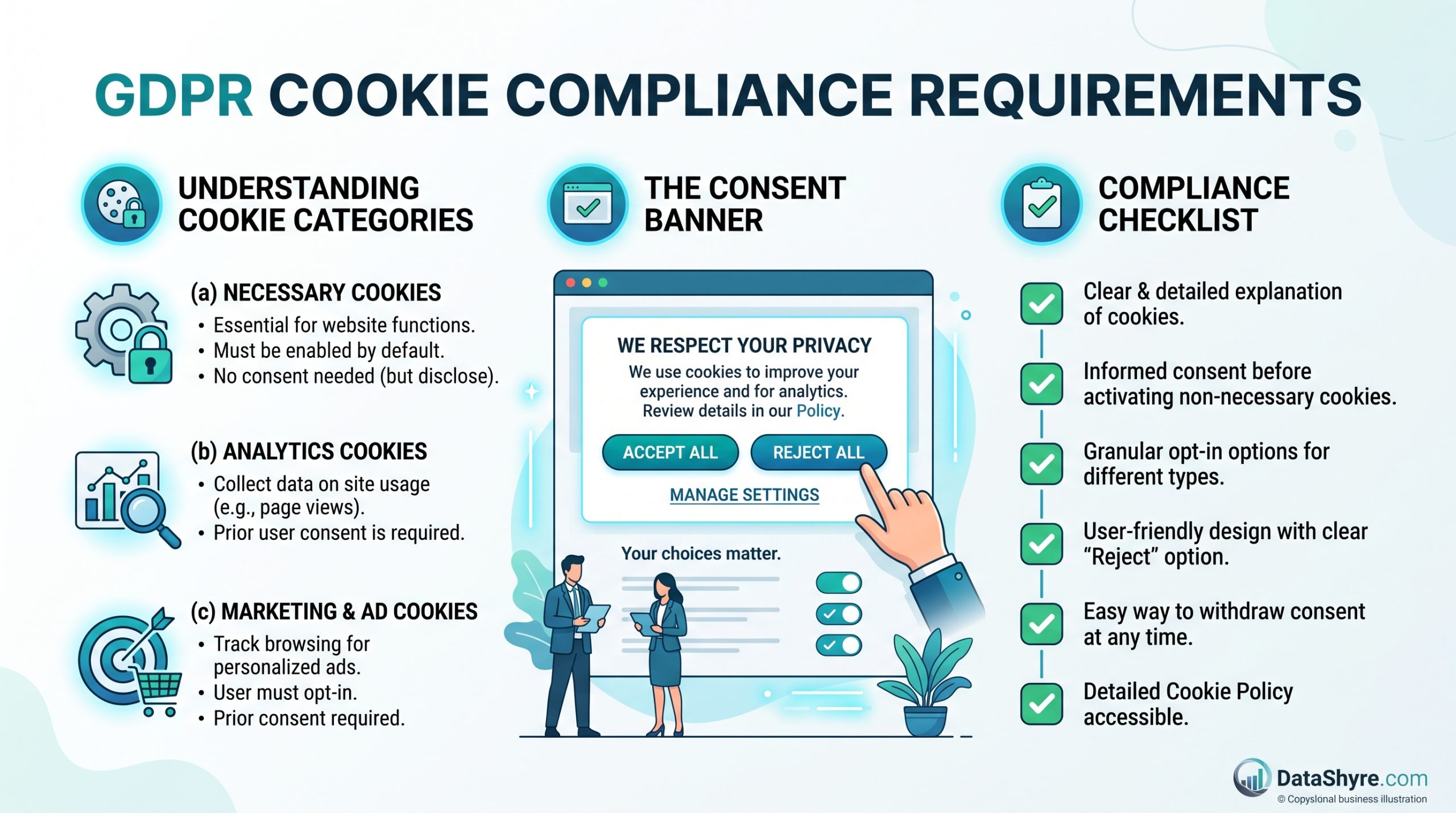
For consent to be valid under GDPR and the ePrivacy Directive, it must be:
- Freely Given – No cookie walls blocking content access
- Specific – Granular control over cookie categories (analytics, marketing, etc.)
- Informed – Clear information about what data is collected, by whom, and for how long
- Unambiguous – Clear affirmative action required (clicking “Accept”), not scrolling or continued browsing
Key Technical Requirements Scanners Validate
- Pre-consent Blocking – Non-essential cookies must be blocked until consent is obtained
- Equal Prominence – “Accept all” and “Reject all” buttons must have equal visual weight
- Easy Withdrawal – Consent revocation must be as simple as giving consent
- No Pre-ticked Boxes – All options must start unchecked
- Comprehensive Disclosure – Clear information about purposes, recipients, and retention periods
Types of Website Privacy Checkers
1. Deep Scanning Solutions
Cookiebot by Usercentrics – Known for comprehensive scanning that detects and categorizes cookies against major privacy regulations, providing detailed compliance reports.
2. Runtime Compliance Auditors
SecureSpells – Focuses on live behavior analysis, checking for pre-consent firing and hidden requests that static scanners might miss.
3. Free Compliance Scanners
Usercentrics and CookieYes offer free website compliance scans that provide risk assessments and basic remediation guidance.
4. Enterprise Privacy Platforms
OneTrust, TrustArc, Osano – Provide integrated suites combining scanning with consent management, vendor risk assessment, and ongoing compliance monitoring.
Implementation Checklist for 2026
- Initial Baseline Scan – Run a comprehensive privacy scan to establish your current compliance state
- Consent Mechanism Validation – Verify your CMP properly blocks non-essential cookies before consent
- Dark Pattern Audit – Check for misleading designs, pre-ticked boxes, or unequal button prominence
- Category Granularity Test – Ensure users can accept/reject cookies by purpose (analytics vs marketing)
- Withdrawal Process Review – Test that consent revocation is as easy as giving consent
- Continuous Monitoring Setup – Configure automated regular scans to catch new tracking technologies
- Remediation Tracking – Document and track fixes for identified compliance issues
- Regulatory Change Alerts – Subscribe to EDPB and national DPA guidance updates
Internal Resources
- GDPR Cookie Consent Requirements – 7 Live Checks for Compliant Banners
- Google Analytics Cookie Consent – Live Checks After Google’s June Update
- Consent Management Platform Best Practices – 7 Actionable Tips for 2026
Conclusion
Website privacy checkers have evolved from nice-to-have tools to essential components of any GDPR compliance program in 2026. By combining automated scanning with continuous monitoring and actionable remediation guidance, these tools help organizations stay ahead of regulator scrutiny while building user trust through transparent privacy practices.
Published: August 30, 2026