

CMPs Consent Management Platform: How to Compare a Shortlist in 2026
If you are searching for cmps consent management platform, you are usually not asking what a CMP is. You are trying to compare several consent management platforms at once and cut through the sales language.
That is the right frame in July 2026. The European Commission still says valid consent must be freely given, informed, specific, clearly expressed through a positive act, and easy to withdraw without disadvantage. The UK ICO’s April 29, 2026 storage-and-access technologies guidance also makes the scope wider than classic browser cookies alone: it covers cookies, tracking pixels, device fingerprinting, and similar technologies. For ad-supported publishers, Google’s current requirements add another operational layer because personalized ads in the EEA, the UK, and Switzerland require a Google-certified CMP integrated with the IAB Transparency and Consent Framework.
If you want baseline context first, start with our guides to consent management platform, consent management platform best practices, and cookie consent manager. This article is narrower. It is the shortlist review I would use when comparing multiple CMPs side by side.

What the keyword usually means
The awkward phrase cmps consent management platform reads like a plural search. In practice, it usually means one of three things:
- You are comparing multiple vendors before procurement.
- You already have a CMP and want to know whether another one would control more of the stack.
- You are trying to separate legal compliance, tag behavior, and publisher requirements before renewal.
That is why this should be a comparison exercise, not a definition exercise.
1. Compare behavior before banner design
The first question for any shortlist is simple: what happens before the user clicks anything?
The European Commission’s consent guidance makes the legal baseline clear: consent has to be a real choice and it must be possible to refuse or withdraw without disadvantage. The EDPB’s consent guidelines remain the practical GDPR reference for that standard. So when you compare vendors, do not start with theme libraries or multilingual templates. Start with first-load behavior.
Ask each vendor to show four live tests in a browser:
- first visit with no prior choice;
- reject all;
- accept all;
- later withdrawal or change of choice.
If a CMP cannot show that non-essential technologies stay blocked until the right state exists, the rest of the demo does not matter much.
2. Compare how each CMP handles downstream signals
Most CMP failures are not front-end failures. They are handoff failures.
Google’s current consent-mode documentation is unusually blunt here: “The order of the code here is vital.” That is not just an implementation detail for engineers. It is a buying checkpoint for anyone comparing cmps consent management platform options.
Google says consent defaults should be set before commands that send measurement data, and its Tag Manager guidance points implementers to setDefaultConsentState and updateConsentState. Google also documents wait_for_update for asynchronous CMP flows. In plain English, that means the product you buy should be able to win the timing race on the real page, not just save a preference after tags already fired.
When you compare vendors, ask:
- Does the CMP establish default denied states before analytics or ad tags run?
- Does it support the full Google consent state, including
ad_storage,analytics_storage,ad_user_data, andad_personalization? - Does it work cleanly with GTM or your equivalent tag layer without a fragile custom patch?
Those questions tell you more than any feature grid.
3. Separate legal fit from Google publisher fit
This is where many shortlist reviews get sloppy.
Google’s publisher help says publishers serving personalized ads to users in the EEA, the UK, or Switzerland must use a Google-certified CMP integrated with the IAB TCF. Google also says something just as important: its certification checks do not verify full compliance with the TCF or applicable privacy laws.
That means two different tests belong in your shortlist:
- legal and implementation fit for your actual consent obligations;
- product and revenue fit for Google’s ad-stack rules if ads matter to you.
If a vendor passes only the second test, it is not automatically the right CMP. If it passes only the first test, it may still be a poor fit for a publisher workflow.
4. Score the audit trail, not just the interface
The more CMPs you compare, the easier it is to get distracted by design polish. Resist that.
The stronger shortlist question is whether your team can prove what happened later. A serious CMP should let you export or review at least:
- consent state by category or purpose;
- timestamp of the action;
- banner or policy version;
- regional logic applied at the time;
- later changes or withdrawals.
This matters because cookie-banner issues are still drawing regulator attention. On July 14, 2026, the EDPB said the Belgian DPA must assess the merits of a cookie-banner complaint involving VRT’s site instead of dismissing it on procedural grounds. The signal is not that every CMP is unsafe. The signal is that banner behavior and implementation details still receive real scrutiny.
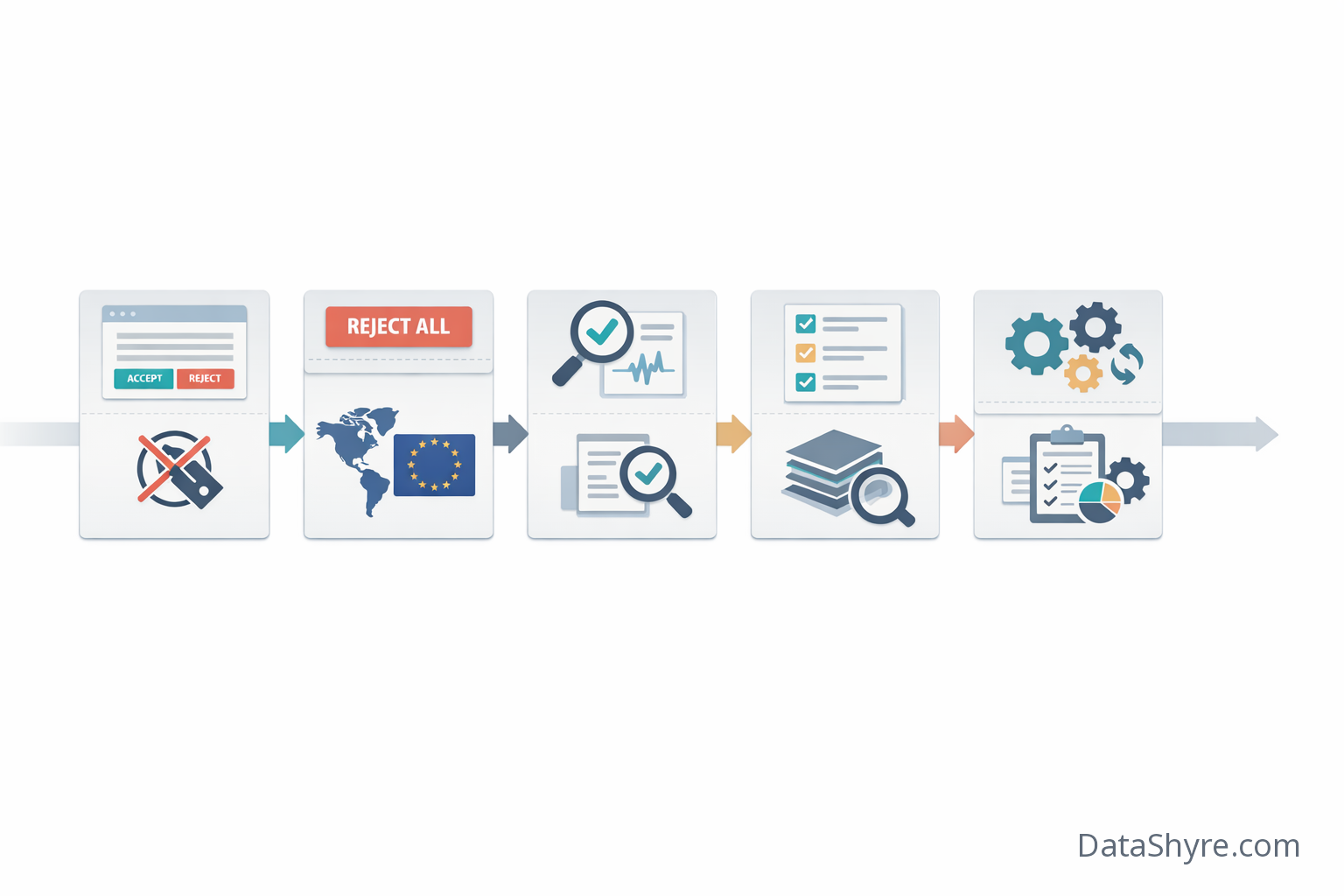
5. Prefer the CMP that is easiest to keep accurate
The best shortlist decision is often the product that creates the fewest mysteries after launch.
The ICO’s April 29, 2026 announcement matters here because it did not talk only about cookies. It described storage and access technologies broadly and said organizations want “clear, practical guidance they can rely on.” That is the right standard for CMP operations too.
A good cmps consent management platform choice should make the following easier every month after go-live:
- updating vendor lists and tag mappings;
- changing banner copy without losing evidence;
- handling new regions or rule sets;
- re-testing after site, tag, or template changes;
- proving that rejection and withdrawal still work.
If the platform needs constant custom repair, your team is buying overhead, not control.
A shortlist scorecard I would actually use
When comparing vendors, I would score each one from 1 to 5 on these six items:
- prior blocking on first load;
- equal reject-all and accept-all paths;
- downstream signal handling for GTM, analytics, and ads;
- regional flexibility;
- audit exports and change history;
- Google publisher fit where relevant.
That scorecard will usually tell you more than a long requirements spreadsheet because it keeps the focus on live behavior and evidence.
Bottom line
The practical meaning of cmps consent management platform is not “which banner looks nicest?” It is “which platform can survive a real implementation, a real audit, and a real site change without falling apart?”
In 2026, that means comparing CMPs on blocking, signal timing, audit proof, and publisher fit. If you do that well, the right vendor usually becomes obvious long before the design review starts.
Sources
- European Commission: When is consent valid?
- European Data Protection Board: Guidelines 05/2020 on consent under Regulation 2016/679
- UK ICO: Final storage and access technologies guidance published
- Google for Developers: Set up consent mode on websites
- Google Ad Manager Help: Google consent management requirements for serving ads in the EEA, the UK, and Switzerland (for publishers)
- EDPB: Belgian DPA must handle the merits of a NOYB cookie-banner complaint