

Consent Management Providers: 7 Questions to Ask Before You Buy in 2026
Most teams shopping for consent management providers are not really buying a banner. They are buying a control layer that has to capture user choice, stop the wrong tags, sync downstream systems, and leave a record someone can actually defend later.
That bar is higher in July 2026 than it was even a year ago. In April 2026, the ICO published final storage-and-access-technologies guidance and said 99% of the UK’s top 1,000 websites now meet its compliance standards for cookie banners. That is useful context for buyers: the easy part is more standardized now. The harder part is whether your provider can keep consent accurate after the first click.
John Edwards, the UK Information Commissioner, has put the design baseline plainly: it must be “just as easy to reject all non-essential cookies” as it is to accept them. William Malcolm of the ICO recently used another phrase worth keeping during vendor demos: users need “meaningful control over how their data is used.” If a provider cannot support those two outcomes in practice, it is probably selling interface polish more than compliance substance.

If you are still narrowing the category, our guides to consent management platform, consent management provider, and consent management platform best practices are good companion reads. This article stays tighter: what to ask before you sign.
1. Can the provider control purposes, not just present them?
The ICO’s current guidance says consent requests need to be specific to the purpose, which usually means granular choices by purpose. A vendor that can only show a generic accept or reject layer is not enough if your stack mixes analytics, personalization, advertising, and partner tags.
Ask the provider to show how each purpose maps to actual technical controls. If a user rejects advertising but accepts analytics, what exactly fires, what stays blocked, and where is that logic maintained?
2. Does refusal actually stop downstream activity?
This is where weak products get exposed. The best consent management providers do not stop at preference capture. They enforce the choice in tag managers, SDKs, pixels, suppression lists, and partner handoffs.
Recent enforcement shows why that matters. In September 2025, the CNIL fined SHEIN 150 million euros in part because cookies were placed before consent, users’ choices were not respected, and refusal or withdrawal did not stop new cookies from being placed. In November 2025, the CNIL also fined the publisher of vanityfair.fr after repeated investigations into cookie non-compliance.
So during procurement, ask for a proof-of-refusal test, not a prettier demo. Have the vendor show what happens after a user rejects, later withdraws, or reopens settings.
3. Can it prove what the user saw and chose?
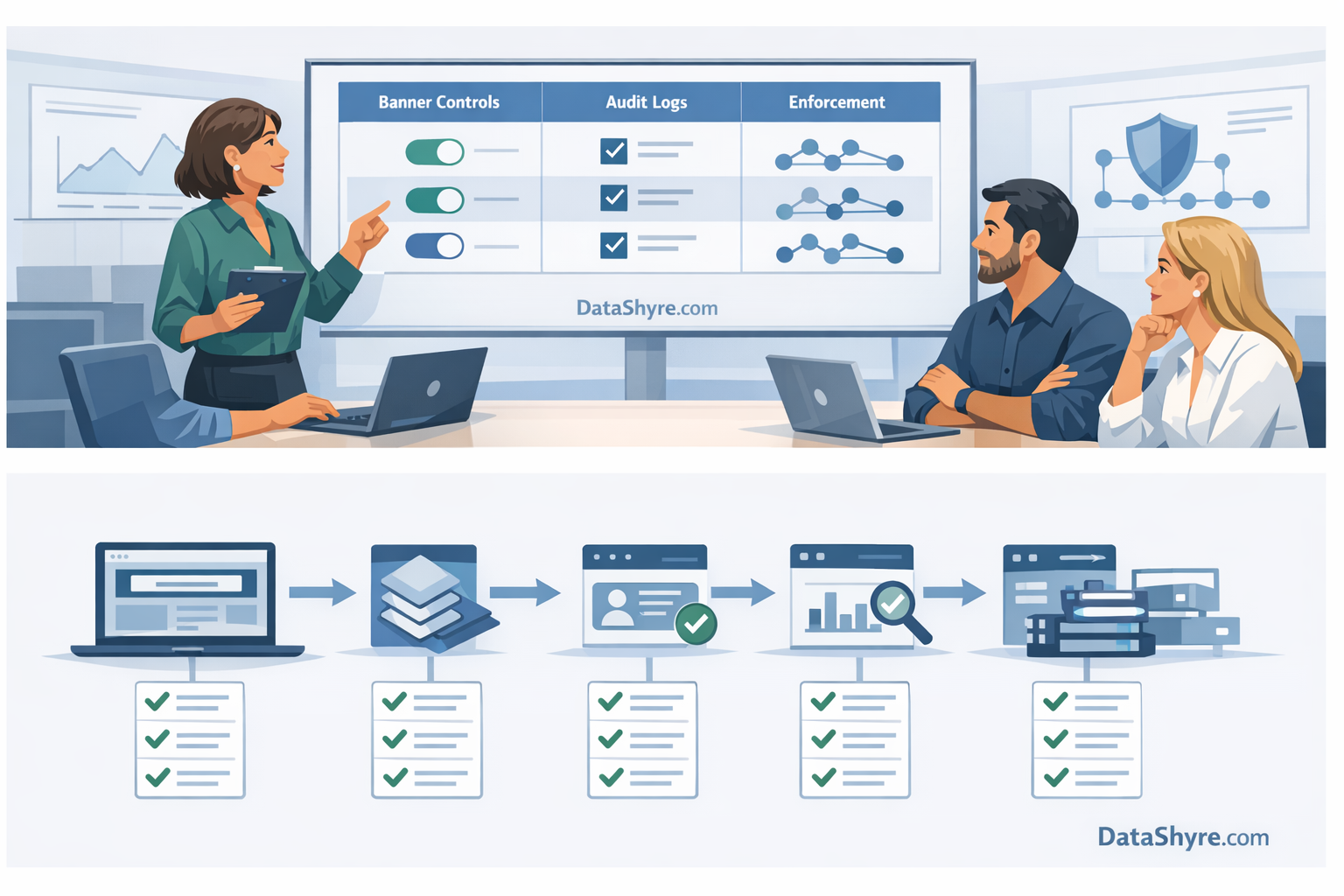
The ICO says providers must be able to demonstrate consent and protect the records they keep. That means your vendor should preserve more than a yes-or-no state.
You want a record of:
- the banner or notice version shown
- the geography or rule set applied
- the exact purpose selections made
- the timestamp and identifier used
- the downstream systems told about the change
This is where many consent management providers still feel thin. They log the click, but not the evidence around it. That is not great if a regulator, customer, or enterprise buyer wants to inspect how a choice was captured and honored.
4. Does it support neutral choice design?
Anu Talus, Chair of the EDPB, said privacy options should be presented in an “objective and neutral way” without deceptive or manipulative design. That should shape vendor review more than color palettes or template galleries.
Ask to inspect the first layer, second layer, mobile view, and re-open settings flow. Can the product support balanced buttons, clear purpose language, and a withdrawal path that is as easy as the original decision? Can your team configure those patterns without custom engineering every time?
5. Can it handle third parties and consent withdrawal cleanly?
The ICO’s 2026 guidance says users need access to information about third parties, and if consent is withdrawn, the organization must stop using the technology, stop the related processing, and tell relevant third parties about the withdrawal.
That makes third-party governance a buying question, not just a legal one. A serious vendor should help you identify vendors by purpose, publish clear third-party information, and propagate withdrawal events outward instead of leaving your team to clean up manually later.
6. Is it ready for browser-based privacy signals in the U.S.?
Even if your buying process started with cookies, your shortlist should be broader than cookies. In California, the Attorney General says a user-enabled Global Privacy Control can be an acceptable method for consumers to opt out of sale or sharing online. Colorado’s Privacy Act also supports a universal opt-out mechanism for sale and targeted advertising.
That means the product should not think only in EU-style opt-in terms. Good vendors can reconcile opt-in consent where it is required with browser-based opt-out signals where those apply, while keeping the evidence trail intact.
7. What is the contract and operating model behind the tool?
The ICO says that if you use a CMP provider, you need to consider the roles and responsibilities you each have under the UK GDPR, including whether the provider is acting as a processor and whether the controller-processor arrangement is appropriate.
That question gets skipped because it sounds like procurement paperwork. It is not. It affects incident handling, data retention, subprocessor review, and who owns changes when product, legal, and marketing disagree. Before you buy, ask who configures rules, who approves changes, who reviews expiration defaults, and how the provider supports audits.
Bottom line
The strongest buyers in 2026 are not asking which vendor has the nicest banner library. They are asking which vendor can capture a valid choice, enforce it across the stack, and prove it later without drama.
That is the test worth using if you are shortlisting CMP vendors this quarter. If the answers are vague, the reporting is thin, or the withdrawal flow breaks once data starts moving, keep looking.
This is a business guide, not legal advice. For a live program, match the provider review to the jurisdictions and tracking uses you actually operate.
Sources
- Information Commissioner’s Office
- European Data Protection Board
- California Department of Justice
- Colorado Attorney General
- CNIL