

GDPR Compliance Guide for 2026: 7 Checks That Catch Problems Early
If your team treats GDPR as a policy document instead of an operating system, problems tend to surface late. Not when the first data map is built. When a buyer asks hard questions. When a vendor changes scope. When somebody files an access request. When a breach clock starts.
That is why a good gdpr compliance guide should be less about slogans and more about the controls that break first. In May 2026, EDPB Chair Anu Talus said the expanding EU digital rulebook has made compliance harder and that regulators are trying to make it “more achievable in practice.” That feels right. Most teams do not need more theory. They need a shorter list of checks that exposes weak spots early.
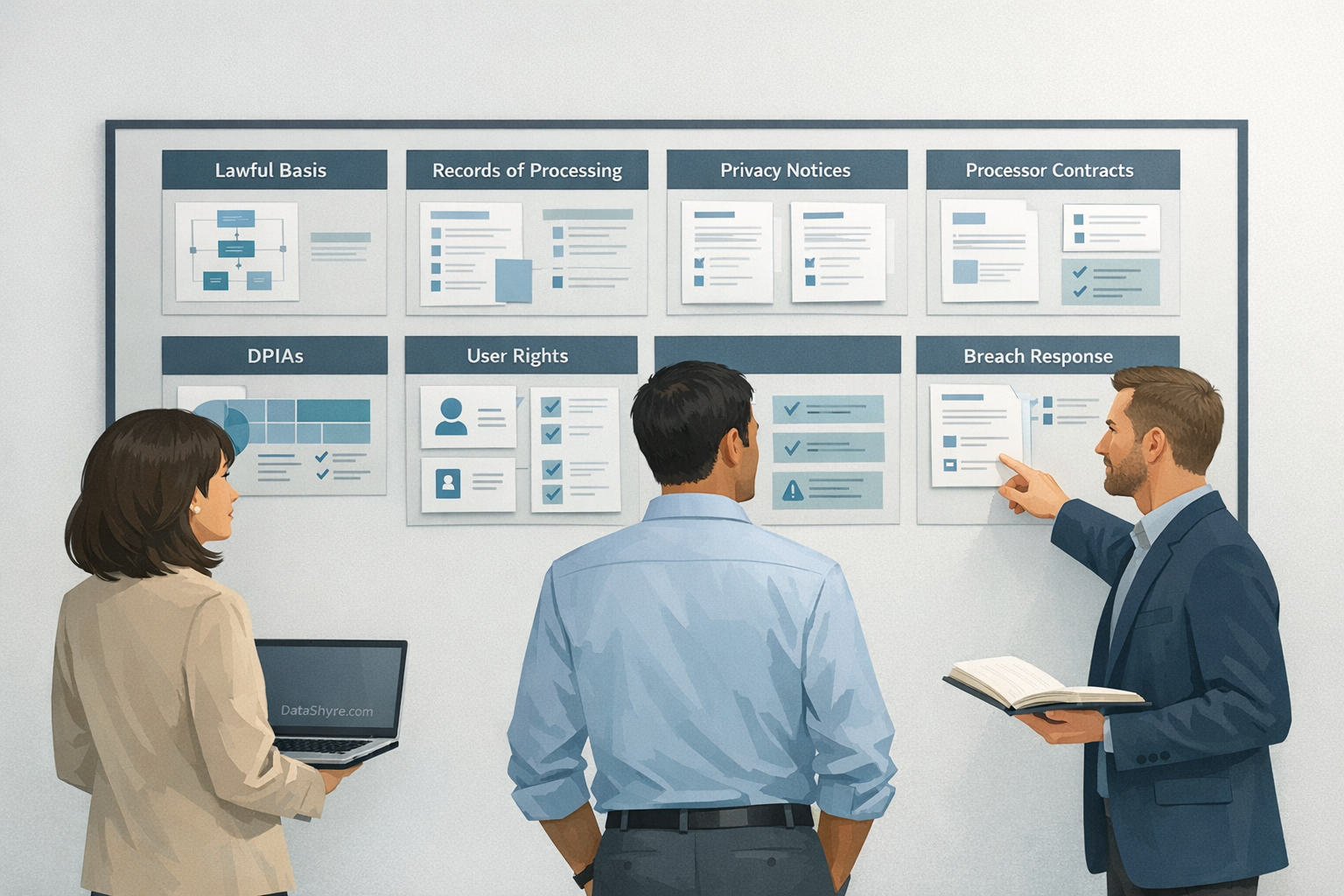
If you want to go deeper on two specific pieces, our guides to a GDPR compliant privacy notice and GDPR consent requirements are useful companion reads. This article stays broader. It is the top-level review I would run before a launch, audit, or procurement cycle.
A gdpr compliance guide starts with seven checks
1. Check whether each processing purpose has its own lawful basis
This sounds basic, but it is where a lot of sloppy programs begin. The ICO says there is no single lawful basis that is better than the others, and that the right one depends on your purpose and relationship with the individual. It also warns that if consent feels difficult to use, another basis may fit better.
That means you should stop grouping everything into one privacy statement and one internal approval note. Marketing email, fraud prevention, account delivery, analytics, employee monitoring, and support logging often belong on different legal footing. If your team cannot explain the basis purpose by purpose, your program is already weaker than it looks.
2. Check whether your records of processing still match reality
Article 30 is not glamorous, but it is the document that tells you whether your program is still tethered to the real product. Records of processing should not sit in a stale spreadsheet untouched since last quarter. They should show who the controller is, what purposes you run, which categories of data move where, and which security measures support the activity.
This is also the fastest way to find drift. New tracking tools get added. Teams start exporting data to a vendor nobody logged. Retention quietly stretches. Good review discipline keeps coming back to records because outdated records usually signal outdated compliance.
3. Check whether notices and consent flows tell the same story
Transparency rules are not satisfied by having a long notice in the footer. GDPR requires information to be clear, accessible, and written in plain language, and the ICO says people must be told the purposes, retention periods, and sharing details that matter. If the notice says one thing while the product does another, that gap is where complaints grow.
The consent layer is part of this check too. John Edwards put it well when he said it should be “just as easy to reject” non-essential cookies as it is to accept them. Even if your current review is broader than cookies, the point carries. If your interface promises choice, the system behind it has to honor that choice without delay or hidden friction.
4. Check your processor contracts and international transfers together
Vendor review is often split into two workstreams when it should be one. Article 28 requires controllers to use processors that can provide sufficient guarantees, and transfer rules still matter whenever personal data moves outside the EU or EEA. The European Commission’s current framework still points teams to adequacy decisions and standard contractual clauses as the main transfer tools.
In practice, this means your procurement file should answer a few plain questions. What is the vendor doing for you? Where is the data going? Which transfer mechanism applies? Who owns the security commitments? If the contract file and the transfer file live in separate worlds, your operational risk is higher than either document suggests.
5. Check whether high-risk projects trigger a DPIA early enough
Teams often remember DPIAs when the product is nearly ready to ship, which is late. The ICO says you must do a DPIA before processing that is likely to result in high risk to individuals, and it treats the exercise as a way to identify and reduce those risks before launch.
That timing matters. A DPIA is useful when it can still change the design, the data fields, the retention logic, or the vendor choice. It is much less useful when it becomes an approval memo written after the architecture is settled. If your business is adding large-scale monitoring, sensitive data processing, or new profiling logic, this checkpoint should light up quickly.
6. Check whether you actually need a DPO
Some companies appoint a DPO because it feels reassuring. Others avoid the question because it sounds heavy. The right answer is narrower than both instincts. GDPR and ICO guidance tie the obligation to public authorities, large-scale regular and systematic monitoring, or large-scale processing of special-category or criminal-offence data.
If you meet that threshold, the role is not ceremonial. The DPO needs enough independence and access to advise on compliance, support DPIAs, and act as a contact point. If you do not meet the threshold, you may still want a strong privacy lead. Just do not confuse a named contact with the formal DPO requirement.
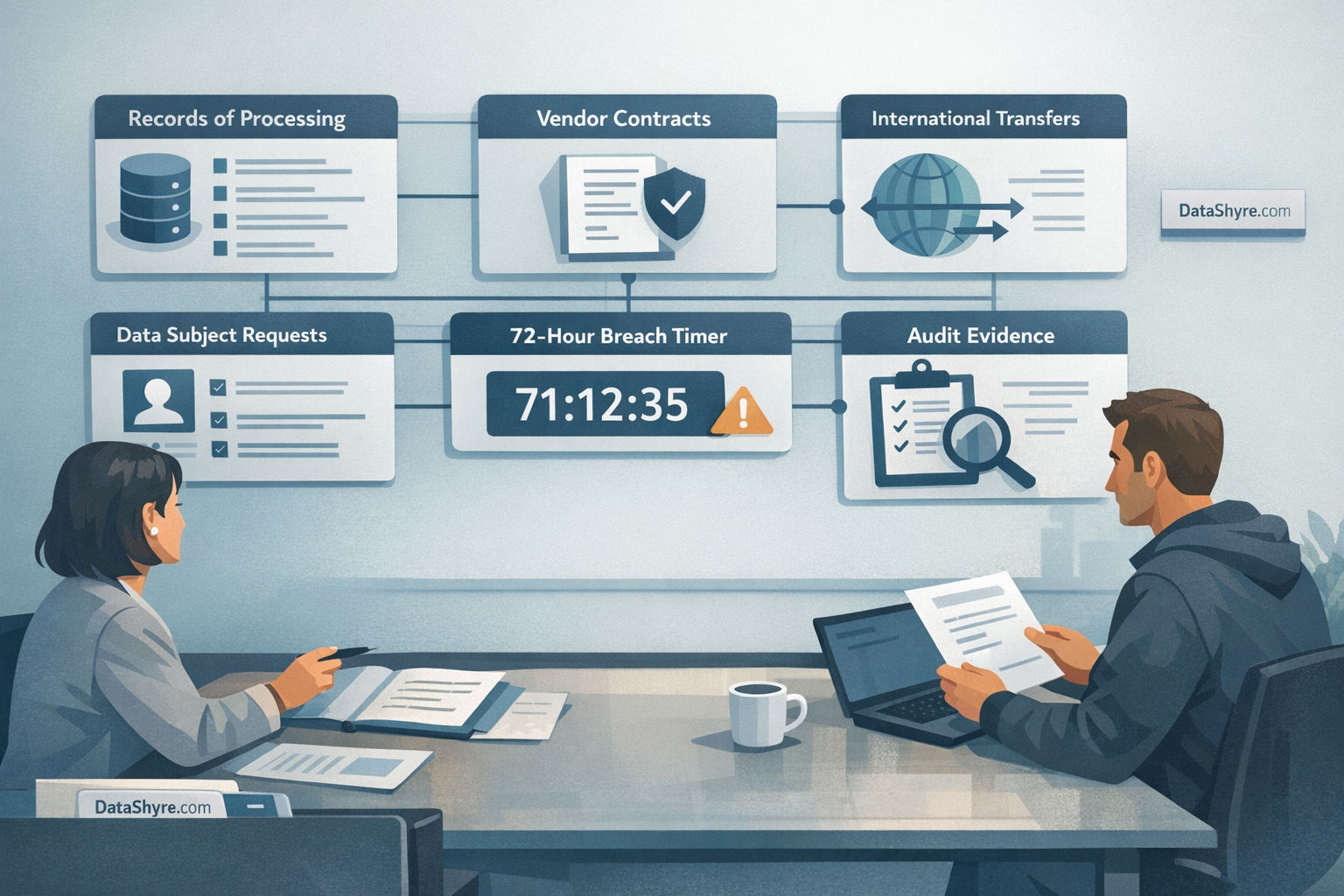
7. Check whether rights requests and breach response work under pressure
This is the operating test most people notice first. The ICO says rights requests generally need a response within one calendar month. It also says reportable personal data breaches must be reported without undue delay and within 72 hours, with the clock starting when the organisation becomes aware of the breach.
Those deadlines are short enough that process beats policy every time. Can support route a request correctly? Can engineering preserve the relevant data? Can legal decide whether a breach crosses the reporting threshold? Can somebody pull the facts without starting from scratch? If the answer depends on one person being online, the control is too fragile.
The simple review question
Here is the question I keep coming back to: if a regulator, enterprise buyer, or worried user picked one processing activity at random, could your team explain the purpose, basis, notice, vendor path, retention, transfer position, and response workflow without improvising?
If not, start there. gdpr compliance guide work usually improves fastest when it gets concrete. One workflow. One vendor. One high-risk feature. One rights path. Then the next.
Bottom line
Good GDPR programs are not built from one big audit sprint. They are maintained through repeated, boring checks that keep product reality aligned with policy claims. That may be less exciting than a giant compliance project. It is also how issues get caught before they become regulator questions.
Sources
- European Data Protection Board
- European Commission
- EUR-Lex
- Information Commissioner’s Office