

Open Source Consent Management Platform: A 2026 Checklist Before You Self-Host
Searching for an open source consent management platform usually means you want more than a prettier cookie banner. You want less vendor lock-in, more visibility into how consent is stored and enforced, and a setup your team can actually inspect.
That can be a smart move. It can also go sideways fast.
In 2026, the hard part is not showing a banner. The hard part is proving that non-essential technologies stay off before choice, that opt-out signals travel to the tools that matter, and that your records still make sense when somebody asks what happened three months later. As William Malcolm of the ICO put it, people need “meaningful control over how their data is used.”
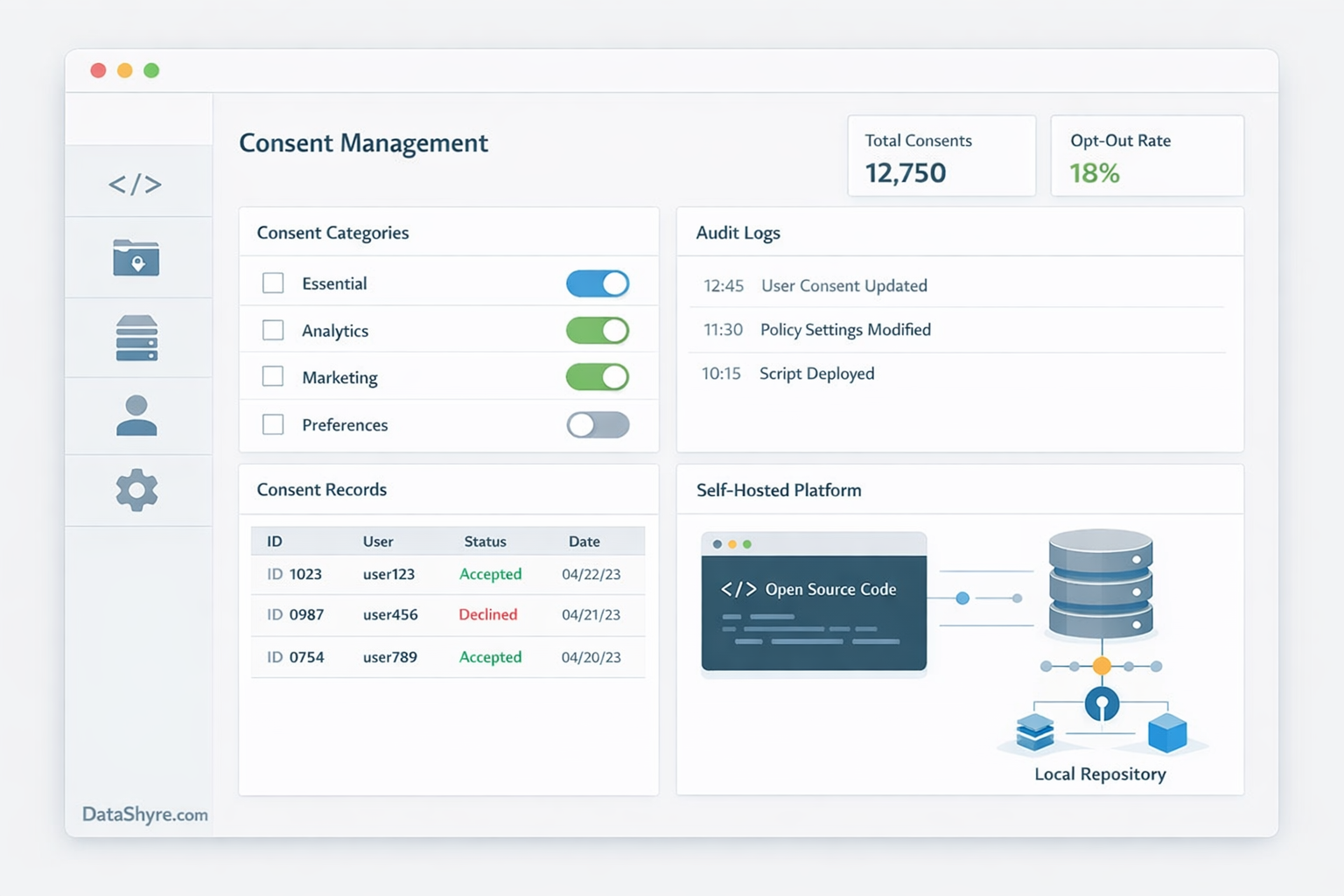
What your self-hosted consent stack has to prove in 2026
The legal baseline is not new, but the operational expectations are getting sharper.
The ICO finalized its storage and access technologies guidance on April 29, 2026, and the guidance squarely covers cookies, tracking pixels, device fingerprinting, and similar technologies. In the EU, GDPR consent still has the old discipline attached to it: consent must be specific, informed, and easy to withdraw. California has also kept pressure on implementation. In September 2025, the CPPA joined California, Colorado, and Connecticut in a sweep focused on companies that may not have been honoring Global Privacy Control signals. That matters because an open-source build is not a free pass. Regulators still care about the outcome.
If your site depends on ad monetization, the bar gets even more practical. Google still requires publishers serving personalized ads in the EEA, the UK, or Switzerland to use a certified CMP integrated with the IAB’s TCF. So before you fall in love with self-hosting, ask a blunt question: can this setup satisfy both privacy rules and the commercial systems attached to them?
Five checks before you commit
1. Test whether it blocks first and asks second
This is the first test because it is where weak implementations usually fail.
Your platform should stop non-essential tags, pixels, and scripts until the user makes a choice. Not later. Not after a race condition. Not on the second pageview. Test the real stack: analytics, ad tags, embedded video, chat tools, A/B testing scripts, and anything firing through a tag manager.
If you are still comparing approaches, our guides to consent management platform, consent management platform best practices, and GDPR consent management platform can help you pressure-test the wider rollout plan.
2. Check whether it can send consent and opt-out signals downstream
An open-source banner is only part of the job. The system also has to tell downstream tools what the user chose.
That includes consent states for analytics and advertising, withdrawal events, and opt-out preference signals where relevant. In California, honoring browser-level signals is not theoretical anymore. Tom Kemp of the CPPA described the state’s direction as making privacy choices “as simple as clicking a button in your browser.” California’s browser requirement does not take effect until January 2027, but the enforcement pattern around honoring opt-out signals is already here.
If Google advertising is in scope, confirm whether your chosen tool can work with a certified CMP path where required. Some open-source components are useful building blocks but not complete answers for an ads-supported publisher.
3. Make sure the evidence is usable, not just present
A good audit trail should answer basic questions quickly:
- What did the user see?
- What did they choose?
- When did they choose it?
- What version of the banner or policy was live?
- What happened after withdrawal?
Plenty of teams store a consent flag and call it a day. That is not much help when you are debugging a complaint or reviewing a marketing workflow months later. Look for timestamped records, purpose-level choices, jurisdiction logic, and a clear way to connect consent events to the systems that acted on them.
4. Be honest about the maintenance burden
This is where the open-source idea often looks best in procurement and worst three quarters later.
Someone still has to maintain classifications, review newly added scripts, update banner copy, retest integrations, and confirm region logic after marketing changes. Open source gives you flexibility, but it also hands more operational responsibility back to your team. If nobody owns that work, the benefit of transparency fades quickly.
The safest buyers treat this as an operating model decision, not just a software decision.
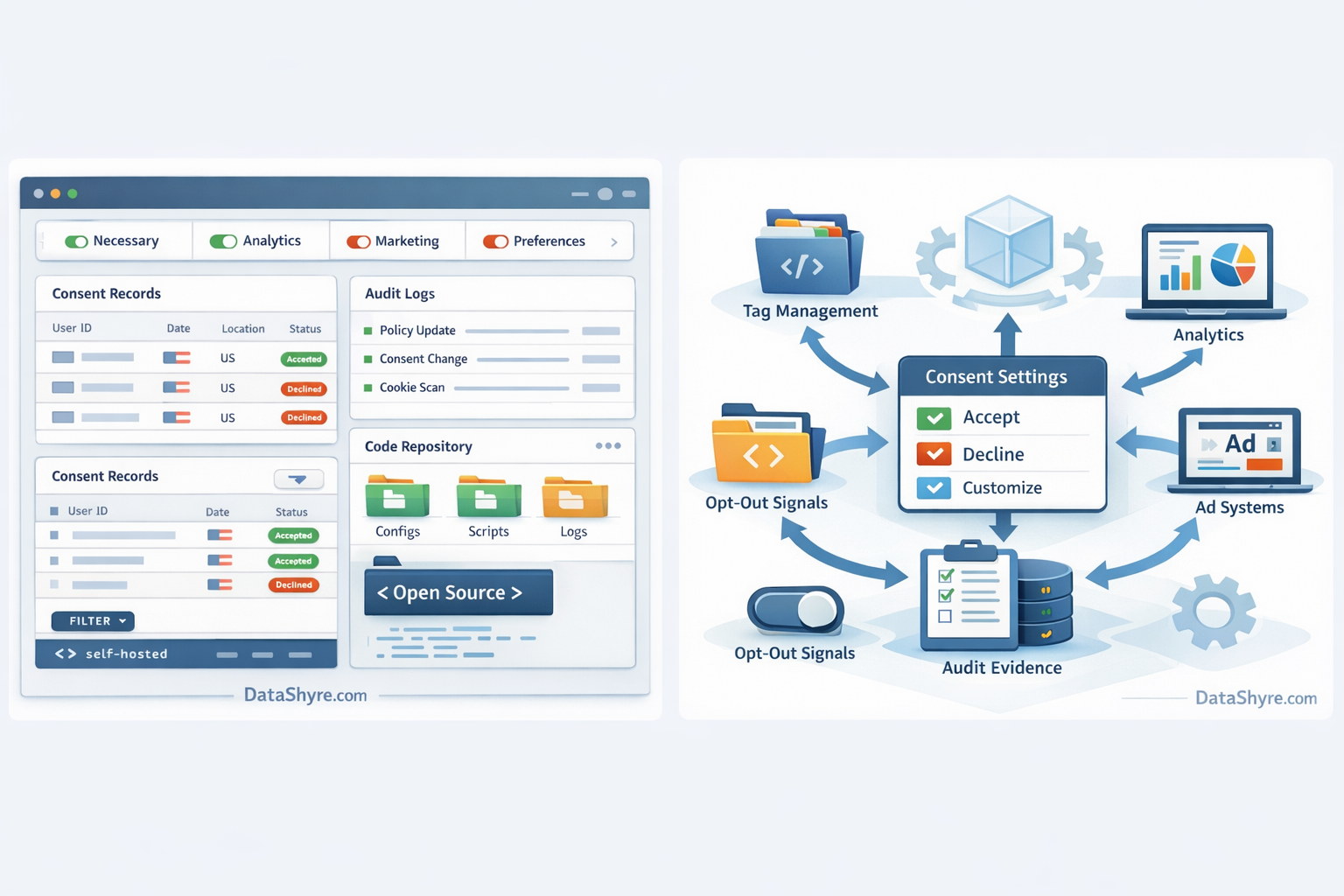
5. Decide whether you need a toolkit or a finished product
Some organizations really do want a toolkit: composable parts, self-hosted storage, custom logic, and deeper control over the stack.
Others mostly want a finished product that legal, marketing, and engineering can all live with. That is a different buying decision. If you need TCF workflows, multi-region banner logic, mature reporting, and vendor-supported ad integrations on day one, an open-source-first route may still work, but only if you are willing to assemble and maintain more of the system yourself.
That is the key distinction. open source consent management platform is not a synonym for cheaper CMP. It is usually a bet on control.
When open source is the right move
This approach tends to make sense when you have one or more of these conditions:
- You need self-hosting for architectural or procurement reasons.
- You want inspectable code paths for consent storage and enforcement.
- Your engineering team can own ongoing maintenance.
- You need custom integrations that commercial tools handle poorly.
It is a weaker fit when you need fast deployment, heavy ad-tech support, or a vendor that can handle most of the operational work for you.
Bottom line
The best reason to choose this route is not ideology. It is control you can actually use.
If the system can block before choice, pass consent and opt-out signals cleanly, keep records worth keeping, and survive day-two maintenance, it may be the right call. If not, you are not really buying transparency. You are buying more work.
Sources
- ICO
- EUR-Lex
- California Privacy Protection Agency
- Google Ad Manager Help