GDPR Cookie Consent: A 2026 Checklist for Valid Banners
DataShyre StaffJun 17, 2026
5 min read
GDPR Cookie Consent: A 2026 Checklist for Valid Banners
If your team is revisiting gdpr cookie consent in 2026, the short answer is still simple: non-essential cookies and similar tracking technologies should stay off until the user receives clear information and takes an affirmative action. This article is for privacy, marketing, and product teams that need a practical standard they can use this quarter.
If you also want design inspiration, our guide to GDPR cookie consent examples shows what strong first-layer choices look like in practice.
Valid consent must be freely given, specific, informed, and unambiguous.
Non-essential trackers should be blocked before consent, not merely disclosed.
Rejecting should be as easy as accepting on the first layer.
Teams need to govern more than browser cookies now, including pixels, scripts, and other storage or access technologies.
Withdrawal should stay available after the banner is dismissed.
What valid consent actually requires
For most website teams, valid consent comes down to five operational tests.
1. The user gets a real choice
Consent is weak when the interface nudges people toward acceptance with brighter buttons, extra clicks, or vague wording. European Data Protection Board chair Anu Talus said users should be given a “real choice.” That is a useful benchmark for banner reviews because it turns a legal rule into a product test.
2. Purposes are separated clearly
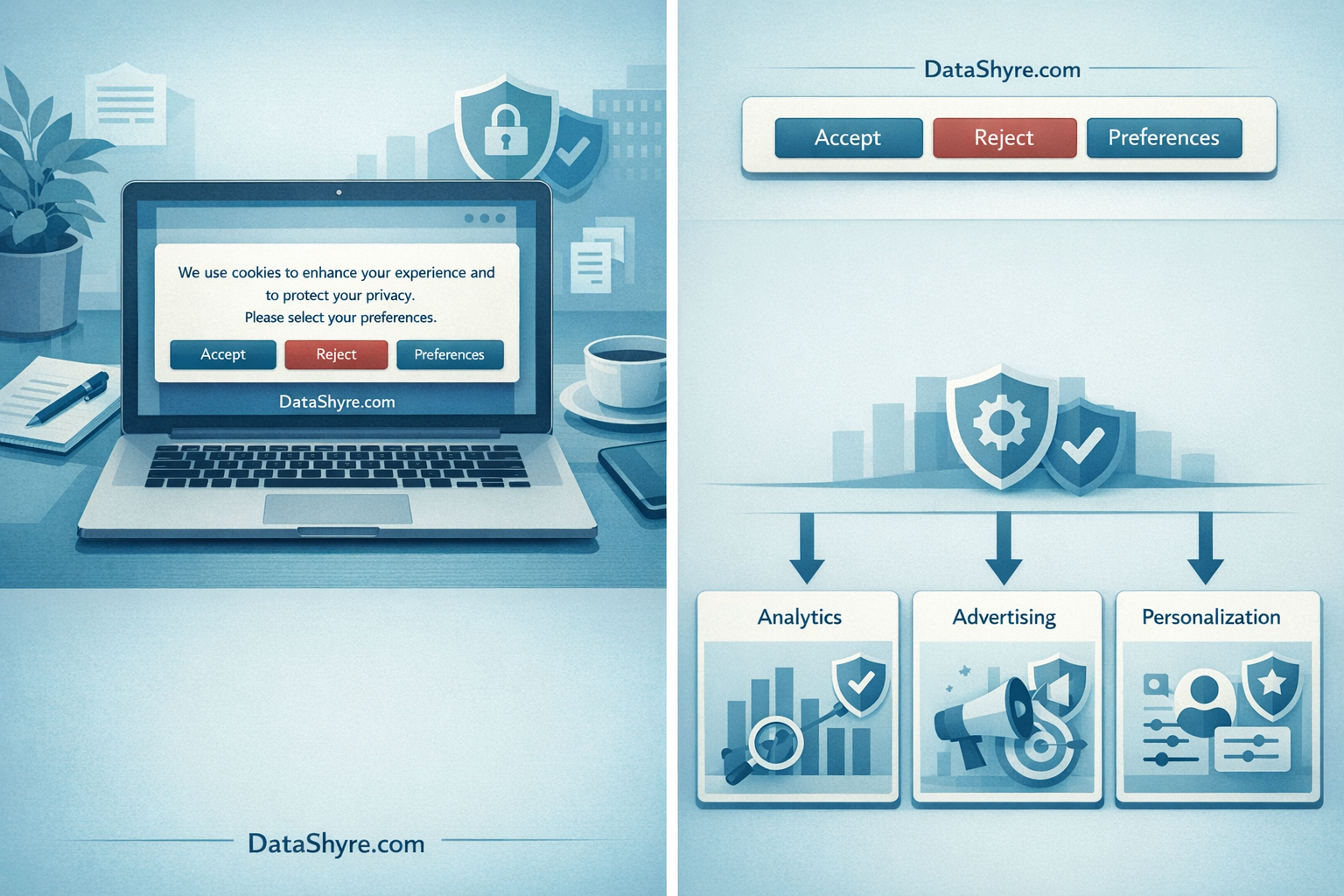
Analytics, advertising, personalization, and essential functions should not be blended together. People should understand what each category does and be able to agree to one purpose without being pushed into all of them.
3. Non-essential tracking stays blocked until consent
A banner is not compliant just because it appears on screen. If analytics, advertising, or personalization tools still fire before the click, the implementation is doing the risky part too early.
4. Withdrawal is easy later
Users should be able to reopen settings from a footer link, floating icon, or account control. Withdrawal is part of the consent lifecycle, not a nice-to-have.
5. The signal actually propagates downstream
The banner, CMP, tag manager, analytics stack, and ad tools need to respect the same decision. A polished front end with a broken consent signal behind it is still a compliance problem.
Why gdpr cookie consent is bigger than cookies now
One of the clearest shifts in 2026 is that regulators are describing a wider tracking surface. The UK ICO finalized its Storage and Access Technologies guidance on April 29, 2026, and the guidance covers cookies alongside pixels, fingerprinting, tags, link decoration, and web storage. In practical terms, that means teams should audit the whole tracking path rather than only checking a browser cookie list.
The enforcement message is also clearer than it was a few years ago. In December 2025, the ICO said 95% of the UK’s top 1,000 websites had changed their banners to comply after regulatory engagement. That is a strong signal that banner design is no longer a cosmetic issue; it is an active compliance target.
The same announcement included a useful product principle from ICO executive director William Malcolm, who said the regulator wants to “put people in control over how they are tracked online.” If your banner hides refusal or leaves tags running anyway, it fails that test.
A 6-point implementation checklist for gdpr cookie consent
If you need a practical cleanup plan, start here.
1. Inventory every tracker
Document cookies, pixels, SDK calls, storage keys, and scripts. If a tool is not strictly necessary, treat it as consent-gated until you verify otherwise.
2. Block before the first page view sends data
Do not rely on notice alone. Marketing and analytics tags should wait until the user makes a choice.
3. Make first-layer refusal obvious
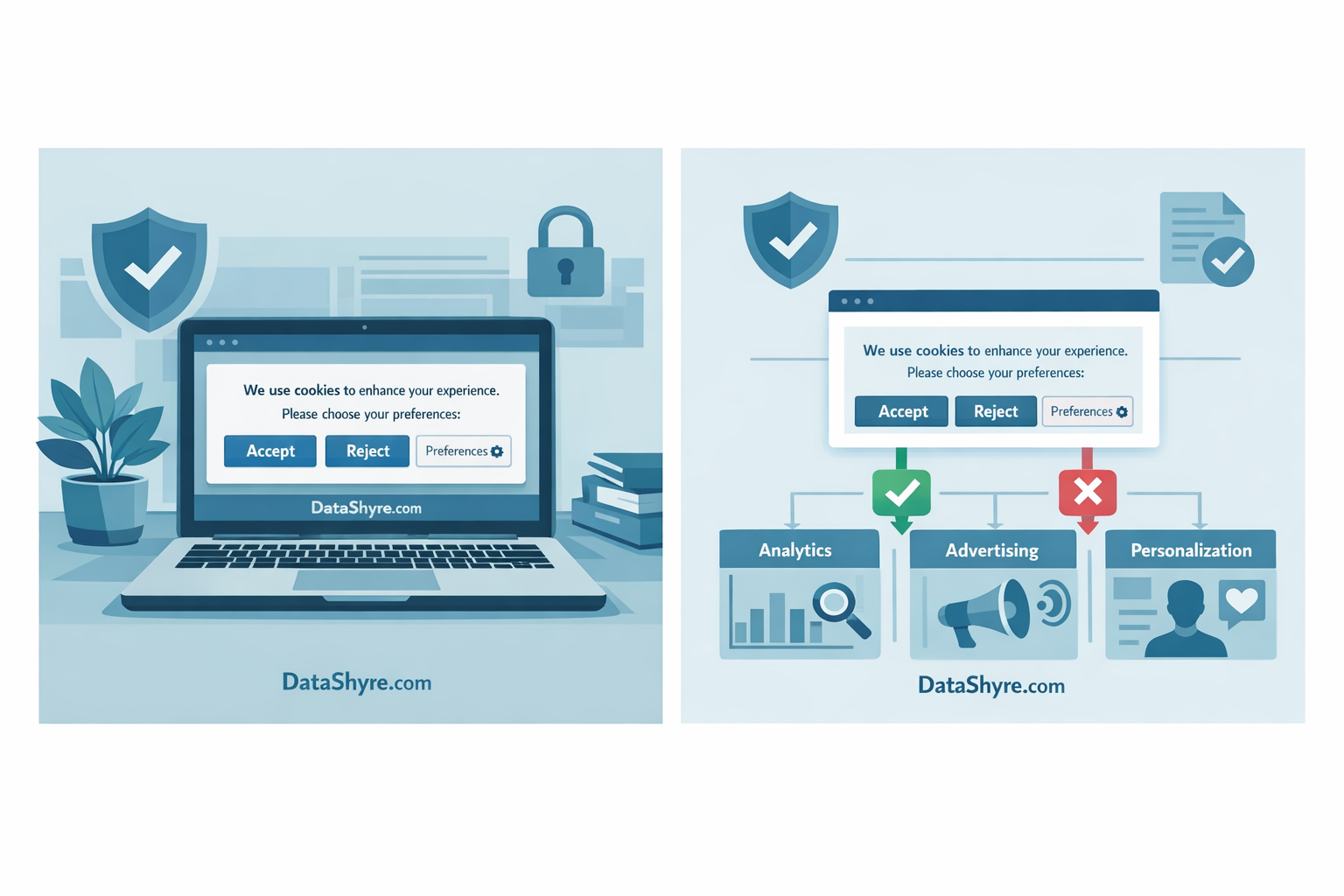
A strong banner usually includes Accept, Reject, and Preferences on the first layer. Equal discoverability matters more than aesthetic symmetry.
4. Use plain-language purposes and vendor context
Explain why a category exists and, where relevant, who receives the data. Legal precision matters, but readable language matters too.
5. Wire the consent signal into operations
Your CMP should control tag managers, analytics tools, ad platforms, and downstream workflows. This is where many teams discover that the banner looked compliant while the stack was still collecting data.
6. Keep a persistent way to change the decision
A footer privacy link or floating settings icon is usually enough, as long as it remains visible and functional. Record consent events and refresh them when purposes or vendors materially change.
Common mistakes that still create risk
Most problem banners still repeat the same patterns:
no visible reject option on the first layer
pre-enabled non-essential categories
vague labels such as “improve experience” instead of purpose-based explanations
one toggle covering multiple unrelated processing purposes
no persistent withdrawal control
consent choices that never reach tags, analytics, or ad systems
These are not edge-case issues. They are the recurring gap between a banner that looks acceptable and a consent program that actually works.
FAQ
Is cookie consent always required under GDPR?
Not for everything. Strictly necessary technologies can fall outside the consent requirement, but non-essential analytics, advertising, and similar tracking tools generally should not be set before the user chooses.
Is a cookie banner enough by itself?
No. A banner is only the front end of the control. The real test is whether the choice changes what your tags, vendors, and downstream systems actually do.
Can a team rely on a different legal basis instead of consent?
For most non-essential website tracking, regulators still focus on consent before storage or access occurs. Teams should be cautious about treating disclosure alone as a substitute for a true opt-in flow.
Final takeaway
Good GDPR cookie consent is not about making a banner look safer. It is about proving that the user had a genuine choice, that non-essential tracking stayed off until that choice was made, and that the choice kept working after the click. If your team can show those three things, you are much closer to a defensible consent setup in 2026.
Sources
European Commission GDPR consent guidance
European Data Protection Board consent summary and consent-or-pay opinion
UK ICO Storage and Access Technologies guidance
UK ICO announcement on top 1,000 website cookie compliance