

SMS Consent in 2026: What Counts and What to Keep
If your team sends promotional texts, sms consent is not a box-checking exercise anymore. The real question is simpler and harder: what exactly did the person agree to, how easily can they change their mind, and what proof will you still have six months later?
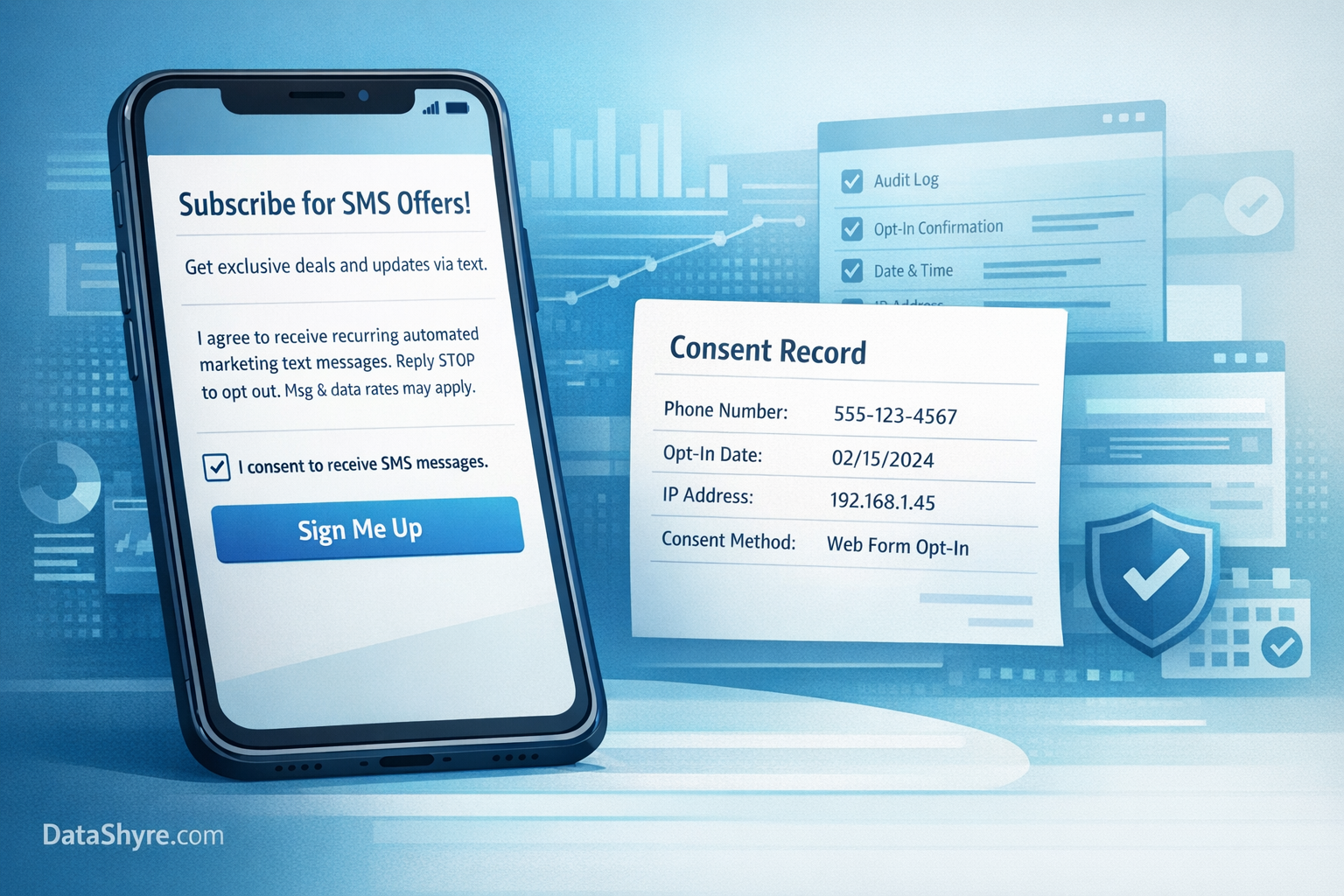
That is where a lot of programs still wobble. The growth team cares about list size. The platform team cares about deliverability. The legal and privacy teams care about disclosures, revocation, and records. A strong program lines those up before the first campaign goes live.
If you want the broader framework first, our guides to marketing consent, user consent, and opt-in consent are the best companions. This article stays narrow: U.S. promotional texting, current federal signals, and the practical controls worth tightening now.
What valid SMS consent looks like
The federal baseline is still demanding enough to trip up sloppy flows. The FCC’s consumer guidance says automated telemarketing text messages generally require prior express written consent, and that consent cannot be treated as a condition of purchase. In plain English, a buried line in checkout terms is weak, and a bundled yes for email, SMS, and partner offers is weaker.
Good sms consent usually has four traits:
- the text program is named clearly;
- the person can tell promotional texts from transactional or support messages;
- the disclosure is close to the phone-number field or the action button; and
- the record preserves the exact wording shown at the time.
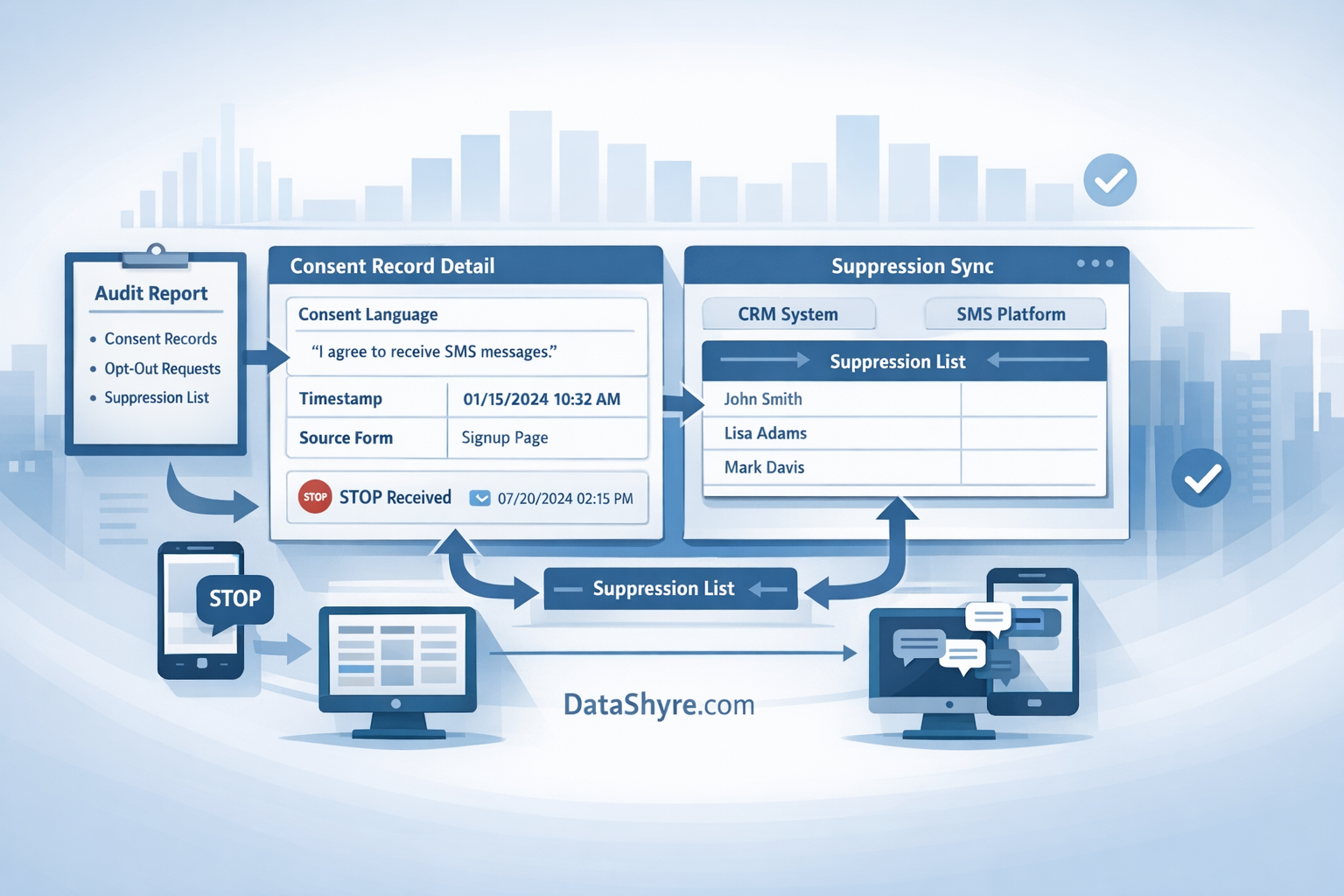
That last point matters more than teams expect. If your program depends on a lead form, a popup, a checkout step, and an SMS platform syncing later, the legal risk sits in the handoff. When the wording, timestamp, or source page disappears between systems, the proof gets thin fast.
Where SMS programs still break
The first failure is vague disclosure. If the user thinks they are asking for a coupon and the business treats that as open-ended permission for recurring promotions, the consent story is already shaky.
The second failure is cancellation friction. In October 2024, FTC Chair Lina Khan said businesses should not make people “jump through endless hoops just to cancel a subscription.” That line was about subscriptions, but it fits text programs too. If opting in takes one tap and opting out takes a support ticket, the flow is asking for trouble.
The third failure is weak vendor control. In a May 2026 case involving Shutterstock, FTC official Christopher Mufarrige said sellers need to “clearly communicate all material terms” and secure express informed consent. For SMS teams, that is a reminder that message cadence, recurring charges when applicable, and cancellation mechanics should not be left to fine print or a vendor default.
None of this is theoretical. It is the same operational lesson we keep seeing across privacy work: ask narrowly, log precisely, and do not let a downstream tool rewrite the user’s choice.
Revocation is the real test in 2026
The FCC has been especially clear on the back half of consent. In March 2024, Chair Jessica Rosenworcel said consumers should be able to “revoke consent any reasonable way at any time.” That matters because a lot of SMS programs still behave as if STOP is the only valid path, even when the person replies with ordinary language or uses another reasonable channel.
The same FCC action also made room for a one-time confirmation text after an opt-out, but not a disguised marketing follow-up. That is a useful implementation rule: confirm the unsubscribe if needed, then stop.
There is one nuance worth knowing. In January 2026, the FCC delayed one narrow cross-program revocation requirement until January 31, 2027. But that did not erase the core operational burden. Businesses still need to accept reasonable revocation requests and make sure suppression logic reaches the right campaigns, numbers, and vendors.
If a person has to text STOP to one short code, email support for another program, and dig through account settings for a third, the setup is already telling you where the risk sits.
What to log before the first marketing text
This is the part most teams underbuild. Before you send the first campaign, keep records that answer basic audit questions without detective work.
| What to keep | Why it matters | | — | — | | Exact disclosure text and screen capture | Shows what the user actually saw | | Phone number source and collection point | Connects consent to the specific form, ad, or checkout flow | | Program name and purpose | Separates promotional SMS from order, support, or account texts | | Timestamp, region, and system of record | Helps route the right rule set and prove timing | | Revocation history and suppression sync | Shows that a later opt-out was honored across tools |
I would also run a blunt go-live test before every major SMS launch:
- submit a fresh opt-in from the real form;
- confirm the disclosure saved correctly in the CRM or consent log;
- send a test STOP and confirm suppression propagates;
- check whether any backup workflow can still message the number; and
- save screenshots while the flow is live, not after someone asks for them.
That is not glamorous work, but it is what makes sms consent defensible when a regulator, customer, or platform partner starts asking questions.
The bottom line
Good SMS programs are not built on the biggest list. They are built on clean disclosure, easy revocation, and records that survive handoffs between forms, CRMs, and messaging tools. If your team can show who agreed, what they saw, and how the system reacted when they said stop, you are in much better shape than most.
Sources
- Federal Communications Commission consumer guidance
- Federal Communications Commission press releases and orders
- Federal Trade Commission announcements