

Google Analytics Consent Mode in 2026: 7 Live Checks Before You Trust the Setup
If you are reviewing google analytics consent mode on October 3, 2026, the useful question is not whether one Google screen says consent mode is enabled.
It is whether your banner, Google tag, GA4 property, linked Google Ads behavior, and withdrawal path still agree on the live page.
That is still the right frame in 2026. Google’s current materials still say consent mode helps control how Google tags behave based on the user’s consent choices, while also making clear that it does not provide a consent banner or widget. Google’s setup and debugging guidance still expects implementers to set default consent states, send updates when the user acts, and verify the current consent parameters in Tag Assistant. Google’s Analytics Help also says that, starting June 15, 2026, Google Analytics transitioned to using Consent Mode in Google Ads as the single control for Google Ads data. And the European Commission still says valid consent must be freely given, informed, specific, and based on a clear affirmative act, and that “It should be as easy to withdraw as to give consent.”
If you want adjacent context first, start with our guides to GA4 consent mode, consent mode, and cookie consent Google Tag Manager. This article is narrower. It is the live Google Analytics-specific review I would run before trusting a google analytics consent mode setup this week.

1. Remember what consent mode does, and what it does not do
Many teams still treat consent mode as if it were the banner itself.
It is not.
Google’s current Tag Manager help is still explicit that consent mode does not provide the consent interface. It is the control layer that tells Google tags how to behave after your site or CMP has captured a choice.
That matters because a site can fail in several different ways:
- the banner can collect weak or pressured consent;
- the Google tag can receive the wrong default state;
- GA4 can initialize before the consent logic is ready;
- linked Google Ads behavior can drift away from what the team expects.
So the first live check is conceptual but important: make sure your team is reviewing google analytics consent mode as runtime behavior, not as a box that was ticked during setup.
2. Set denied defaults before the first meaningful GA hit
This is still the most common implementation defect.
Google’s current setup guidance says you should set the default consent state before a user grants consent, and then update that state after the visitor interacts with the banner. In practice, that means your consent defaults need to run early enough that the Google tag does not get a misleading first read.
For google analytics consent mode, I would test this in a clean browser session:
- load the page with no prior consent stored;
- confirm the default state is present before the main Google tag logic executes;
- check whether any analytics-related storage appears before the user acts;
- compare the result with what the banner and CMP claim to be doing.
If denied defaults land too late, later updates may look correct in a dashboard while the first pageview behavior was already wrong.
3. Verify all four current consent signals, not only analytics_storage
This is where many audits stay too shallow.
Google’s current consent documentation and Tag Assistant guidance still point implementers to four important signals:
ad_storageanalytics_storagead_user_dataad_personalization
That matters because google analytics consent mode is rarely just an analytics-only question anymore. A GA4 property may be linked to Google Ads, may support remarketing or measurement use cases, or may sit inside a wider Google tag implementation that depends on more than the analytics branch alone.
If the team only validates analytics_storage, the review may miss the bigger failure: Analytics looks fine, but the rest of the Google setup is still out of line with the user’s choice.
4. Re-check the June 15, 2026 Google data-control change
This is the branch too many internal playbooks still miss.
Google’s Analytics Help says that, starting June 15, 2026, Google Analytics moved to using Consent Mode in Google Ads as the single control for Google Ads data, including data shared by Google Analytics with linked Ads accounts. The same help page says the Google Signals setting in Analytics now controls only the association of Analytics data with signed-in user information for behavioral reporting.
That means a serious google analytics consent mode review should now ask:
- what controls GA4 collection behavior on the page;
- what controls how data is handled in linked Google Ads paths;
- whether your team’s documentation still reflects the post-June 15 model rather than the older admin logic.
If your internal checklist still treats Google Signals as the main data-use switch for linked Google Ads behavior, the checklist is outdated.
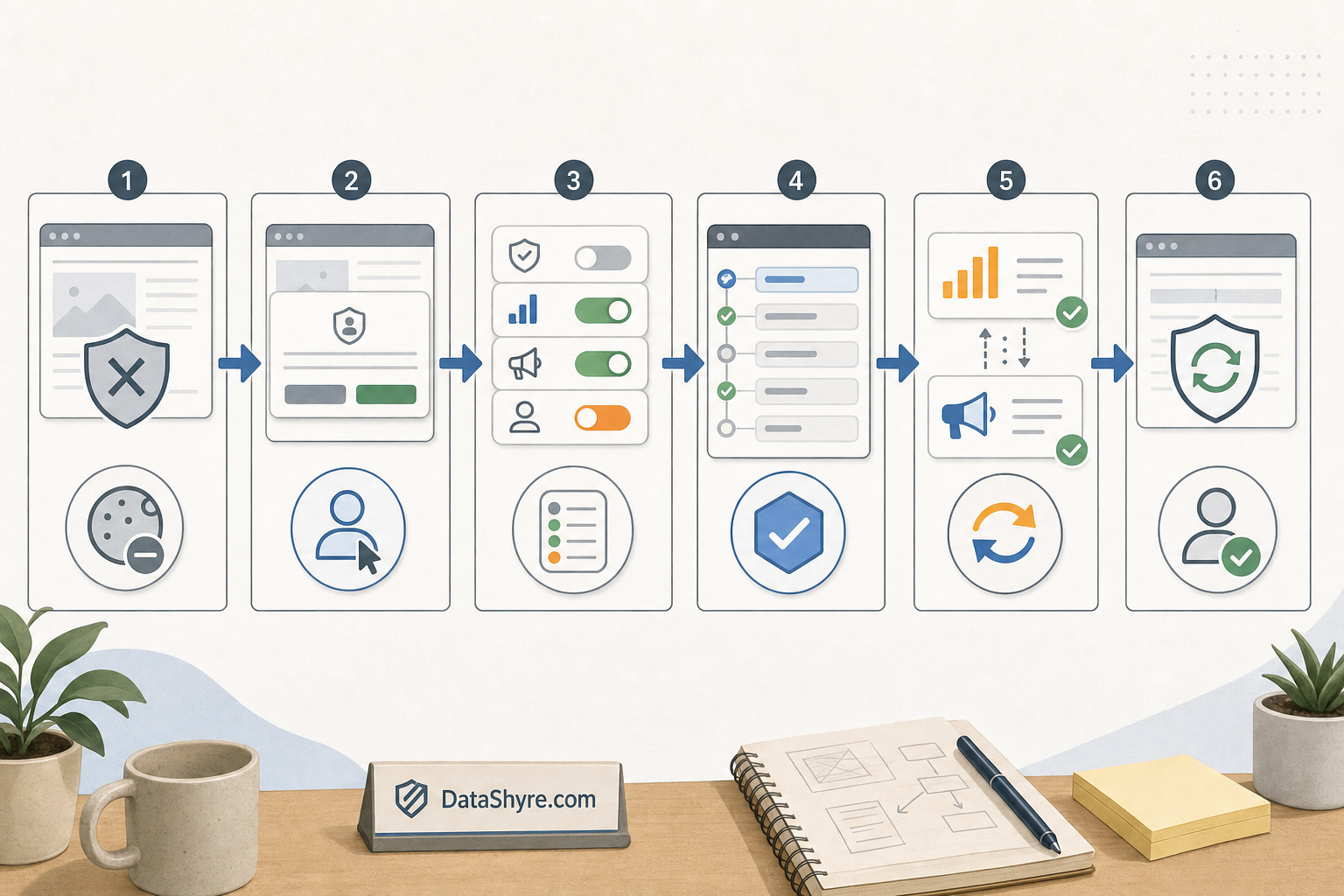
5. Decide whether your Analytics path is basic or advanced on purpose
Google still distinguishes basic and advanced consent mode, and the difference matters for analytics reviews.
In basic mode, Google tags are blocked until the user interacts with the banner. In advanced mode, Google tags can load with defaults set to denied and adjust their behavior after the user choice.
For google analytics consent mode, that distinction changes what you should expect to see on first load:
- in basic mode, you are testing whether Google tags stay blocked cleanly until the user acts;
- in advanced mode, you are testing whether denied defaults are present early enough and whether cookieless signaling stays within the behavior your team intended.
Neither path is trustworthy just because the label sounds familiar. What matters is whether the live page behaves the way your team documented.
6. Test rejection and withdrawal as seriously as acceptance
This is where a lot of clean-looking setups fall apart.
Google’s setup guidance still expects consent to be updated when the user interacts, on the same page where the interaction happens. The European Commission’s current guidance still says refusal and withdrawal have to remain real and usable parts of the consent flow.
So a proper google analytics consent mode review should test at least these states separately:
- first load with no choice yet;
- explicit reject;
- explicit accept all;
- later withdrawal from settings.
Then compare:
- what the banner says happened;
- what Tag Assistant shows for the consent state;
- what actually changed in network behavior or browser storage;
- whether the withdrawal path is as easy to use as the original choice.
If the implementation only becomes correct after a reload, a route change, or a delayed retry, it is weaker than it looks.
7. Compare Tag Assistant evidence with real browser behavior
Tag Assistant is essential, but it is not the whole audit.
Google’s debugging guidance is excellent for checking whether the expected consent parameters were set and updated. But a strong google analytics consent mode review also compares that with what happened in the browser itself.
My minimum pass is:
- verify the API calls in Tag Assistant;
- inspect first-load network behavior before choice;
- inspect reject, accept, and withdrawal states;
- check whether analytics-related storage or identifiers appear earlier than expected;
- review whether non-Google scripts are following the same user choice.
That last step matters because Analytics often shares the page with other vendors. A site can show healthy Google consent behavior while a pixel, chat widget, or embed still ignores the same visitor decision.
Bottom line
The strongest google analytics consent mode setup in 2026 is not the one with the neatest admin screenshot.
It is the one that:
- treats consent mode as runtime behavior rather than banner design;
- sets denied defaults before the first meaningful analytics action;
- verifies all four current consent signals;
- understands the June 15, 2026 data-control change;
- chooses basic or advanced behavior intentionally;
- tests rejection and withdrawal as carefully as acceptance;
- compares Tag Assistant evidence with the browser’s real behavior.
If your team can still prove those seven checks on the live page today, you are much closer to trustworthy measurement than a team that only proves the banner rendered.
Sources
- Google for Developers: Consent mode overview
- Google for Developers: Set up consent mode on websites
- Google for Developers: Troubleshoot consent mode with Tag Assistant
- Google Analytics Help: Consent type
- Google Analytics Help: Updates to Google Analytics Data Controls
- Google Tag Manager Help: About consent mode
- European Commission: Legal grounds for processing data
- ICO: Guidance on the use of storage and access technologies
- ICO: How do we manage consent in practice?
—
Published: October 3, 2026. Updated using current official Google, regulator, and government materials available at publication time.