

GDPR Cookies Consent in 2026: What Your Banner, Tags, and Logs Need to Prove
GDPR cookies consent is still easy to misunderstand. Plenty of teams reduce it to banner copy or button color. Regulators usually look deeper than that. They want to know whether non-essential tracking waited for a real yes, whether refusal was genuinely easy, and whether your records can show what happened later.

The practical standard has not changed: consent must come from a clear affirmative action, not silence or inertia. The Court of Justice of the European Union made that point in the Planet49 case when it said a pre-checked cookie box does not amount to valid consent. CNIL says users must be able to refuse cookies as easily as they can accept them, and it also says consent must be withdrawable at any time. If your banner looks compliant but your tags load before the click, the design is not your biggest problem.
If you want companion reads around layout and implementation, our guides to GDPR cookie consent examples, cookie consent requirements, and Google Tag Manager cookie consent cover those adjacent questions.
What GDPR cookies consent actually requires
Under the GDPR standard used for cookie permissions, the user has to take a real action that is freely given, specific, informed, and unambiguous. In practice, that means a banner cannot lean on pre-ticked boxes, vague wording, or a fake choice where the accept button is obvious and the refusal path is buried.
The operational part matters just as much. In April 2026, the UK ICO published final guidance on storage and access technologies and said the goal is an online tracking ecosystem that gives people “meaningful control over how their data is used,” in the words of Executive Director William Malcolm. That is a useful benchmark because it forces teams to test what their tools actually do, not just what the banner promises.
A solid setup usually includes:
- blocking non-essential cookies and similar trackers until consent is captured
- showing an accept and reject path with comparable visibility
- separating necessary tools from analytics, advertising, and personalization where appropriate
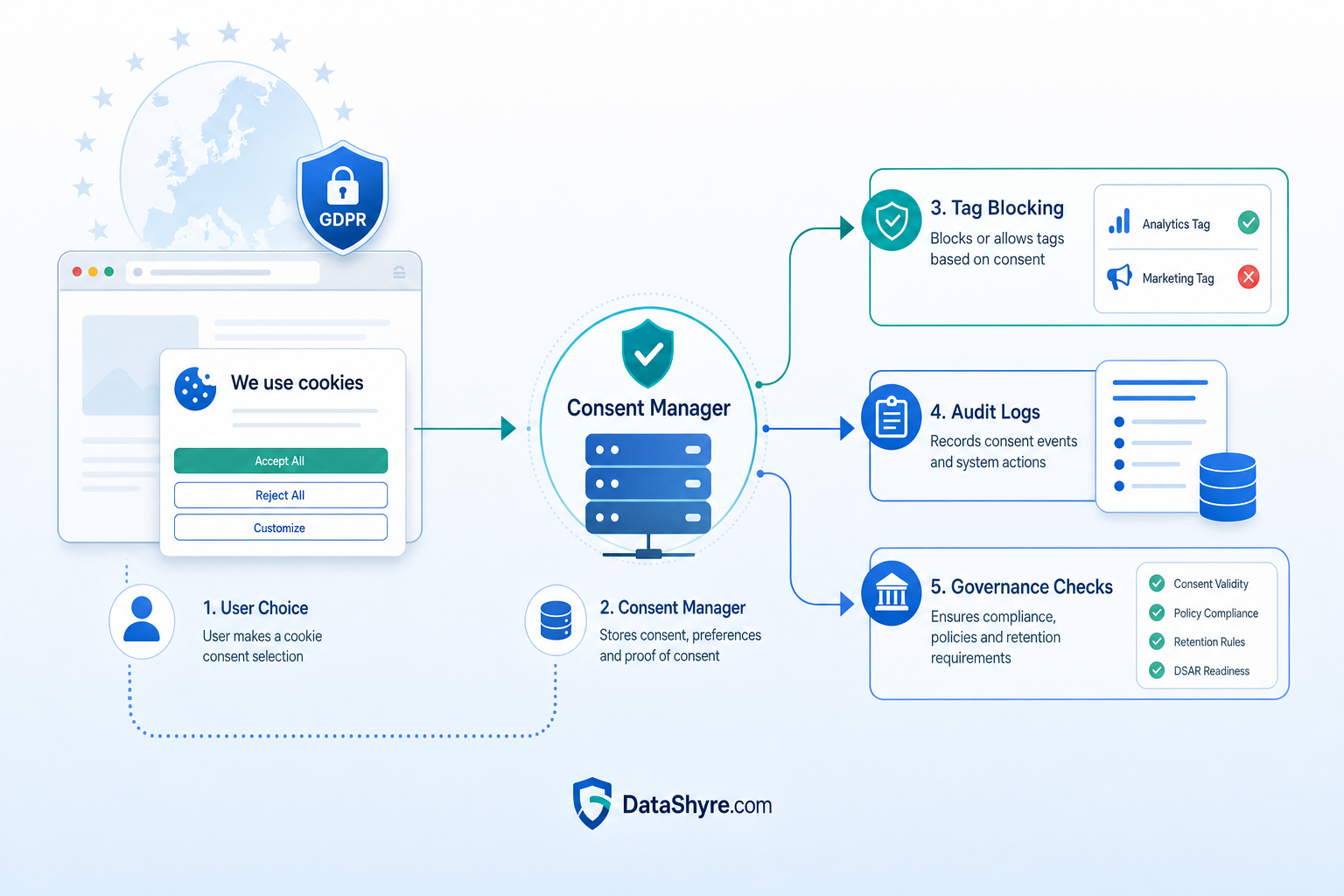
- logging the user signal, policy version, and downstream effect in a way your team can audit later
- making withdrawal as easy as the original choice
Where teams still get this wrong
The first failure is obvious once you look for it: the site says users have a choice, but analytics or ad tags still fire on page load. That breaks the whole point of prior consent.
The second failure is interface design. CNIL’s guidance is blunt here. Refusing should be as simple as accepting. A small text link hidden behind a second layer is hard to defend when the first layer has a large, inviting accept button.
The third failure is weak proof. Many companies can show a screenshot of the banner but not a reliable record of which version the user saw, what categories were accepted, and whether the consent manager actually changed tag behavior. That gap becomes painful during audits, enterprise security reviews, or regulator questions.
The 2026 checklist I would use
If I were reviewing a site for GDPR cookie readiness today, I would keep the checklist short and unforgiving.
- Do non-essential cookies stay off until the user actively agrees?
- Can the user reject at the first layer without hunting for the option?
- Are categories and explanations clear enough that the choice is informed?
- Does the consent record show the signal, time, banner version, and effect on tags?
- Can the user revisit and change the choice without friction?
That is also where the EDPB’s language helps. In its consent-or-pay opinion, Chair Anu Talus said users should face a model that is “informed, fair and respects users’ fundamental right to data protection.” That framing travels well beyond large platforms. If the user experience nudges acceptance while making refusal awkward, the interface may be polished, but the choice is still weak.
What this means for business teams
For marketing, product, and privacy teams, the main lesson is simple: do not treat the banner as the compliance program. The banner is the visible layer. The real test sits underneath in tag controls, regional logic, consent storage, and QA.
If gdpr cookies consent still lives only in your banner copy, your program is incomplete. It works only when the legal rule, the interface, and the technical implementation match. When those drift apart, you get the worst mix possible: more user friction and weaker compliance evidence.
Bottom line
The safest way to think about gdpr cookies consent in 2026 is to treat it as an end-to-end control, not a wording exercise. Get a real yes before non-essential tracking starts. Make no as easy as yes. Keep records that hold up after the fact. That is what businesses need to prove when someone asks whether consent was valid.
Sources
- Court of Justice of the European Union
- European Data Protection Board
- UK Information Commissioner’s Office
- CNIL