

GDPR Cookie Consent Plugin: 6 WordPress Checks Before You Install One in 2026
Most WordPress teams do not need another banner that looks compliant from ten feet away. They need a plugin that can collect valid permission, stop optional tracking before it starts, and keep working after somebody adds a new tag, embed, or ad tool.
That is the real test for a gdpr cookie consent plugin. Under the GDPR standard for consent, the click has to be freely given, specific, informed, and unambiguous. Regulators have kept pressing the design point too. Former UK Information Commissioner John Edwards put it simply in 2024: it must be “just as easy to reject” non-essential cookies as it is to accept them.

If your team is still aligning on the wider consent baseline, start with our guides to GDPR cookie consent, GDPR cookie consent requirements, and GDPR cookie consent examples. This article is narrower. It is about what a WordPress plugin has to do in practice before the “GDPR-ready” label means much.
1. It blocks optional scripts before the user clicks
This is the first filter because it catches the biggest failure mode. A plugin is not helping you if analytics, ad tags, heatmaps, chat widgets, or embedded media start firing before the visitor chooses.
The enforcement risk here is current, not theoretical. In November 2025, the CNIL fined the publisher of vanityfair.fr after finding that cookies requiring consent were placed on arrival and that refusal or withdrawal did not reliably stop them. If a vendor cannot explain how its WordPress integration prevents that sequence, move on.
2. It makes refusal obvious on the first layer
The banner copy matters, but the decision layout matters more. In December 2024, the CNIL publicly warned publishers over cookie banners that pushed people toward acceptance through misleading design. Their examples were familiar: reject links hidden in body copy, accept buttons repeated, and refusal made visually weaker than consent.
That is why I would treat first-layer refusal as non-negotiable. A good gdpr cookie consent plugin gives you a visible reject option on the first screen, not a maze of settings that only appears after extra clicks.
EDPB Chair Anu Talus used the phrase “real choice” in a different consent context, but it applies cleanly here too. If the interface nudges the user toward yes, you have a design problem and a compliance problem at the same time.
3. It lets users change their mind later and actually honors the change
Withdrawal is where weak implementations usually show themselves. Plenty of tools can collect a first click. Fewer can reopen settings cleanly, update the consent state across plugins and tags, and stop downstream tracking after the user changes course.
This should be tested, not assumed. Accept optional categories, browse a second page, withdraw consent, and reload. If the tag behavior does not change, the plugin is giving you theater instead of control.
That is also where the broader policy language still lands. William Malcolm of the ICO said the online tracking ecosystem should give people “meaningful control over how their data is used.” That is a useful buying standard because it forces you to look past banner styling and into actual site behavior.
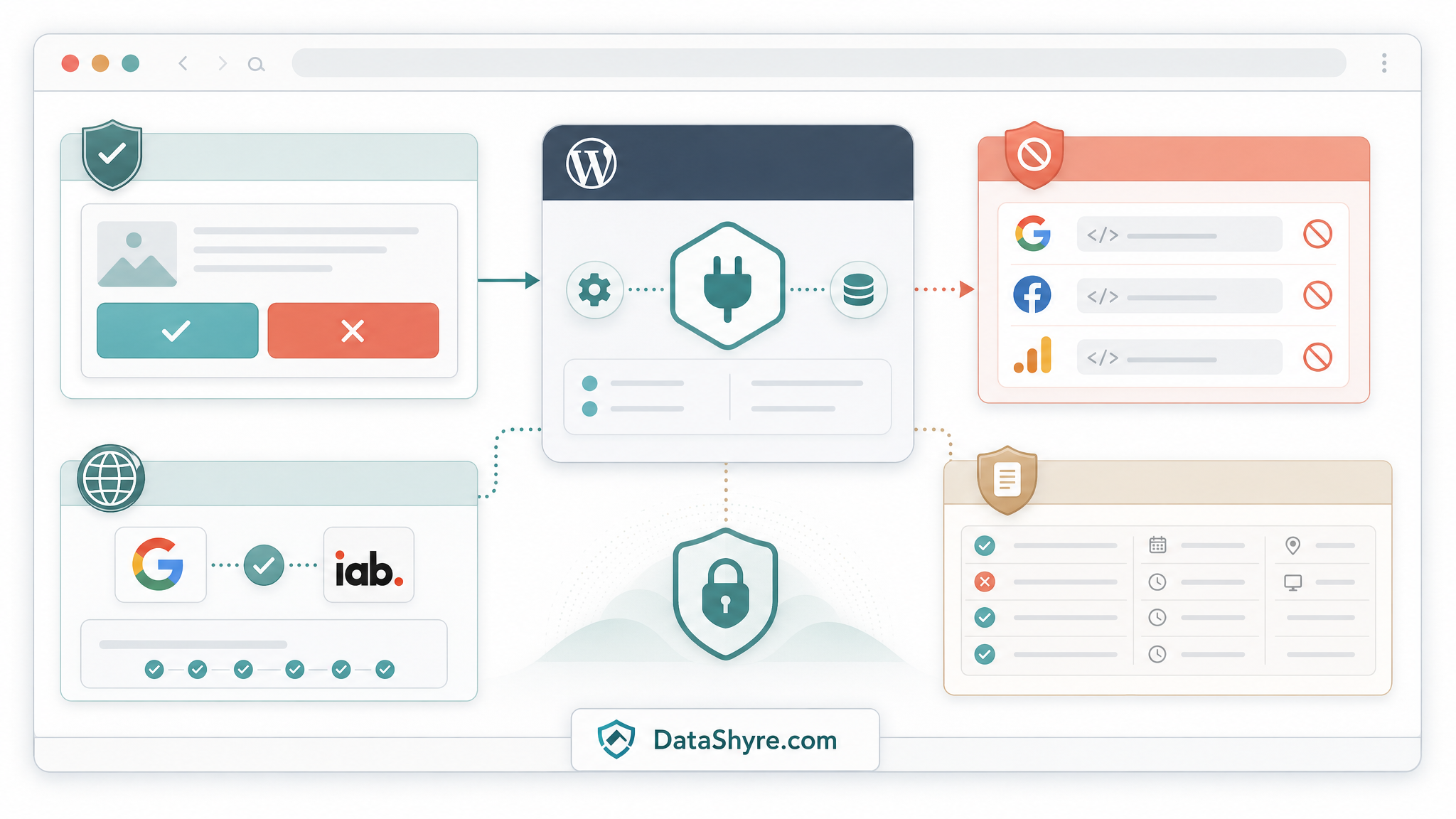
4. It understands WordPress, not just browser cookies
This point is easy to miss if you only compare screenshots.
WordPress now has the WP Consent API ecosystem, but even its own plugin description is clear about the limitation: it standardizes consent communication between supporting plugins, and it does not handle consent by itself. It also warns that third-party scripts still need blocking through a consent management plugin.
That means your evaluation should include the messy WordPress layer:
- Does the plugin work with the plugins that set cookies or tracking on your site?
- Does it handle embeds, tag-manager injections, and scripts loaded through themes or custom code?
- Does it fail safely when a plugin does not support the consent API?
If the answer to those questions is fuzzy, you probably do not have a WordPress solution yet. You only have a banner.
5. It supports your ad stack if you monetize EU, UK, or Swiss traffic
Some WordPress sites only need a clean consent layer for analytics and embeds. Others also need the plugin to cooperate with Google advertising requirements.
If you serve Google ads to users in the EEA, the UK, or Switzerland, Google still requires a certified CMP integrated with the IAB Transparency and Consent Framework. Google also pushed the TCF transition forward in 2026: TCF v2.3 became mandatory for new consent strings created on or after March 1, 2026.
So if your site is monetized, ask harder questions:
- Is the plugin part of a Google-certified CMP path where required?
- Can it pass the right consent string to your ad and measurement tags?
- Has the vendor updated for TCF v2.3 rather than leaning on older documentation?
This is one place where a plugin can be technically neat but operationally outdated.
6. It leaves records another human can understand later
You are not just buying a banner. You are buying a control system that somebody on your team will have to explain later to legal, marketing, a client, or an auditor.
Look for banner versioning, timestamps, category-level choices, and a record of how consent was changed or withdrawn. You do not need an elaborate archive for every small site, but you do need enough evidence to show what the visitor saw and what the site did in response.
That last part matters because the trouble rarely starts with the banner launch. It starts after a redesign, a marketing script change, or a plugin update that quietly alters behavior.
Bottom line
The best gdpr cookie consent plugin is not the one with the nicest template gallery. It is the one that survives real WordPress conditions: optional scripts blocked before consent, refusal and withdrawal kept simple, ad-stack requirements handled when needed, and records left behind when the site changes.
If a vendor can do those six things well, you are looking at a serious consent tool. If it cannot, the GDPR branding is mostly packaging.
Sources
- EUR-Lex
- Information Commissioner’s Office
- European Data Protection Board
- CNIL
- WordPress.org
- Google Ad Manager Help
- Google AdSense Help