

GDPR Consent Management in 2026: A Working Checklist for Product and Marketing Teams
GDPR consent management is easy to oversimplify. Teams talk about the banner, maybe the wording on the first layer, and then move on. The real job is broader. You need a usable choice at collection, a reliable signal flowing into the tools that depend on that choice, a withdrawal path that actually shuts things off, and records that hold up when someone asks what happened.
That is still the standard in 2026. The GDPR definition of consent in Article 4(11) is unchanged: it must be freely given, specific, informed, and unambiguous. Article 7 adds two operational tests that matter every day: the controller must be able to demonstrate consent, and withdrawing it must be as easy as giving it. The European Data Protection Board’s consent guidance remains the practical reference point for how those rules work in product flows, especially around clarity, granularity, and withdrawal.

What the control actually covers
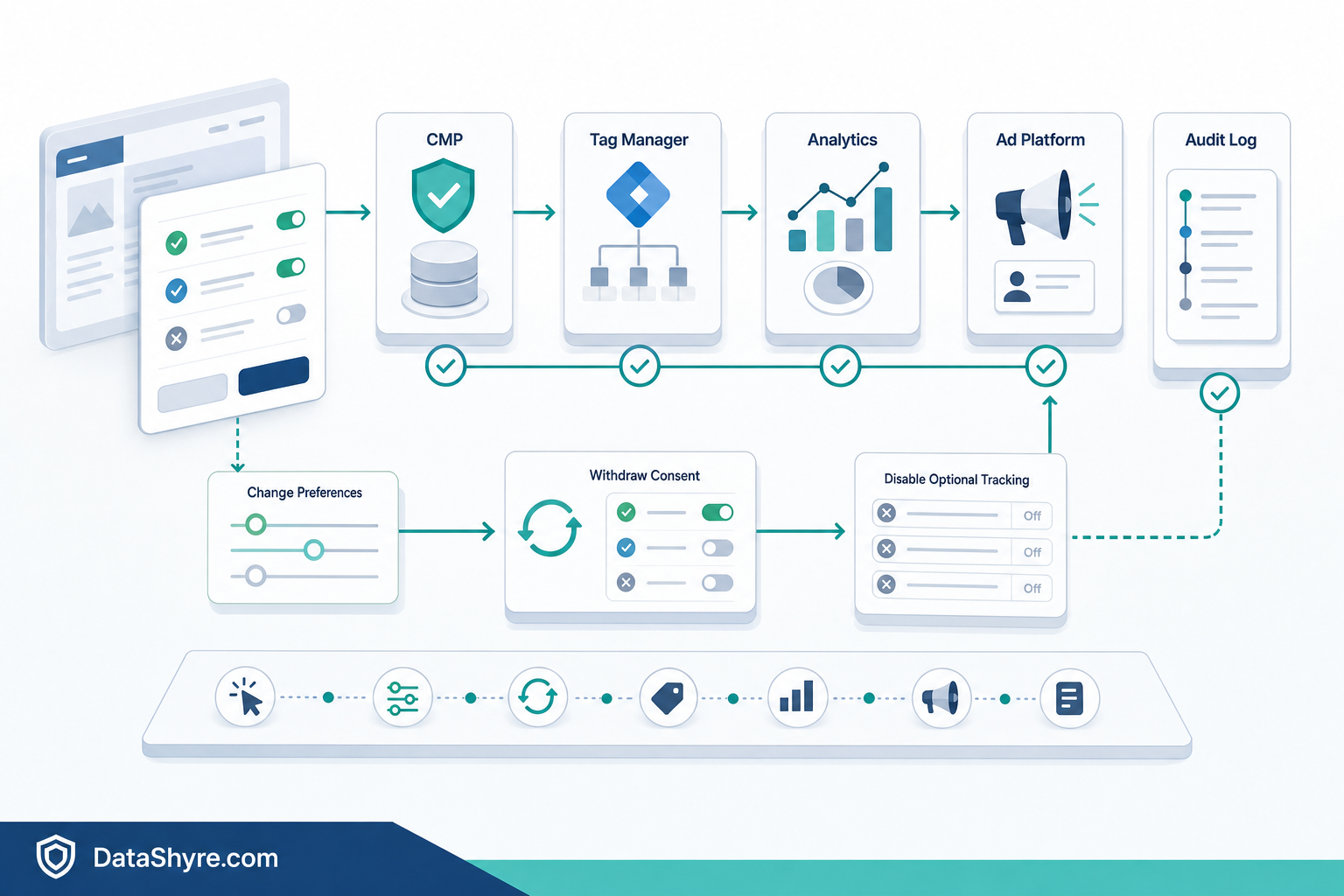
The phrase sounds narrow, but the work crosses several systems. The banner or preference center collects the choice. Tag managers, SDKs, analytics tools, ad platforms, CRMs, and experimentation tools then need to respect it. If one part of that chain ignores the signal, the whole control weakens.
That is why the safest mental model is not “banner compliance.” It is consent operations. If you want a product view of the software side, our guide to choosing a GDPR consent management platform helps. If you need the cookie-specific rule set, the companion checklist on GDPR cookie consent requirements is the better read.
Why the operational bar still matters in 2026
Recent regulator and platform activity says the same thing from different angles.
On July 14, 2026, the EDPB said the Belgian DPA must assess the merits of a NOYB cookie banner complaint rather than dismiss it on procedural grounds. That does not create a new consent rule by itself, but it does show cookie-banner disputes are still live enforcement territory. In the UK, the ICO published final storage and access technologies guidance on April 29, 2026 covering cookies, tracking pixels, device fingerprinting, and related tools. William Malcolm of the ICO described that package as “clear, practical guidance,” which is a fair summary of where the market is now: the legal standard is familiar, but teams still have to implement it cleanly.
The platform layer matters too. Google’s current Ad Manager help documentation says publishers serving personalized ads in the EEA, UK, or Switzerland need a Google-certified CMP integrated with the IAB TCF. That is not the same thing as full GDPR compliance, and Google says so explicitly. Still, it is a useful reminder that modern consent management is not just a legal checkbox. It is an integration problem with revenue consequences.
A working checklist for teams
1. Capture consent by real purpose, not vague outcome
If your first layer only says you use data to “improve experience,” you are leaving too much unsaid. People should be able to understand whether they are agreeing to analytics, advertising, personalization, or another distinct purpose. Purpose-level clarity is where valid capture starts.
2. Make refusal easy on the first pass
This one is still a fast gut check. In a 2024 speech, UK Information Commissioner John Edwards said it should be “just as easy to reject all non-essential cookies” as it is to accept them. If refusal takes more clicks, more hunting, or a separate screen while acceptance is immediate, the design is pulling in the wrong direction.
3. Block downstream tools until the signal exists
This is where plenty of polished setups fail. The banner may look fine while tags still fire early, identifiers still get written, or mobile SDKs still initialize before a user makes a choice. GDPR consent management only works when the systems downstream are gated, not just labeled.
4. Sync the signal across vendors and internal tools
Consent often breaks in the handoff between systems. Marketing has one view, product has another, and ad tech has a third. If a preference change updates the CMP but not analytics, remarketing, CRM enrichment, or data exports, your control is partial at best. This is also where platform requirements become practical. In Google’s words, it will “require all partners” using certain publisher products to use a certified CMP for in-scope personalized ads. Whether or not your stack depends on Google advertising, the broader lesson is the same: consent has to travel.
5. Keep records that explain what happened
A screenshot is not enough. Teams should be able to show which notice version appeared, what purposes were presented, what choice was recorded, when it changed, and how that state was passed to dependent vendors or tags. Article 7’s proof requirement is not abstract. It turns into auditability very quickly.
6. Test withdrawal like a user, not like a project plan
Accept first. Reopen preferences. Change the setting. Reload. Check network calls and storage again. Then confirm the updated state reaches the systems that were relying on the earlier signal. This sounds basic, but it is still one of the most common weak spots because it forces product, engineering, and marketing tooling to stay in sync after the first interaction.
What good looks like
Good consent management is boring in the best way. A user makes a choice once. The site respects it before any optional tracking starts. Preference updates are easy to find. Internal teams can retrieve a clean record without reconstructing events from five dashboards. That is the point.
If your current setup depends on manual patches, tribal knowledge, or a hope that no one checks the downstream flow, it is worth tightening now. This article is practical guidance, not legal advice, but the business takeaway is simple: consent management should be treated as an operating control with owners, tests, and evidence, not as a one-time website project.
Sources
- EUR-Lex
- European Data Protection Board
- UK Information Commissioner’s Office
- Google Ad Manager Help
- Google Ad Manager Blog