

User Consent in 2026: What Businesses Need to Capture, Respect, and Prove
A lot of teams still treat user consent as a banner, a checkbox, or a one-time UX task. That is too narrow now. In 2026, consent is really an operating rule: what you ask for, when you ask, what happens after a yes or no, and what evidence you can show later.
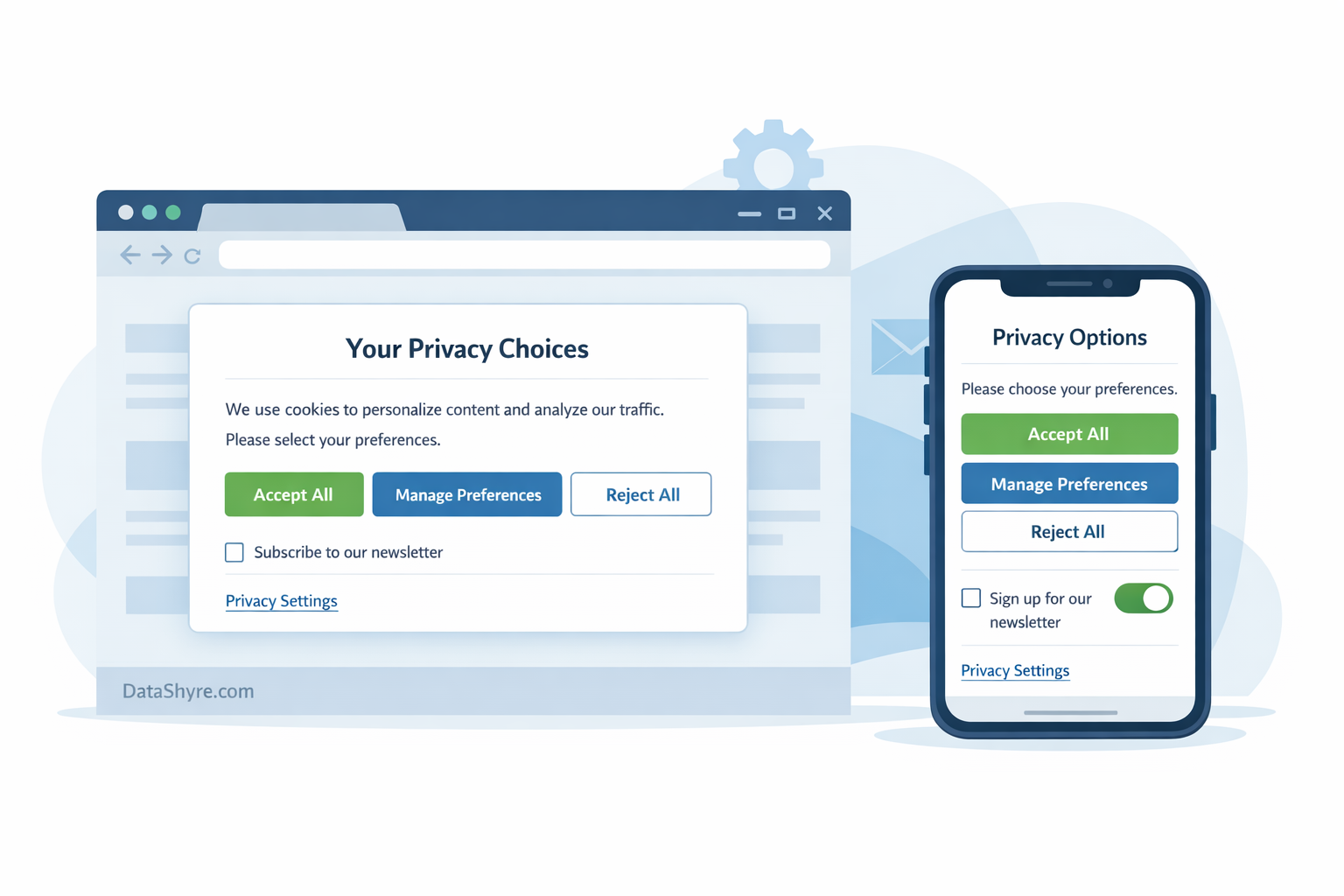
If you need the website-tracking baseline first, our guide to what cookie consent is is the quickest starting point. If your team is evaluating tooling, this consent management platform checklist helps frame the buying questions.
What consent means in practice
At a practical level, consent is permission for a specific use of data or a specific privacy-sensitive action. The hard part is not collecting the click. It is making sure the request is clear, limited, and enforced.
That usually means four things:
- the request is tied to a real purpose;
- the person can make a genuine choice;
- the system changes behavior based on that choice; and
- the business can show what happened later.
The UK ICO’s latest storage-and-access technologies guidance, published on April 29, 2026, puts the standard in a useful way. William Malcolm, the ICO’s Executive Director for Regulatory Risk and Innovation, said people should have “meaningful control over how their data is used.” That is a better internal test than asking whether a banner or form technically appeared.
Where consent usually breaks down
The pattern is familiar: the wording looks fine, but the product behavior does not match it.
1. One consent choice is stretched across unrelated uses
A person agrees to receive a download link, and the business quietly treats that as permission for product emails, ad retargeting, and data sharing with partners. That is where consent gets sloppy fast.
Separate choices are not always the prettiest option for conversion teams, but they are often the cleaner option for risk.
2. Refusal exists on paper, not in the flow
This is still common in websites, apps, and connected TV experiences. The control exists somewhere, but it is buried, slow, or incomplete.
That is exactly why the California Department of Justice’s February 11, 2026 settlement with Disney matters beyond streaming apps. Attorney General Rob Bonta said opting out “should not be complicated or cumbersome.” If a business requires people to hunt across devices, services, or account screens, the interface itself becomes part of the compliance problem.
3. Tags and SDKs start before the choice is applied
This is the classic implementation miss. A banner says one thing while analytics, advertising, or personalization tools do another.
Google’s current consent mode documentation is plain about the sequence: set default consent states before measurement happens, then update those states after the user interacts with consent settings. If your stack starts collecting first and sorting out permission later, the control is mostly cosmetic.
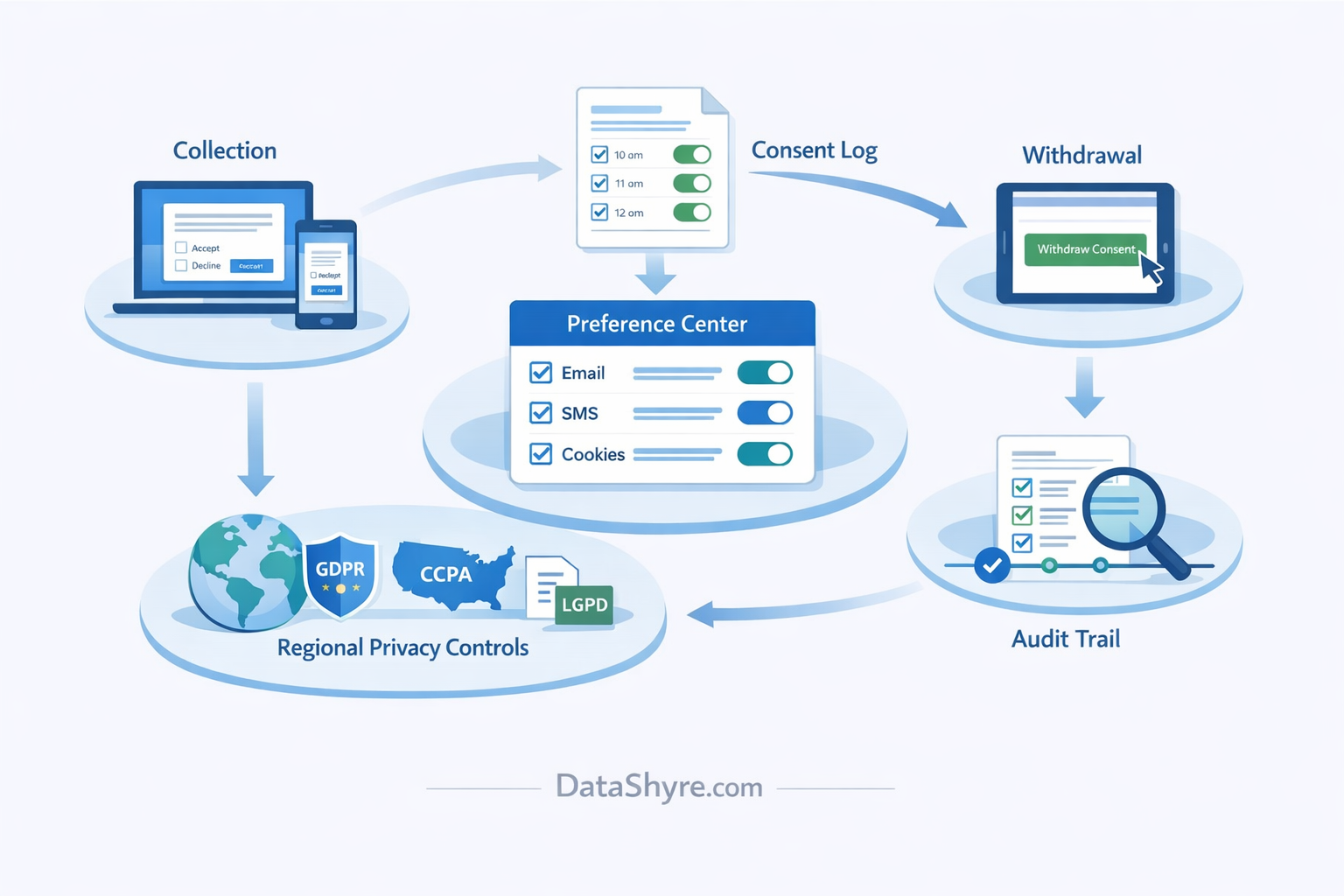
4. Consent logs are too weak to be useful
A timestamp alone is not much help if you cannot connect it to the notice shown, the choice made, the region, and the downstream systems that were supposed to honor it.
Good records do not have to be bloated. They do need enough detail to answer basic questions later: what did the person see, what did they choose, when did they change it, and did the product actually follow that choice?
What a strong user consent process looks like in 2026
A strong user consent process is less about flashy UX and more about disciplined operations. For most teams, that means:
- mapping every consent-dependent touchpoint across websites, apps, forms, and embedded tools;
- separating consent for different purposes when the uses are genuinely different;
- making reject, withdraw, and preference changes easy to find;
- blocking or downgrading data collection until the right signal exists where the law requires it; and
- keeping evidence that survives an audit, a vendor review, or a regulator question.
This is also where regional context matters. EU and UK teams still need to think carefully about prior permission for many non-essential tracking uses. California teams often spend more time on usable opt-out rights, Global Privacy Control handling, and whether sale or sharing actually stops across devices and services. If you want the California side in more detail, our California consumer privacy guide is the closest companion.
A simple internal test for business teams
If you are trying to pressure-test your setup, ask five blunt questions:
- Could a normal user say no without extra friction?
- Does the product actually change behavior after that no?
- Are marketing, analytics, and personalization choices separated where they should be?
- Can the person reverse the decision later without a support ticket?
- Can your team prove all of the above with records that make sense?
If even one of those answers is shaky, your consent program probably needs work.
Why consent is now a trust signal, not just a legal checkbox
Enterprise buyers, implementation partners, and privacy reviewers increasingly look past surface compliance. They want to know whether choices are real, whether defaults are conservative, and whether the stack behaves predictably under regional rules.
That is why consent has moved out of the design corner. It now touches revenue operations, data architecture, marketing automation, mobile development, and procurement. A messy setup creates more than legal risk. It creates sales friction, integration delays, and cleanup work later.
The good news is that the fix is usually not mysterious. Start narrow. Pick one journey: a web banner, a lead form, an in-app preference center, or a connected account flow. Make the choice clear. Make the system honor it. Then make the proof easy to retrieve.
Bottom line
The companies that handle user consent well in 2026 are not the ones with the most polished banner. They are the ones whose products, logs, and workflows all tell the same story.
That story should be simple: we asked clearly, we respected the answer, and we can prove it.
Sources
- UK ICO
- California Department of Justice
- Google Developers