

GDPR Cookies Consent in 2026: What Your Banner Still Has to Prove
If you are reviewing gdpr cookies consent on August 7, 2026, the useful question is not whether your banner looks modern. It is whether non-essential cookies and similar tracking tools stay off until the person chooses, whether refusing is as easy as accepting, and whether the result still holds up once your real tag stack starts running.
That is still an active compliance issue, not a settled design problem. On April 29, 2026, the UK ICO finalized its guidance on storage and access technologies and made clear that the review reaches beyond classic browser cookies into tracking pixels, device fingerprinting, and similar tools. On July 14, 2026, the European Data Protection Board said the Belgian DPA must assess the merits of a cookie-banner complaint involving broadcaster VRT instead of dismissing it on procedural grounds. The official direction is still practical: user choice has to be real, visible, and technically enforced.
The European Commission’s current guidance still provides the cleanest baseline. Valid consent must be freely given, specific, informed, and expressed through a clear affirmative act. It also keeps the withdrawal standard short and useful:
“It should be as easy to withdraw as to give consent.”
>
European Commission
If you want the companion reads first, start with our guides to GDPR cookie consent, GDPR cookie consent examples, and GDPR consent requirements. This article is narrower. It is the practical review I would use before trusting gdpr cookies consent on a live site this week.
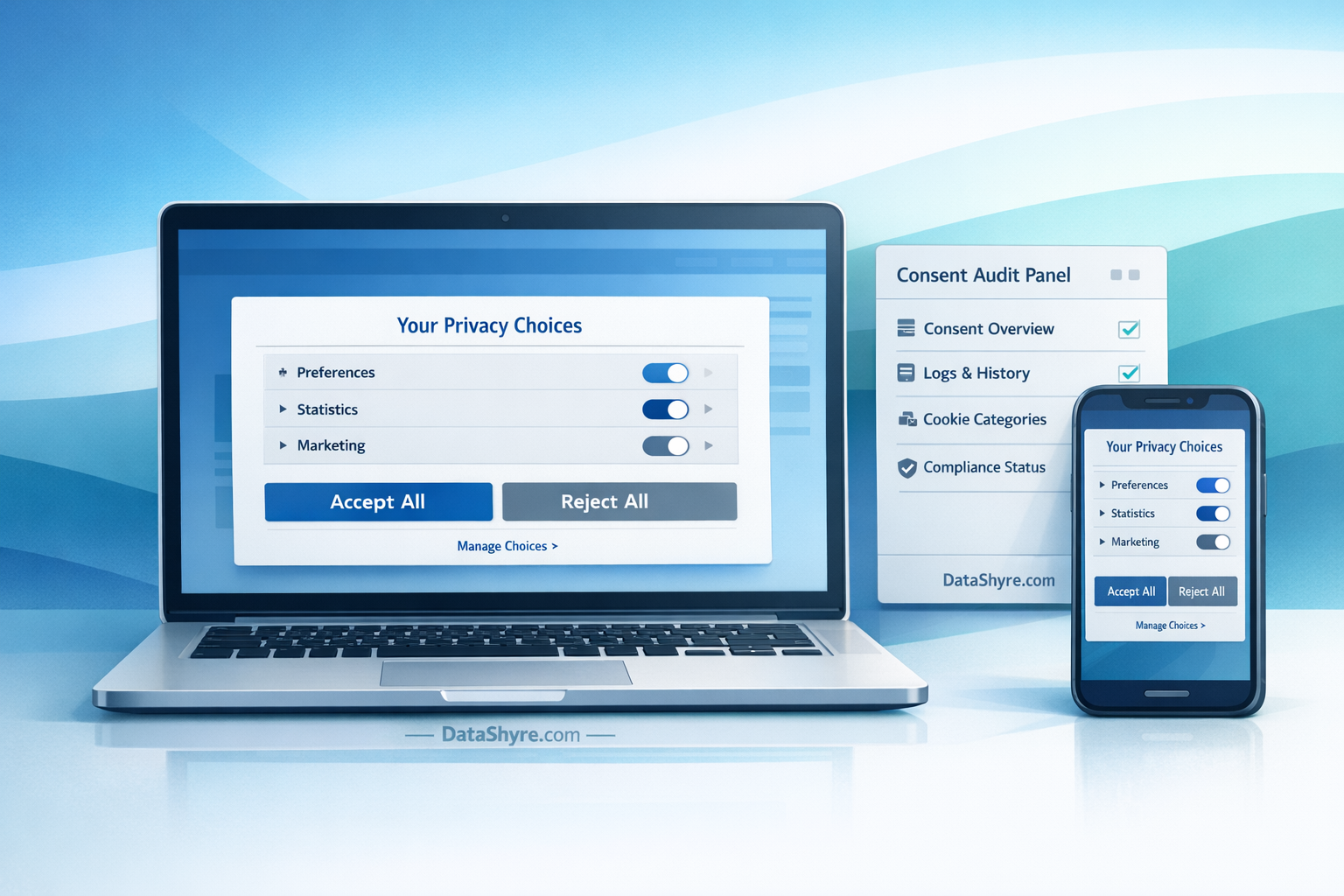
What GDPR cookies consent has to cover now
For most websites, gdpr cookies consent is no longer just a banner-copy issue.
It usually has to govern:
- analytics and advertising tags;
- pixels, scripts, and similar tracking technologies;
- embedded media, maps, chat, and third-party widgets;
- later preference changes or withdrawal;
- records that show what the person saw and chose;
- downstream tools that have to obey the same consent state.
That is why a polished interface can still fail a serious review. The visible layer may look compliant while the real site keeps loading optional tools too early or records a preference that never reaches the systems that matter.
The ICO’s April 2026 launch note captured the bigger goal well when William Malcolm said people need:
“meaningful control over how their data is used.”
>
William Malcolm, ICO
That is the standard I would apply to gdpr cookies consent in 2026.
7 checks that still matter
1. Verify prior blocking on pages where optional tools actually fire
This is still the fastest way to expose the gap between banner design and runtime behavior.
The ICO’s finalized 2026 guidance matters because it expressly covers cookies, tracking pixels, device fingerprinting, and similar storage-and-access technologies. That means your test should not stop at whether a cookie file appears in the browser. It should include scripts, pixels, embedded tools, and any equivalent tracking behavior.
For gdpr cookies consent, test the pages that usually break first:
- the homepage;
- campaign landing pages;
- pages with video, maps, chat, or forms;
- checkout or account flows if optional measurement or ads tools appear there.
If non-essential technologies activate before consent where prior consent is required, the banner is not the real control.
2. Make refusal as usable as acceptance
This is one of the clearest live enforcement themes.
France’s CNIL still puts the rule plainly:
“rejecting cookies should be just as easy as accepting them.”
>
CNIL
That is an immediate review filter for gdpr cookies consent. If Accept all is prominent but Reject all is hidden in a second layer, softened into ambiguous wording, or visually downgraded into a low-contrast text link, the interface is steering the person instead of collecting a free choice.
This is often where sites fail without realizing it. The legal text may be decent, but the interaction design still nudges the answer.
3. Check whether purposes are specific enough to support informed consent
The European Commission and the ICO both keep the same core message: consent must be informed and specific.
For gdpr cookies consent, that means people should be able to distinguish between genuinely different purposes, such as:
- strictly necessary functions;
- analytics;
- personalization;
- advertising;
- embedded third-party media where relevant.
Vague labels such as experience or partners are usually weaker than they look. A person should be able to understand what will happen if they allow a category and what stays off if they refuse it.
4. Follow the consent signal into Google tags and publisher workflows
The banner is only one layer. The live tools behind it have to receive the same state at the right time.
Google’s current consent mode guidance still says you should set the default consent state before a user grants consent, update the state based on the person’s interaction, and make sure the update is tracked on the page where it occurs before any page transition. That makes gdpr cookies consent a technical sequencing problem, not only a copy problem.
If the site depends on ad monetization, there is a second check. Google’s current publisher guidance still says a certified CMP integrated with the IAB Transparency and Consent Framework is required when serving personalized ads to users in the EEA, UK, or Switzerland. That does not define GDPR by itself, but it is still an operational requirement that many publisher stacks have to satisfy.
So a serious gdpr cookies consent review checks whether:
- default consent is set before tags run;
- granular choices change downstream tag behavior;
- updates and withdrawals propagate correctly;
- publisher-specific requirements are tested separately from the banner design.
5. Test withdrawal as a real user action, not a theoretical setting
Many implementations look fine on the first click and break on the second.
Accept optional categories, reopen preferences, withdraw them, and inspect what changes. The European Commission’s standard is still the right one: withdrawal should be as easy as giving consent.
For gdpr cookies consent, the return path should be easy to find, whether it lives in:
- a floating privacy icon;
- a footer link such as
Privacy Settings; - an account-level preference center;
- another persistent entry point a normal user can find later.
If the preference can technically be changed but the user has to hunt for it or the tags continue running as before, the setup is weaker than it looks.
6. Review the proof model, not just the interface
Sooner or later, someone will ask what happened on a specific date.
Good gdpr cookies consent records usually connect:
- the banner or preference-center version shown;
- the purposes or categories presented;
- the user’s choice and timestamp;
- later changes or withdrawals;
- the downstream behavior that was supposed to follow.
This is the difference between having a banner and having evidence. A stored yes-or-no value alone is often not enough to explain what the person actually saw or what the site actually did next.
7. Re-test after every meaningful stack change
Consent drift is common.
New tags are added. A tag manager container is republished. A video provider changes. A performance plugin alters load timing. The banner still looks identical while the live behavior has changed materially underneath it.
That is why gdpr cookies consent should be treated as release work, not as a one-time interface task. The EDPB’s July 2026 VRT decision is useful here because it is a reminder that cookie-banner disputes still reach the merits. The topic has not become low-risk just because most sites now have a banner.
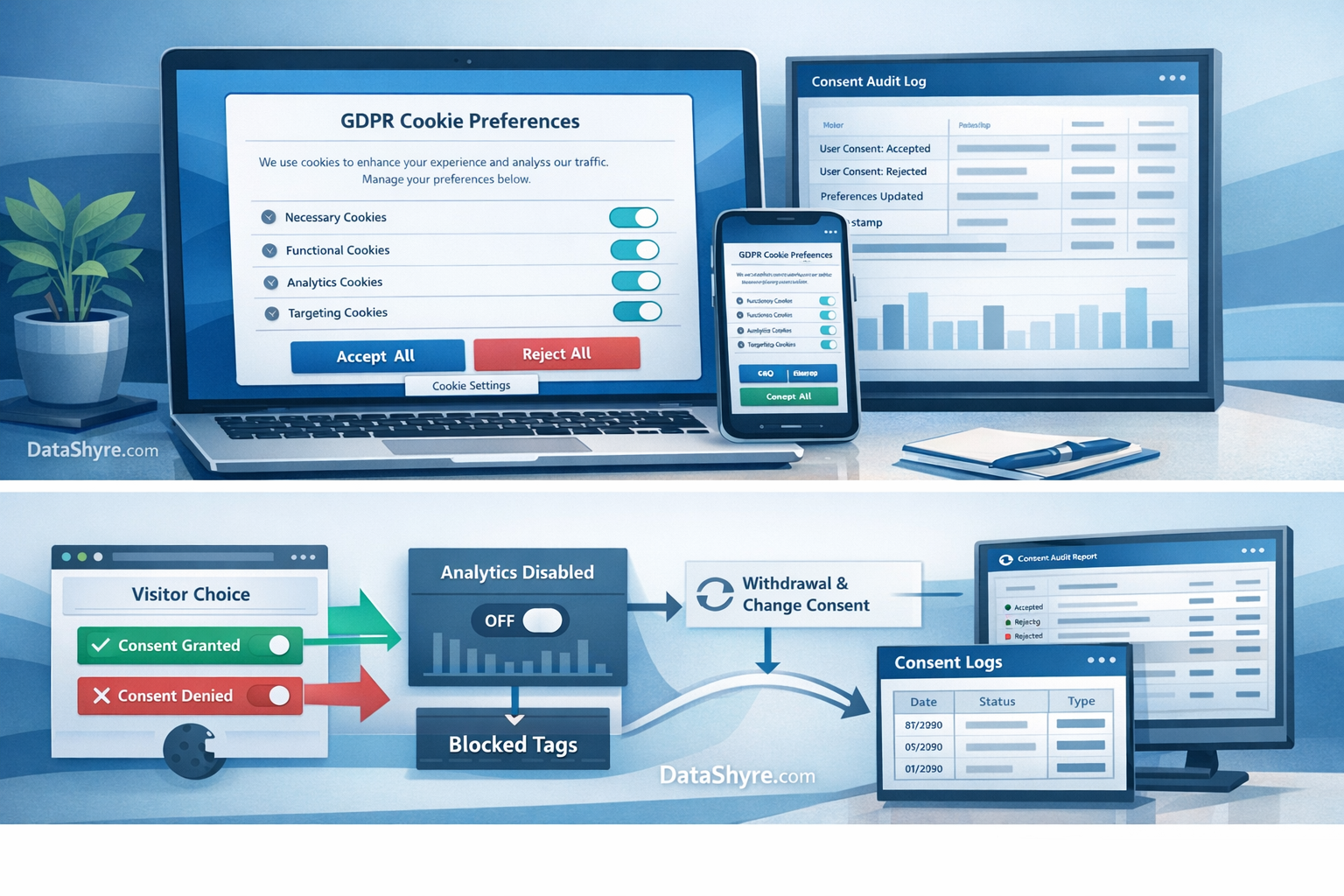
A short review sequence for this week
If I were checking gdpr cookies consent today, I would use this order:
- Open a clean browser session on the live site.
- Inspect what loads before any banner interaction on key templates.
- Click
Reject alland confirm optional technologies stay off. - Allow one optional category only and verify downstream behavior changes.
- Reopen preferences and test withdrawal on the same visit.
- Review whether the records match what the user just saw and did.
- If the site serves personalized ads, run the Google publisher and CMP checks separately from the visual review.
That sequence exposes more real risk than comparing banner layouts in isolation.
Bottom line
Strong gdpr cookies consent in 2026 still comes down to the same practical standard: block optional tracking before choice, make refusal as easy as acceptance, explain purposes specifically enough to be understood, make withdrawal easy later, and keep records that still make sense when someone asks questions.
If your current setup can prove those points on live pages, you are much closer to a consent experience that works in production and reads credibly in a regulatory review. If not, the banner may be published while the compliance work is not.
Sources
- UK ICO: Final storage and access technologies guidance published
- UK ICO: Guidance on the use of storage and access technologies
- European Commission: When is consent valid?
- European Commission: What if somebody withdraws their consent?
- European Data Protection Board: EDPB requires Belgian DPA to handle the merits of NOYB cookie banner complaint
- CNIL: Dark Patterns in Cookie Banners: CNIL issues formal notice to website publishers
- Google for Developers: Set up consent mode on websites
- Google Ad Manager Help: Google consent management requirements for serving ads in the EEA, the UK, and Switzerland (for publishers)
This post was updated on August 7, 2026 using current official regulator and platform materials available at publication time.