

GDPR Cookie Consent Examples: Best Practices & Implementation 2026
Published Keyword: gdpr cookie consent examples
Executive Summary
As of 2026, GDPR cookie consent mechanisms face intensified enforcement from Data Protection Authorities across the EU. Organizations must implement compliant cookie consent examples that prioritize user control, transparency, and clear affirmative action to avoid substantial fines. This post reviews current regulatory expectations and practical implementation examples.
Why Effective GDPR Cookie Consent Matters
- Legal Compliance – GDPR requires prior, explicit consent before processing personal data via non-essential cookies
- User Trust – Transparent consent processes build trust and improve user engagement rates
- Enforcement Readiness – Proper documentation protects against fines from data protection authorities
- Operational Efficiency – Standardized consent mechanisms reduce complexity across digital properties
Key GDPR Requirements for Cookie Consent
Based on current 2026 guidelines from official sources:
| Requirement | Description | Source | |————-|————-|———| | Freely Given | Consent must be voluntary without coercion or negative consequences for refusal | GDPR Article 4(11) | | Specific & Granular | Separate consent for different cookie purposes; users must be able to consent to some purposes while refusing others | GDPR Recital 32 | | Informed | Clear information about data controller, types of cookies, purposes, storage duration, and right to withdraw | GDPR Articles 13-14 | | Unambiguous | Clear affirmative action required; pre-ticked boxes or inactivity do not constitute consent | GDPR Recital 32 | | Easy Withdrawal | Withdrawing consent must be as easy as giving it, accessible at any time | GDPR Article 7(3) | | Proof of Consent | Organizations must maintain records demonstrating when and how consent was obtained | GDPR Article 7(1) |
The European Data Protection Board (EDPB) has explicitly stated that “dark patterns”—design choices that mislead or manipulate users into giving consent—are non-compliant and can invalidate consent.[^1]
Practical Cookie Consent Examples
Below are real-world cookie consent examples aligned with 2026 regulatory expectations:
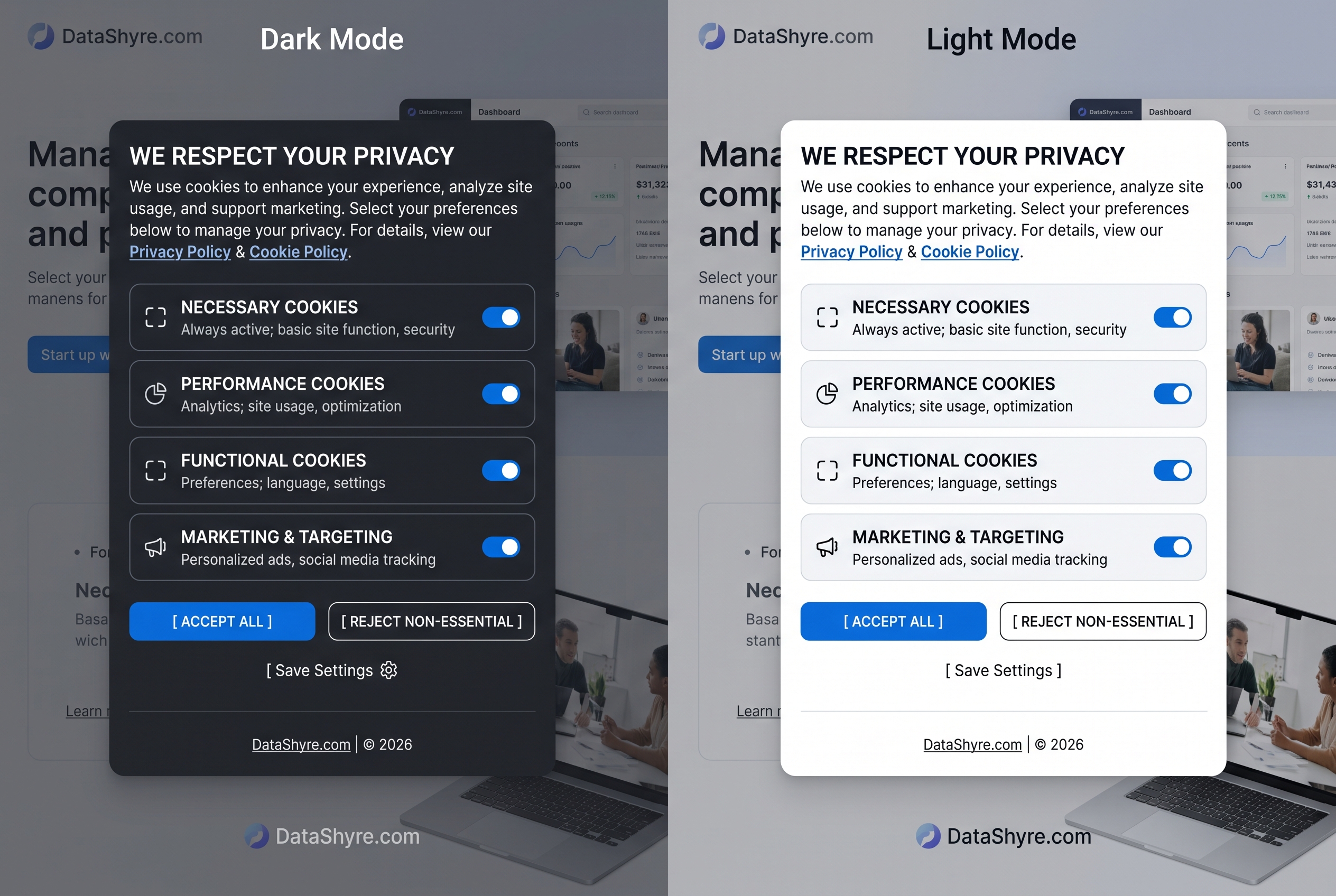
Example 1: Granular Category-Based Banner
This approach allows users to accept or reject specific cookie categories, meeting GDPR’s requirement for granular consent:
“html
“
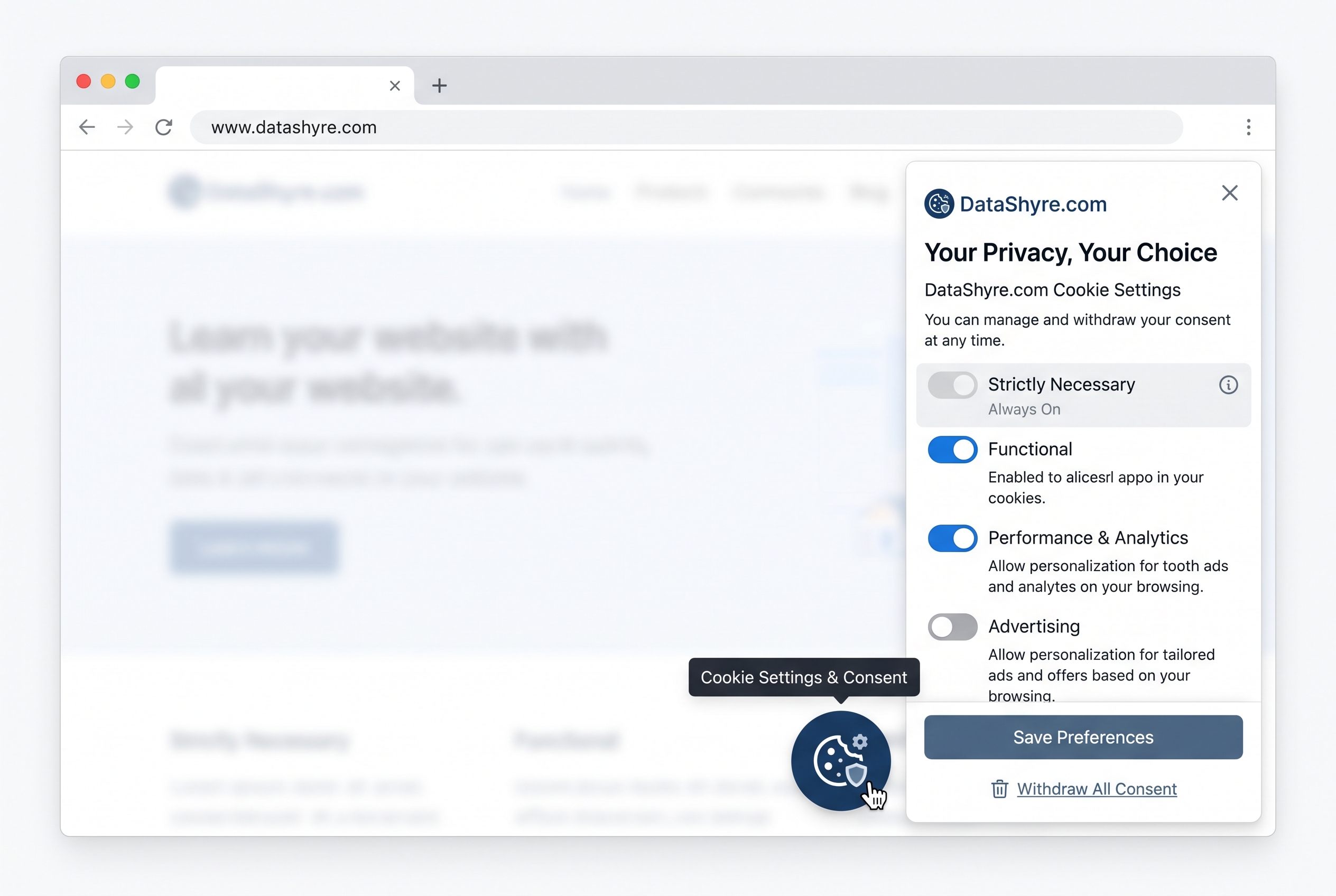
Example 2: Persistent Consent Management Icon
A persistent icon allows users to manage preferences at any time, ensuring easy withdrawal:
“html “
Both examples follow the ICO’s 2026 guidance: “Users must be able to accept or reject each purpose or category of cookies, not just accept or reject all cookies.”[^2]
Implementation Best Practices
- Granular Controls – Allow users to accept/reject different categories (essential, analytics, marketing, advertising) separately
- Clear, Plain Language – Avoid legal jargon; ensure consent requests are easily understandable
- Equal Prominence – Make “Accept All” and “Reject All” buttons equally visible and accessible
- Easy Withdrawal – Include persistent consent management icon/link accessible from all pages
- Maintain Consent Logs – Store timestamp, version of consent request, and user choices for audit purposes
- Regular Reviews – Update consent mechanisms to align with evolving guidelines and regulations
- Geographic Considerations – Account for Member State variations in GDPR implementation
Related Resources
- GDPR Cookie Consent 2026 Guide – Complete compliance overview
- GDPR Compliance Checklist 2026 – Step‑by‑step implementation guide
Images
Conclusion
Implementing effective gdpr cookie consent examples is essential for GDPR compliance in 2026. By prioritizing transparency, granular control, and easy withdrawal mechanisms, organizations can achieve regulatory compliance while building user trust and reducing enforcement risks.
Published: September 11, 2026
Keywords: gdpr cookie consent examples
[^1]: European Data Protection Board (EDPB), Guidelines 05/2020 on consent under Regulation 2016/679 (Version 2.1), 2021.
[^2]: UK Information Commissioner’s Office (ICO), “Guide to the GDPR and the Privacy and Electronic Communications Regulations,” updated 2026.