

Data Consent in 2026: When You Need It, When You Don’t, and What to Record
Data consent gets treated like the safe answer to every privacy question. It is not. In many cases, asking for consent when you would process the data anyway creates a weaker privacy posture, not a stronger one. It confuses users, muddies your records, and can leave your team defending permissions that were never really optional.
The better question is narrower: when does consent actually fit the use case, and what do you need to prove later? In 2026, that answer still depends on purpose, jurisdiction, and whether the person had a real choice.
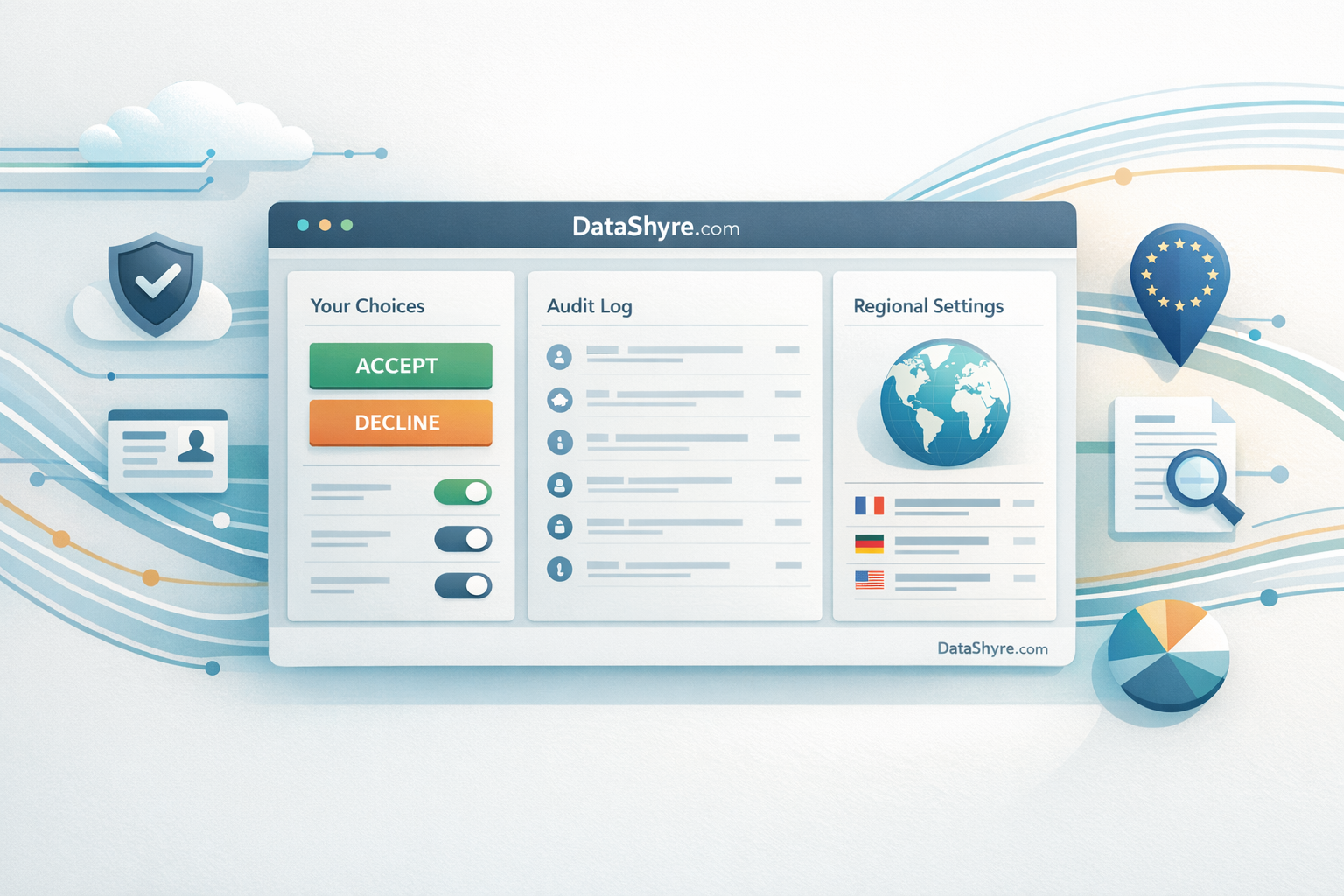
If you are building the broader playbook, our guides to user consent, GDPR consent requirements, and California consumer privacy add useful detail. This article focuses on the decision point: whether consent belongs in the flow at all.
When data consent is the right basis
Under GDPR, consent only works when it is freely given, specific, informed, and unambiguous. The ICO makes the operational standard even clearer: people should get separate choices for separate purposes, they should actively opt in, and they should be able to withdraw without friction.
That makes consent a good fit for optional processing. Think marketing emails someone genuinely signed up for, optional personalization, or non-essential tracking where the person can say no and still use the service. If a banner or form hides the reject path, bundles multiple purposes together, or treats silence as approval, the mechanism is already in trouble.
John Edwards put the point plainly in the ICO’s 2024 speech on cookies: it must be “just as easy to reject” as it is to accept. That line is about cookies, but the design principle travels well. Good consent flows feel reversible, narrow, and boring in the best possible way.
When consent is the wrong answer
This is where a lot of teams slip. If you need personal data to ship an order, provide account access, prevent fraud, or meet a legal obligation, consent may not be the right legal basis at all. Under UK GDPR guidance, if you would still process the data without consent, asking for it is misleading.
That matters because failed consent is not a harmless paperwork issue. It creates false user expectations and weak evidence. If somebody clicks “agree” only because the service blocks access otherwise, your record may show a yes while the law sees no real choice.
For U.S. teams, the mismatch shows up differently. California’s framework is often about notice and opt-out rights for adults, especially around sale or sharing, rather than universal opt-in consent. The California Privacy Protection Agency says businesses must honor opt-out preference signals such as Global Privacy Control as valid requests to stop sale or sharing. Ashkan Soltani, the agency’s executive director, said Californians need “meaningful access” to those signals. That is a useful reminder that privacy rights are not always delivered through a consent box.
Where the edge cases matter most
Three areas deserve extra care.
First, online tracking in Europe and the UK. If the purpose is not strictly necessary, the user needs a real yes-or-no decision before non-essential tracking starts. That is why the consent layer has to control behavior, not just display text.
Second, children. The FTC says the COPPA Rule was amended on April 22, 2025, and the agency’s 2025 update requires parents to opt in to third-party advertising uses. FTC Chair Lina M. Khan called that “active permission.” If your product reaches children, consent design stops being a UX preference and becomes a hard compliance requirement.
Third, minors in California. The CCPA is not a broad opt-in regime for adults, but the rules are different for consumers under 16 when a business sells or shares personal information. That narrower opt-in requirement is exactly why privacy teams need a purpose-by-purpose map instead of one generic consent model.
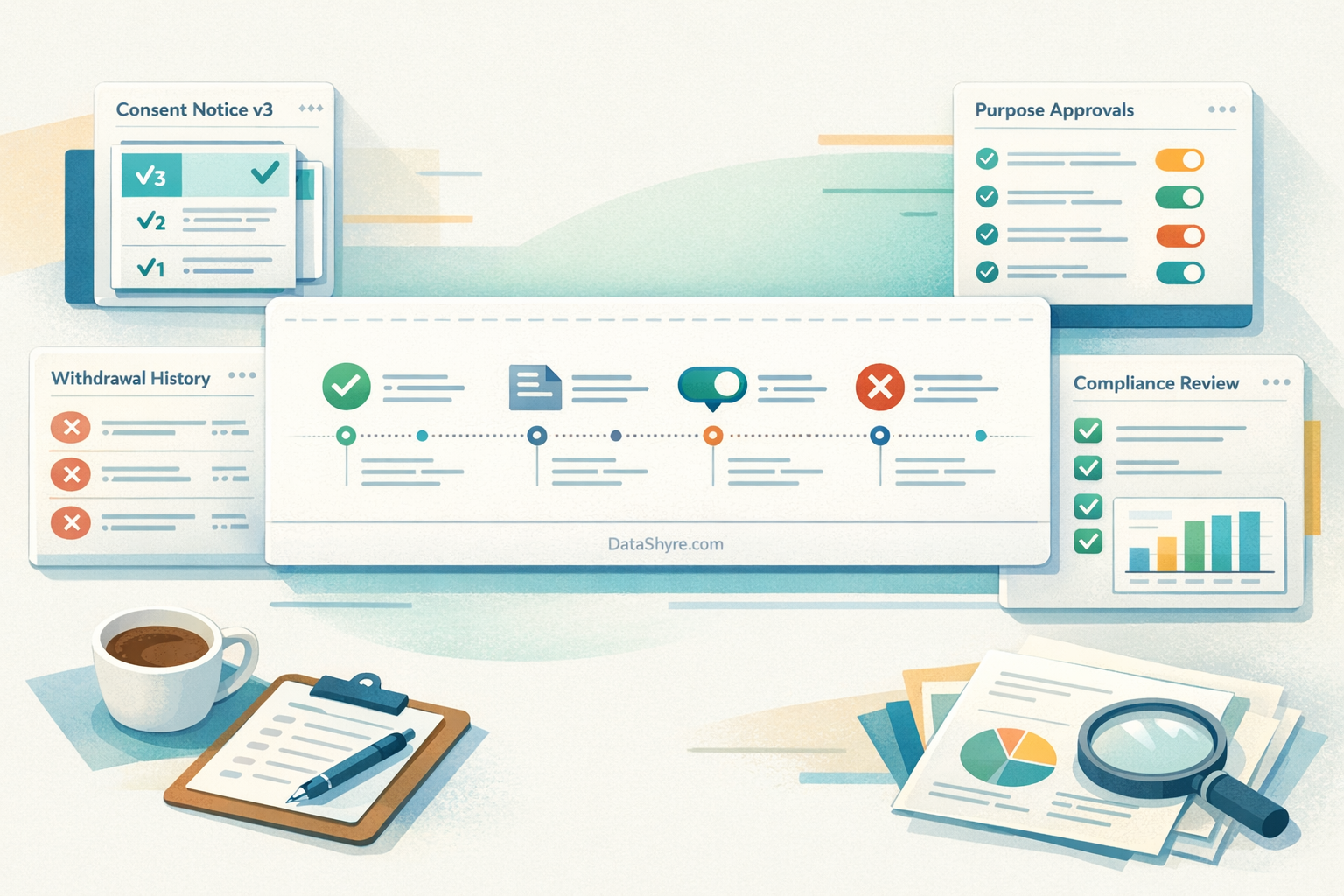
What to record when you rely on data consent
The collection step gets the attention. The recordkeeping step is what saves you later.
At minimum, keep five things:
- Who consented, and how you identified that person or device.
- When consent happened, including timestamp and region if rules vary by geography.
- What they were told at that moment, including the notice version and named third parties where relevant.
- What they agreed to, broken out by purpose instead of one blanket yes.
- When and how they withdrew, changed, or refreshed those choices.
The ICO’s checklist is still the right mental model here: who, when, how, and what you told people. If your team cannot reconstruct that later, you do not have a strong consent record.
One more practical rule: do not let consent logs live in only one interface. They should be accessible to privacy, engineering, support, and legal teams without requiring a specialist to decode them. Consent evidence that nobody can explain is operationally close to no evidence at all.
A simple decision rule for teams
Before you add a checkbox, ask three questions.
- Can the person actually say no without losing something they should reasonably still get?
- Is the purpose optional enough that consent makes sense instead of contract, legal obligation, or another basis?
- Can you prove the exact choice later and honor a change quickly?
If the answer to any of those is no, pause before adding more consent language. The cleaner move may be a different legal basis, a better notice, or an opt-out control instead of another prompt.
Bottom line
Strong data consent practice is not about collecting the most permissions. It is about using consent only where real choice exists, then keeping records that hold up when somebody changes their mind or asks questions later. That is a tighter standard than many teams want. It is also the one that ages better.
Sources
- General Data Protection Regulation
- Information Commissioner’s Office
- European Data Protection Board
- California Privacy Protection Agency
- Federal Trade Commission