

CPA Consent Management Platform in 2026: 7 Colorado Checks Before You Choose One
If you are evaluating a cpa consent management platform on August 8, 2026, the first thing to clarify is that this phrase usually points to Colorado Privacy Act operations, not a generic cookie banner.
That distinction matters because Colorado does not reduce privacy compliance to one consent button. The current official Colorado materials still split the work across consumer rights, opt-outs, Global Privacy Control handling, sensitive-data consent, privacy notices, and proof that the downstream systems actually changed. A serious platform has to help with all of that.
If you want the adjacent buyer context first, start with our guides to consent management platform in 2026, consent management platform best practices, and website privacy checker. This article is narrower. It is the seven-check review I would use before choosing one for a live Colorado program this week.
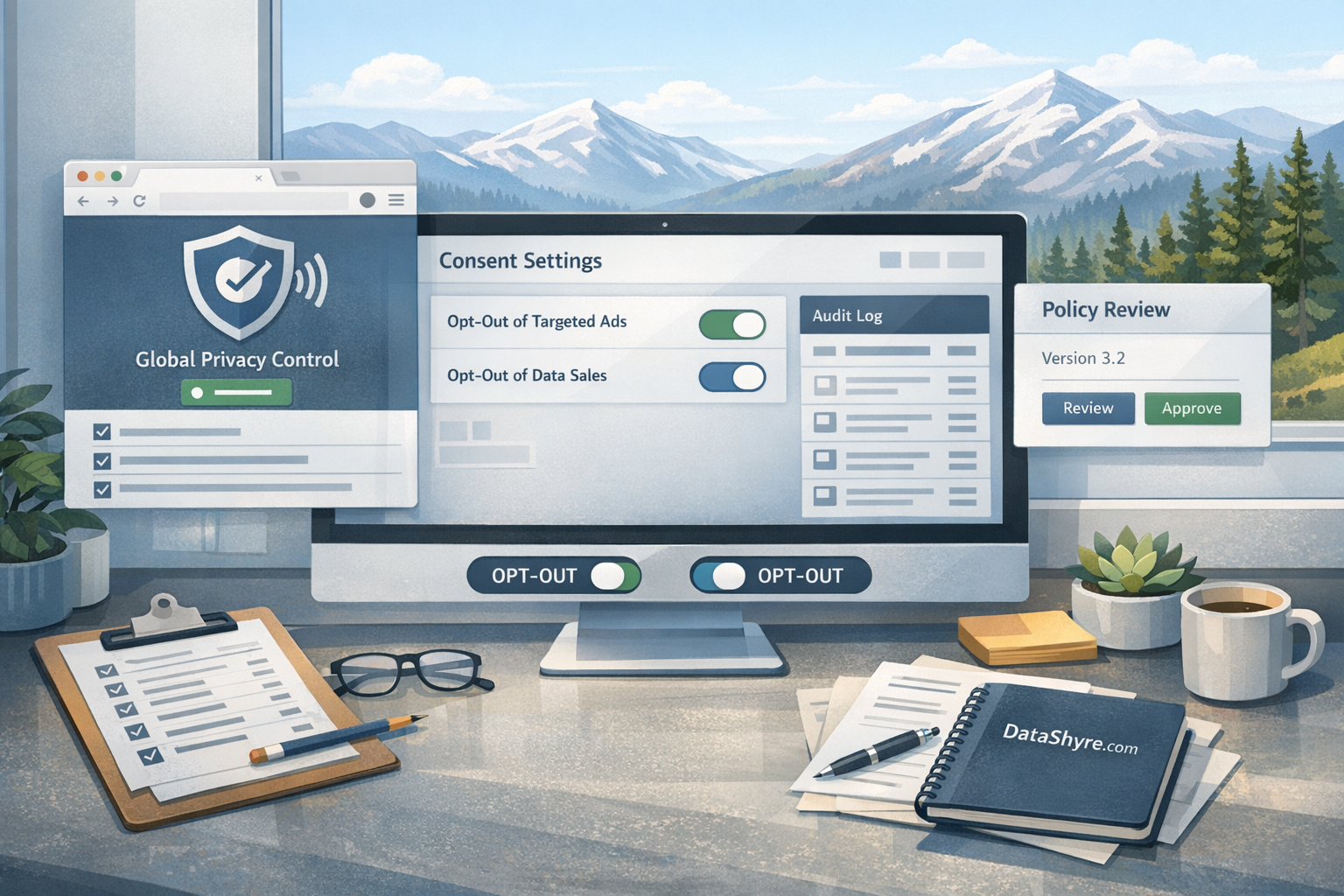
Why this category is more specific than it sounds
The hard part of this category is that Colorado requires several different control types at once.
The Colorado Attorney General’s CPA resource page says consumers have rights to access, delete, and correct their personal data, obtain it in portable form, and opt out of the sale of personal data, targeted advertising, and certain profiling. The same page says controllers have to describe their processing practices and opt-out methods in their privacy notices, and that universal opt-out handling has been required since July 1, 2024.
That means you should not buy one as if it were only a banner product. For many teams, the better question is whether the platform can act as a state-privacy control layer across web, app, vendor, and notice workflows.
What a CPA consent management platform should actually control
At a minimum, a credible platform should help connect:
- Colorado opt-outs for sale, targeted advertising, and certain profiling;
- browser-level signals such as Global Privacy Control;
- consent flows for sensitive data and some secondary uses;
- privacy-notice language and region logic;
- downstream suppression or routing inside the real data stack;
- records the team can review later.
If the tool only gives you a front-end preference prompt, it is probably too small for the job.
1. Separate Colorado opt-outs from actual consent events
This is the first buyer check because a lot of vendor demos flatten unlike things into one preferences table.
Under the Colorado Privacy Act, consumers can opt out of processing for targeted advertising, sale of personal data, and certain profiling. But the same statute also says a controller shall not process sensitive data “without first obtaining the consumer’s consent.” It also says controllers cannot use personal data for purposes that are not reasonably necessary to or compatible with the specified purposes unless they first obtain consent.
So a real tool should distinguish at least three different event types:
- an opt-out request;
- a browser-level opt-out signal;
- a purpose-specific consent event.
If those all become one flat yes-or-no field, the platform may look tidy while hiding the actual Colorado logic.
2. Treat GPC and recognized universal opt-out handling as a first-class requirement
This is one of the fastest ways to eliminate weak options.
Colorado’s Attorney General says businesses covered by the CPA must allow consumers to opt out of sale and targeted advertising using Global Privacy Control beginning July 1, 2024. The Attorney General’s current opt-out page also says GPC is currently “the only UOOM considered valid by The Department.”
That makes GPC handling a core requirement here, not an optional enhancement. The product should help your team:
- detect the signal consistently;
- apply the right suppression logic;
- explain in the privacy notice how the signal is processed;
- retain evidence that the signal was honored.
If GPC support is vague, partial, or dependent on manual cleanup, the platform is weaker than the demo suggests.
3. Check whether the platform can re-consent cleanly after an opt-out signal
Colorado’s statute is more operational here than many teams realize.
The law allows a controller to obtain consent through a web page, application, or similar method for targeted advertising or sale even after a universal opt-out choice exists, but only if the controller gives clear and conspicuous notice about the choices available, the data categories involved, the purposes, and how the consumer may withdraw consent. The same section says revocation must be allowed “as easily as it is affirmatively provided.”
That means a good platform should not just record the opt-out. It should also support a clean re-consent flow when the business has a lawful reason to present one, and it should preserve:
- the notice shown at that moment;
- the purpose and data category involved;
- the revocation path;
- the downstream systems that changed afterward.
If the vendor cannot explain that sequence clearly, the platform may not hold up in production.
4. Review how it handles sensitive data, minors, and newer Colorado rule changes
The current Colorado rule set is not frozen.
The official Colorado rules page shows the current permanent Colorado Privacy Act Rules carry an effective date of December 1, 2025. Colorado’s 2025 rulemaking page also says the CPA was amended after launch, including Senate Bill 24-041 on minors’ online data and Senate Bill 25-276 on immigration-status protections.
That matters because the platform has to keep up with rule changes that affect classification, disclosures, workflow design, and evidence. Buyers should ask whether the vendor can keep pace when Colorado changes:
- minor-data treatment;
- sensitive-data definitions or related logic;
- required notice details;
- opt-out or profiling workflows.
If product updates trail live state rules by quarters, that delay becomes your operational risk.
5. Make sure privacy notices and outside-the-notice controls stay in sync
Colorado puts real weight on notice content.
The Attorney General’s CPA page says privacy notices must describe processing practices, categories of data, purposes, categories of third parties, and the methods consumers can use to exercise their rights. The statute also requires a clear and conspicuous method to opt out in the privacy notice and in a readily accessible location outside the privacy notice when sale or targeted advertising is involved.
That means the platform should help your team connect:
- notice language;
- page or app context;
- the control shown outside the notice;
- the exact workflow that fires after the user acts.
If legal text changes faster than the live controls, or if the footer link and the notice describe different behavior, the platform is not actually reducing risk.
6. Follow the signal into tags, SDKs, data warehouses, and vendors
The visible control is only the first step.
The harder question is what happens after the preference event. If a Colorado visitor sends GPC, do targeted-advertising pathways stop? If someone opts out of sale, do relevant downstream audiences and exports change? If sensitive-data consent is denied or withdrawn, do the systems depending on that permission react correctly?
This is where many tools still fail. They capture the event but do not reliably orchestrate:
- tag managers and pixels;
- mobile SDK behavior;
- CRM and marketing tools;
- analytics and warehouse syncs;
- vendor or contractor handoffs.
If downstream systems keep behaving as if nothing changed, the product is logging privacy events, not enforcing Colorado controls.
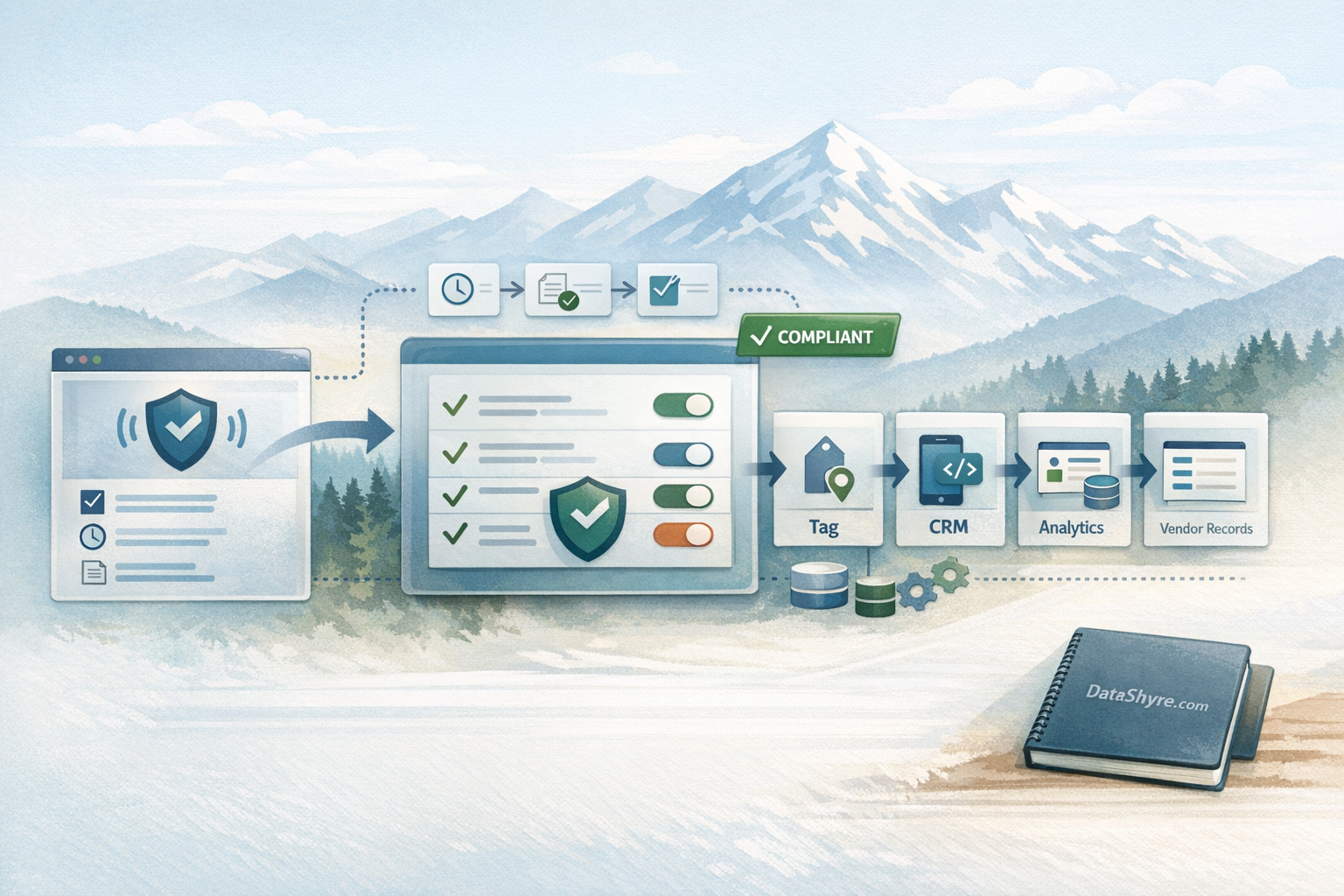
7. Demand evidence that explains context, not just timestamps
Sooner or later, your team will need to explain what the user saw, what they chose, what rule logic applied, and what changed afterward.
That is why the better tools preserve more than a raw event log. They should help your team show:
- which Colorado workflow was triggered;
- whether the event was an opt-out, GPC signal, or consent event;
- which notice or prompt version was active;
- which systems or vendors received the change;
- when the enforcement actions completed;
- how withdrawal or later updates were handled.
That level of proof is what turns the product from a UI layer into an operational compliance control.
A short buying sequence for this week
If I were comparing options right now, I would do it in this order:
- Confirm whether the product separates Colorado opt-outs, GPC, and consent-driven workflows.
- Test GPC in a clean browser and trace what systems actually change.
- Review how the platform handles sensitive data and secondary-use consent.
- Check how quickly the vendor updates Colorado rules content and workflow logic.
- Compare the privacy notice text to the live controls shown on page or in app.
- Follow one event into tags, SDKs, vendors, and support-facing records.
- Export the evidence and decide whether legal, engineering, and operations could all understand it later.
That usually tells you more than a larger feature matrix.
Bottom line
The best cpa consent management platform in 2026 is not the one with the prettiest preference center. It is the one that can distinguish Colorado opt-outs from consent, honor GPC as a live requirement, keep pace with rule changes, and prove that downstream systems followed the user’s choice.
If a platform cannot do that, it may still give you a cleaner banner. It just will not give you much confidence in a Colorado review.
Sources
- Colorado Attorney General: Colorado Privacy Act (CPA)
- Colorado Attorney General: Universal Opt-Out and the Colorado Privacy Act
- Colorado General Assembly: Senate Bill 21-190
- Colorado Secretary of State: 4 CCR 904-3 Colorado Privacy Act Rules
- Colorado Attorney General: 2025 Colorado Privacy Act rulemaking
This post was updated on August 8, 2026 using current official Colorado government and regulator materials available at publication time.