

What Is a Tracking Cookie in 2026? Plain-English Definition, How It Works, and 7 Live Checks
If you are searching what is a tracking cookie on November 13, 2026, the useful answer is not a tiny file websites use.
It is this:
a tracking cookie is a browser-side identifier used to recognize, measure, or profile behavior across visits, pages, devices, or sites for a business purpose such as analytics, advertising, personalization, attribution, or audience building.
That definition matters because the compliance risk is usually not the word cookie by itself. The real issue is what the identifier helps a site or vendor do.
Firefox’s own support docs still say third-party cookies, also called cross-site cookies, are cookies set by a different website than the one a person is visiting, and that some advertisers use them to track visits across sites. Firefox also says cross-site tracking cookies are “disabled by default” for all Firefox users. Chrome’s developer docs still show teams how to “identify and inspect third-party cookies” inside DevTools. The ICO’s current PECR guidance still says businesses generally need to tell people what cookies do and “get the person’s consent” to store them. So in 2026, the practical question is not whether cookies exist. It is whether the identifiers on your site are doing tracking work, whether users are told clearly, and whether the live runtime matches the story in the banner and policy.
If you want nearby context first, start with our guides to tracking cookies, third party cookies, and find tracking cookies. This page stays narrower. It is the what is a tracking cookie explainer I would use this week before reviewing a banner, a privacy notice, or a browser trace.
If your team needs help figuring out which identifiers are necessary, which ones are optional, and how to connect that answer to real consent behavior, DataShyre can help with consent management, data mapping, and runtime privacy testing.
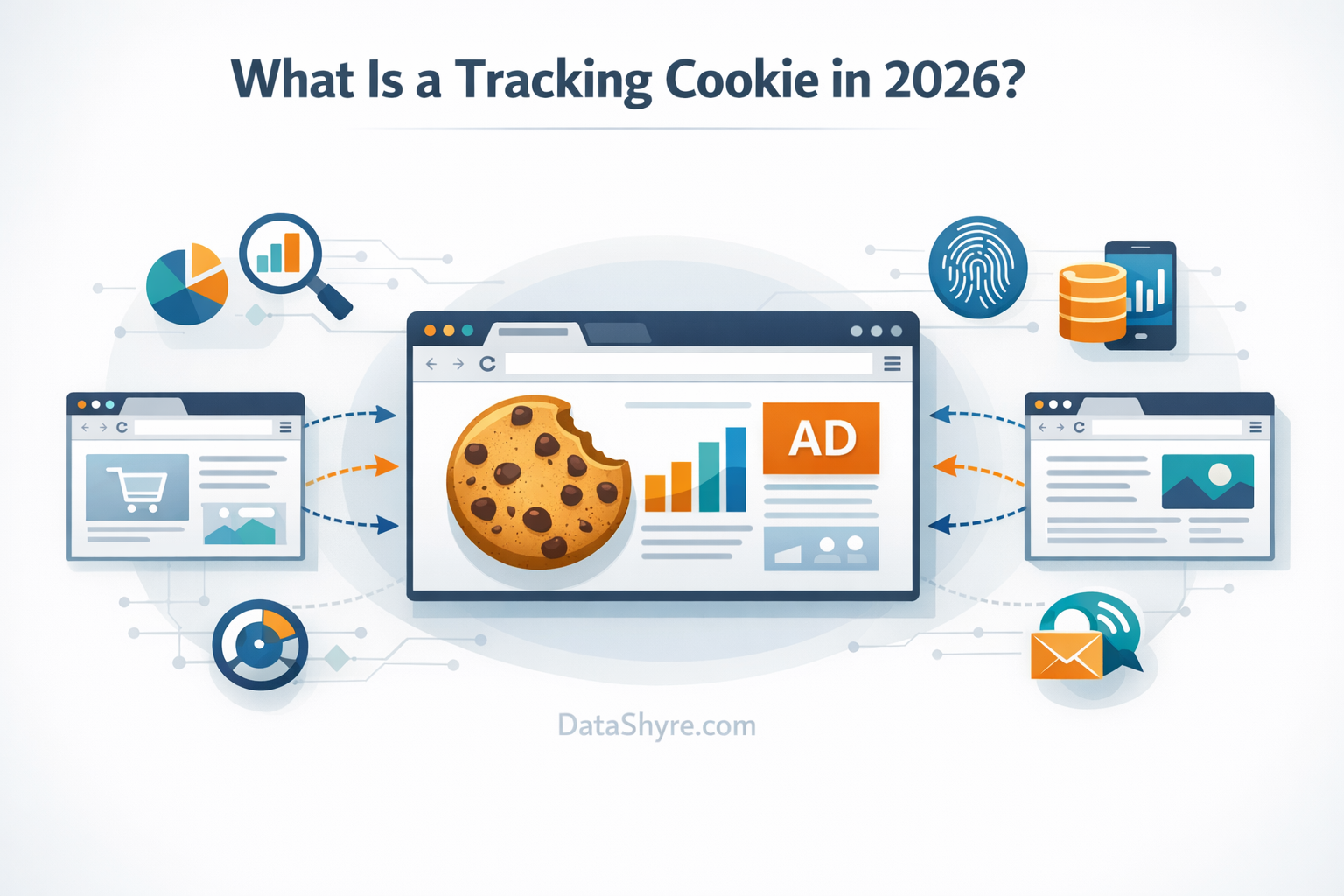
1. A tracking cookie is defined more by purpose than by file format
The easiest mistake is assuming a tracking cookie is a special technical species.
Usually it is not.
Technically, it is still a cookie: browser state that a site or service can set and later read. What makes it a tracking cookie is the job it performs. If the identifier helps follow behavior over time, connect events, build segments, personalize recommendations, attribute conversions, or support targeted advertising, you are already in tracking territory.
That is why a site can have:
- a necessary session cookie that keeps a person signed in;
- a preference cookie that remembers language or accessibility settings; and
- a tracking cookie that helps measure behavior or build a profile.
All three may use the same storage mechanism, but they do not create the same privacy or consent consequences.
2. Many tracking cookies are third-party, but the real review should stay broader
People often use tracking cookie and third-party cookie like they mean the same thing.
They overlap, but they are not identical.
Firefox’s support documentation still describes third-party cookies as cookies set by a different website than the one a person is visiting, and points out that advertisers have used those cookies for cross-site tracking. That is a big part of the story. But teams also create tracking behavior through first-party cookies, browser storage, pixels, scripts, and request identifiers.
The EDPB’s Guidelines 2/2023, adopted in version 2.0 on October 7, 2024, make the same broader point in regulatory language: Article 5(3) of the ePrivacy Directive applies to different technical solutions, not only the classic cookie label.
So when someone asks what is a tracking cookie, I would not stop at is it third-party.
I would also ask:
- what business purpose it supports;
- whether it follows behavior only within one session or across sessions;
- whether another vendor receives the data;
- whether it activates before a valid user choice; and
- whether a different storage method is doing nearly the same job.
3. Browsers already give you a practical way to spot likely tracking cookies
Chrome’s current DevTools documentation still says teams can inspect cookies in Application > Storage > Cookies and can also review them in the Network panel. It specifically says developers can “identify and inspect third-party cookies”, and it notes that third-party cookies are those set by a site different from the current top-level page.
Chrome’s current Privacy and security panel adds another helpful test path. While DevTools is open, you can temporarily limit third-party cookies and see which cookies were allowed, blocked, or exempted.
Firefox is useful as the cross-check because it already takes a stricter posture. Its support pages still say cross-site tracking cookies are “disabled by default” and that Total Cookie Protection confines cookies to the site where they were created.
That means a useful what is a tracking cookie review is usually hands-on:
- inspect the cookie name, domain, expiry, and
SameSitesetting; - compare first load, reject, accept, and withdrawal states;
- watch which requests still fire to third parties; and
- see whether the site breaks when more privacy-protective browser defaults apply.
4. The legal risk is not the label alone; it is what happens before and after choice
The ICO’s current cookies guidance still says the basic PECR rule is to tell people the cookies are there, explain what they do and why, and “get the person’s consent” to store them, unless an exception applies. It also says the same rule can reach similar technologies beyond cookies.
California’s DOJ CCPA page is a helpful reminder that websites also need the surrounding notice layer to line up. The DOJ still says a business must provide a “notice at collection” that lists categories of personal information and purposes, and that the notice must be available at or before collection and link to the privacy policy.
So the useful legal question is not only does this cookie exist.
It is:
- does the identifier support a necessary service the user explicitly asked for;
- if not, is the site seeking consent or honoring opt-out obligations where required;
- are the purposes explained clearly enough for a person to understand the consequence; and
- does the live browser behavior actually change when the user refuses or withdraws.
That last point matters because regulators still care about runtime behavior, not only polished banner copy.
5. Enforcement in 2026 still treats tracking choices as real choices
If anyone still thinks tracking controls are mostly cosmetic, the enforcement record says otherwise.
On October 29, 2026, the CNIL announced a 7 million euro fine against FNAC DARTY entities after finding that a mobile-app tracker collected browsing-history data for recommendations and algorithm training without honoring the user’s choice not to consent.
That should reset how teams answer what is a tracking cookie internally.
A tracking cookie is not just a frontend detail. It can be part of a system that:
- changes what data leaves the browser;
- changes which vendors receive behavior data;
- changes how profiles and recommendations are built; and
- changes whether the site’s public privacy story is true.
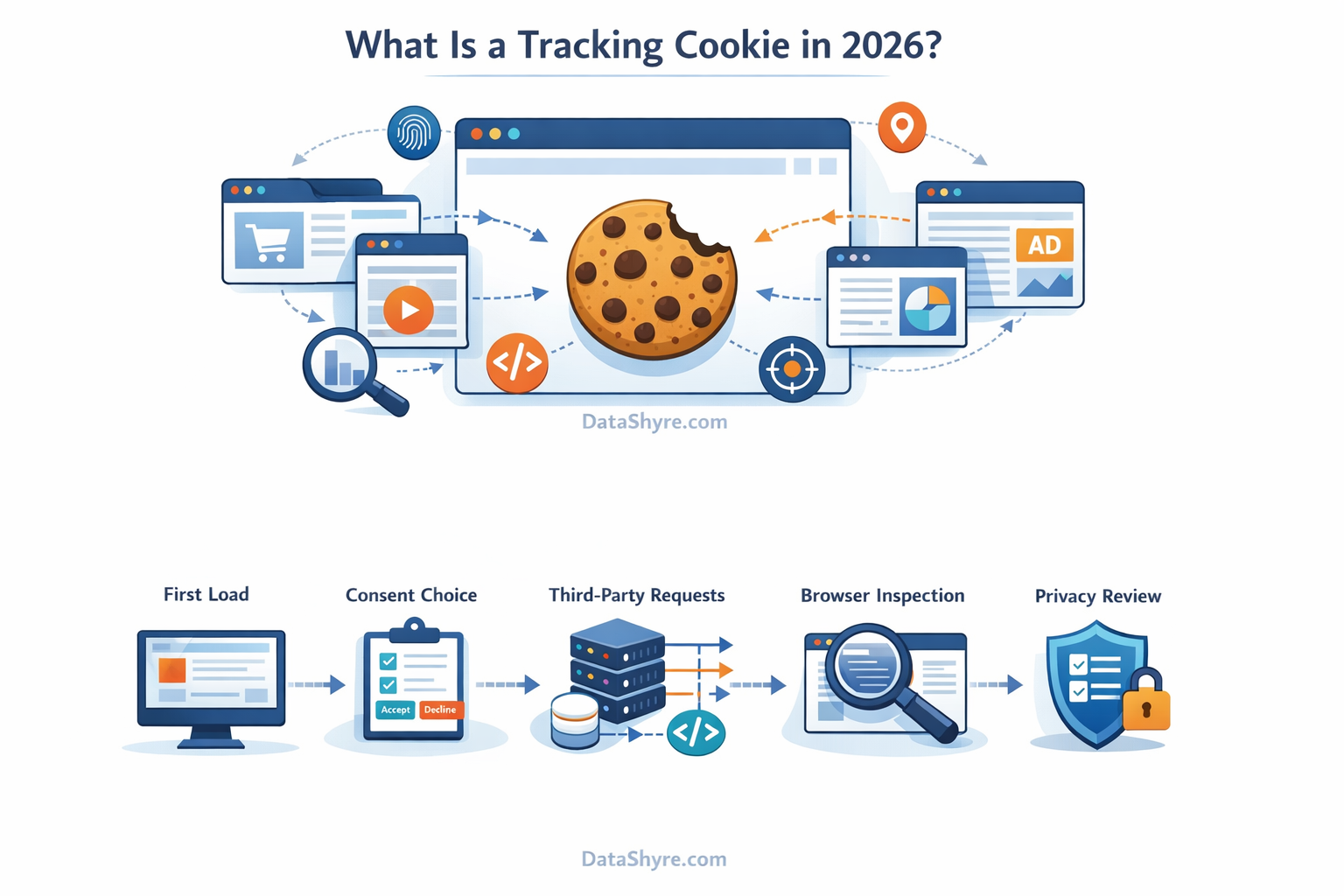
6. Seven live checks I would run this week
If I needed to answer what is a tracking cookie on a real site instead of in a glossary, I would use this order:
- list every cookie, storage item, and third-party request on first load;
- mark which ones are necessary for the requested service and which ones support measurement, ads, personalization, or profiling;
- compare pre-choice, reject-all, accept-all, and withdrawal behavior;
- inspect domains, expiries, and
SameSitevalues in Chrome DevTools; - cross-check the same journey in Firefox to see what stricter browser defaults expose;
- compare the runtime evidence against the banner, preference center, and privacy notice; and
- save screenshots and request logs so the next release can be tested against the same baseline.
That workflow gives you a much better answer than a one-line definition.
7. The shortest practical definition
If you need the fastest answer for a product review or stakeholder meeting, use this:
a tracking cookie is a cookie used to recognize or profile behavior for analytics, advertising, personalization, attribution, or similar monitoring purposes, especially when that behavior extends beyond the one action the user explicitly requested.
That is short enough to use in meetings and precise enough to drive the next technical test.
FAQ
Is every cookie a tracking cookie?
No. Some cookies are necessary for login state, security, or saved preferences. The tracking question turns on purpose and behavior, not just on the presence of a cookie.
Are tracking cookies always third-party cookies?
No. Many important tracking scenarios involve third parties, but tracking behavior can also be supported through first-party cookies or similar browser-side identifiers.
If my banner says reject, but requests still go out, is that a problem?
Potentially yes. The answer depends on purpose and legal context, but a banner that promises one thing while the browser still sends optional tracking signals is exactly the sort of gap teams should test for.
Bottom line
The best answer to what is a tracking cookie in 2026 is not abstract.
It is a browser-state identifier whose real purpose is to recognize or profile behavior over time for measurement, ads, personalization, or similar monitoring. Once you define it that way, the next step becomes obvious: test the live site and see whether the runtime, the consent flow, and the privacy notice all tell the same story.
Sources
- Chrome for Developers, “View, add, edit, and delete cookies”: https://developer.chrome.com/docs/devtools/application/cookies/
- Chrome for Developers, “Privacy and security panel”: https://developer.chrome.com/docs/devtools/security
- Mozilla Support, “Third-party cookies and Firefox tracking protection”: https://support.mozilla.org/en-US/kb/third-party-cookies-firefox-tracking-protection
- ICO, “Cookies and similar technologies”: https://ico.org.uk/for-organisations/direct-marketing-and-privacy-and-electronic-communications/guide-to-pecr/cookies-and-similar-technologies/
- California Department of Justice, “California Consumer Privacy Act (CCPA)”: https://www.oag.ca.gov/privacy/ccpa
- European Data Protection Board, “Guidelines 2/2023 on Technical Scope of Art. 5(3) of ePrivacy Directive” (Version 2.0 adopted October 7, 2024): https://www.edpb.europa.eu/public-consultations/guidelines-22023-on-technical-scope-of-art-53-of-eprivacy-directive_ga
- CNIL, “Cookies and mobile application: 7 million euros fine against FNAC DARTY PARTICIPATIONS ET SERVICES and FNAC DIRECT” (October 29, 2026): https://www.cnil.fr/en/sanction-app-cookies-fnac