

Introduction
Cookie consent banner examples in 2026 must prioritize explicit consent, granular controls, and transparent design to meet evolving GDPR requirements. This guide examines real-world compliant patterns, design principles, and implementation checklists that data protection authorities expect from organizations operating in the EU and UK.
With cumulative GDPR sanctions reaching approximately €7.1 billion since enforcement began in May 2018, cookie consent banners have evolved from simple disclosures to critical compliance instruments. As the French data protection authority CNIL has emphasized, consent must be “freely given, specific, informed, and unambiguous” — and the banner design directly affects whether consent meets these legal standards.
Why Cookie Consent Banners Matter in 2026
With cumulative GDPR sanctions reaching approximately €7.1 billion since enforcement began in May 2018, cookie consent banners have evolved from simple disclosures to critical compliance instruments. Regulatory enforcement in 2026 continues to prioritize websites that fail to obtain valid consent before setting non-essential cookies.
As the French data protection authority CNIL has emphasized, consent must be “freely given, specific, informed, and unambiguous” — and the banner design directly affects whether consent meets these legal standards.
Key GDPR Requirements for Cookie Consent Banners
| Requirement | Design Implication | Source | |————-|——————-|——–| | Prior Consent | Non-essential cookies blocked until affirmative action | GDPR Article 7(1) | | Granular Control | Separate toggles for analytics, marketing, functional categories | GDPR Recital 32 | | Equal Prominence | Accept and Reject buttons with equal visual weight | GDPR Recital 32 | | Easy Withdrawal | Persistent icon/link accessible from all pages | GDPR Article 7(3) | | Proof of Consent | Timestamped records of user choices | GDPR Article 7(1) | | Plain Language | No legalese in primary banner copy | GDPR Articles 12-14 |
Cookie Consent Banner Examples
Example 1: Minimalist Two-Button Design
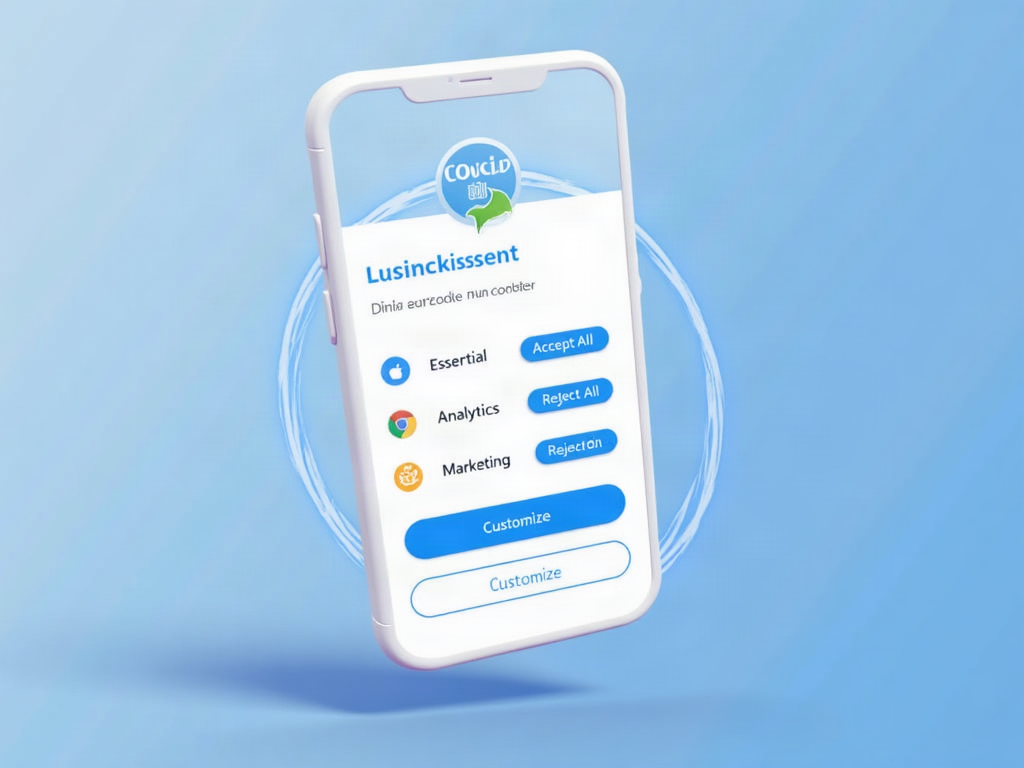
A clean banner with “Accept All” and “Reject All” buttons displayed side-by-side with equal styling. This pattern satisfies GDPR’s requirement for equally prominent choices while minimizing friction.
Example 2: Granular Consent Dashboard
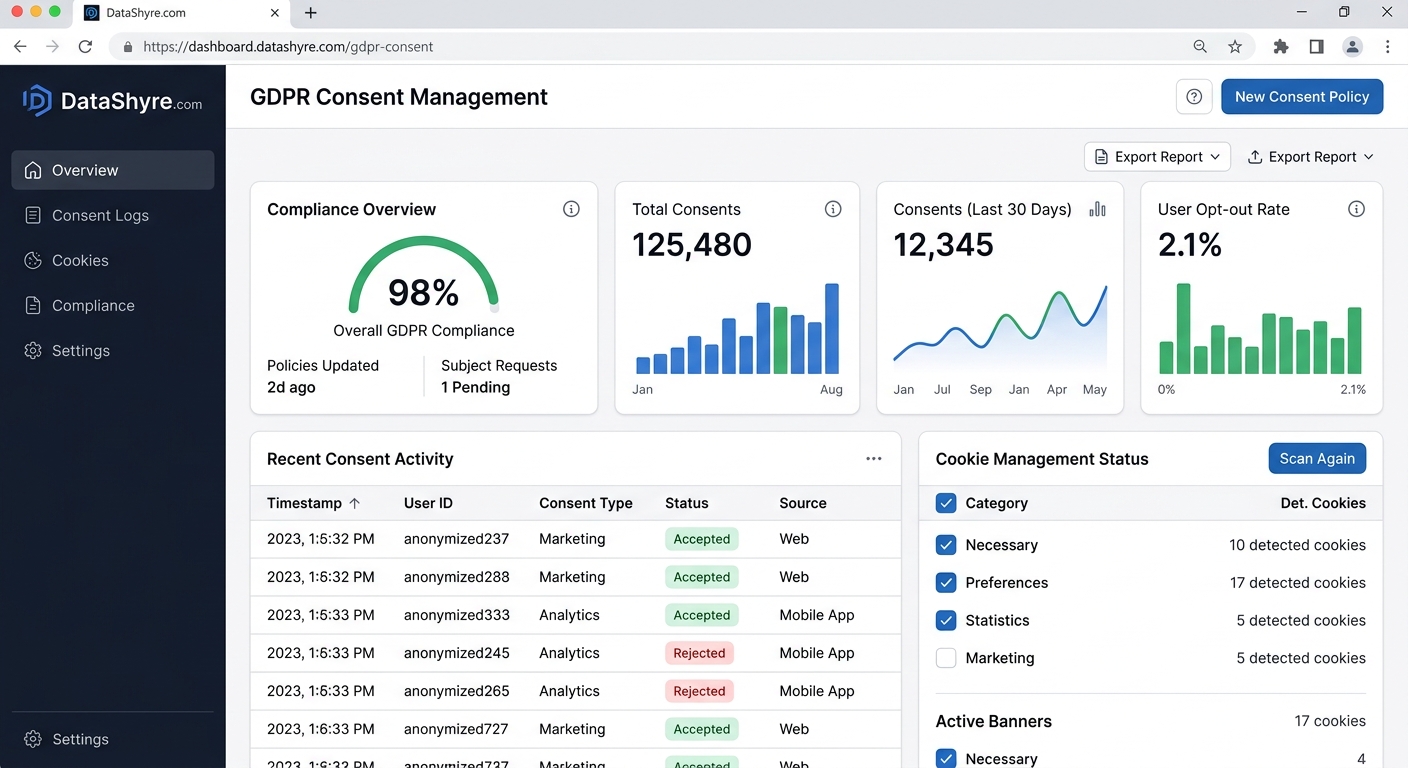
A layered approach where users first see a summary banner, then access a detailed preference center with toggles for each cookie category. Non-essential categories default to OFF, requiring explicit opt-in.
Example 3: Contextual Link Pattern
A compact banner with a “Manage Preferences” link leading to a full consent center. This pattern works well for sites with limited screen real estate while still providing granular control.
Best Practices for Cookie Consent Banner Design
- Prior and Explicit Consent — Non-essential cookies must not be set before the user actively consents. Silence, scrolling, or pre-ticked boxes do not constitute valid consent under GDPR Article 7.
- Clear and Specific Choices — Offer genuine accept/reject options with equal visual weight. Avoid dark patterns that manipulate users toward accepting.
- Granular Consent Options — Allow users to consent to specific categories rather than an all-or-nothing choice. Non-essential toggles should default to OFF.
- Plain, Transparent Language — Use short, direct copy: “We use cookies to understand how you use our website and to show you relevant ads.” Avoid legalese in the primary banner.
- Easy Withdrawal — Provide a persistent consent management icon accessible from all pages so users can revisit preferences at any time.
- No Dark Patterns — Hidden reject options, deceptive wording, and pre-ticked boxes are non-compliant and can result in significant fines.
- Accessibility (WCAG 2.2) — Banners must be navigable via keyboard, compatible with screen readers, and meet color contrast requirements (4.5:1 ratio).
- Match Banner to Actual Behavior — The front-end messaging must accurately reflect back-end behavior. If the banner states only essential cookies are active before consent, the site must genuinely operate that way.
- Robust Consent Records — Maintain time-stamped records of consent collection for audit purposes, including what categories exist and which scripts belong to each.
- Google Consent Mode v2 Integration — For sites using Google Analytics and Ads, ensure the banner accurately communicates consent signals to Google’s platforms.
2026 Enforcement Landscape
GDPR enforcement remains robust in 2026, with significant fines issued for consent violations:
- CNIL (France): €42 million combined penalty against Free Mobile and Free (January 2026) for a breach exposing 24 million subscriber records
- UK ICO: £14.47 million children’s privacy fine against Reddit
- Various authorities: Ongoing enforcement actions against websites with invalid consent mechanisms
These enforcement actions underscore that cookie consent banner design is not merely a UX concern but a legal compliance requirement with substantial financial consequences.
Internal Links to Related Posts
- Cookie Consent Manager in 2026: 7 Live Checks Before You Buy, Renew, or Replace One — detailed CMP evaluation guide
- GDPR Cookie Consent Examples — practical implementation patterns
- Cookie Consent Message in 2026: What to Say and What the Design Must Do — copywriting guidance
Conclusion
Cookie consent banner examples in 2026 must demonstrate valid, explicit, and granular consent mechanisms that comply with GDPR Article 7 requirements. By following the design patterns and implementation best practices outlined in this guide, organizations can achieve regulatory compliance while building user trust and reducing enforcement risk.
Published: September 16, 2026