

Mobile App Consent in 2026: What to Ask Before SDKs Start Tracking
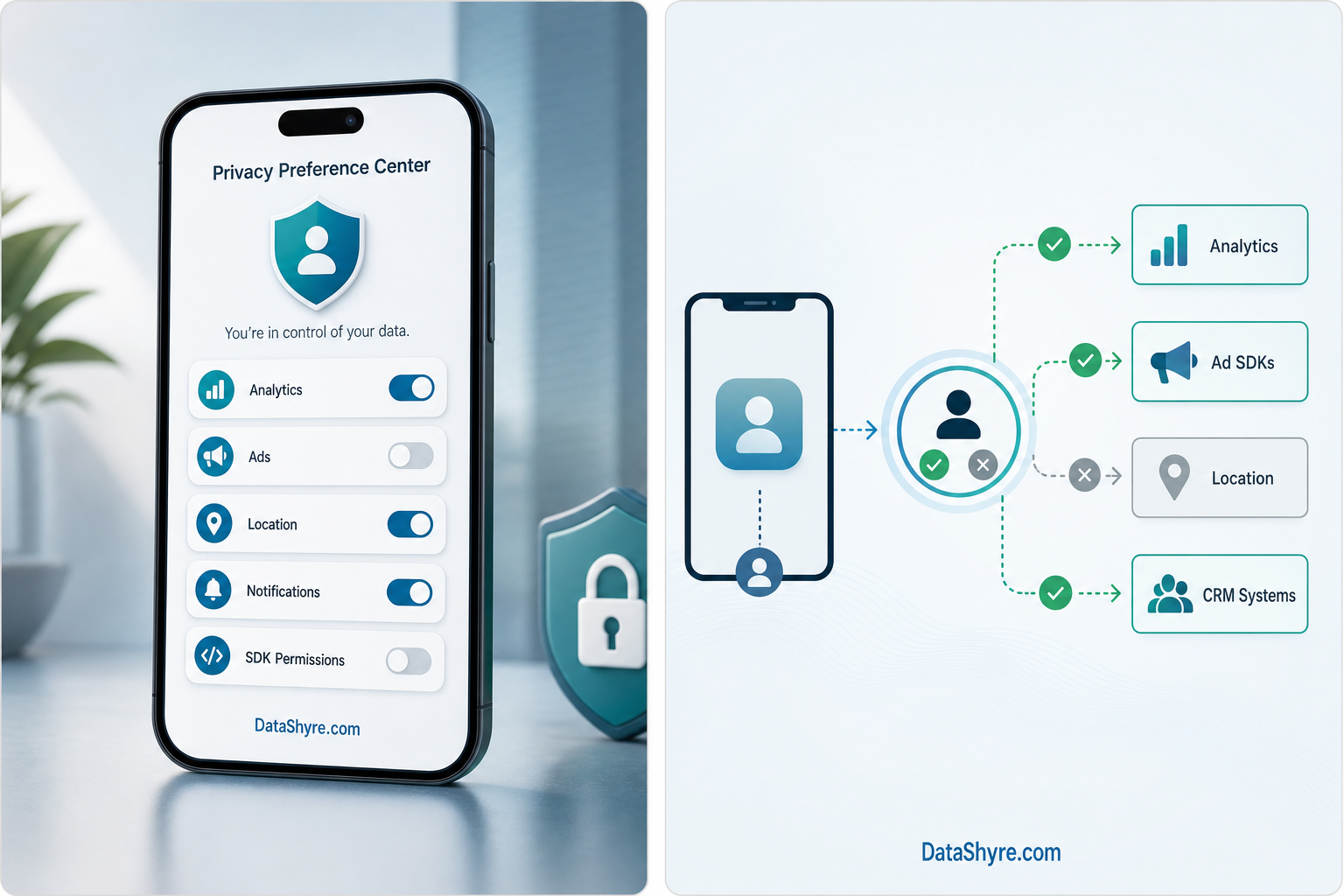
Mobile app consent is not one screen. It is the full chain from the first disclosure to the SDKs, APIs, and downstream vendors that act on the user’s choice. That matters because app teams still confuse OS permissions, privacy notices, ad-tech prompts, and product settings as if they all do the same job. They do not.
In practice, consent decisions inside apps now sit at the intersection of platform policy, privacy law, and real implementation details. Apple wants a clear tracking prompt before cross-app tracking begins. Google Play wants prominent disclosure and affirmative user action before certain personal or sensitive data practices begin. European regulators still care whether the user had a real choice, and California still treats dark-patterned consent as no consent at all.
There is also an important nuance that gets lost in product meetings: not every data use inside an app needs consent. The ICO says organisations do not always need consent if they have another valid lawful basis. But if your app is relying on tracking for advertising, audience building, or certain kinds of profiling, the bar for a clean opt-in gets much harder to dodge.
Craig Federighi put the user expectation plainly when Apple rolled out stronger privacy controls: people want to be “in the driver’s seat” when it comes to their data. That is still the right test. If a user cannot tell what starts after they tap yes, your flow is probably too weak.
Mobile app consent starts before the system prompt
The system prompt is only one moment in the journey. Before that point, users should already understand what data the app wants, why it wants it, whether the request is optional, and what happens if they decline.
For iOS, Apple says apps must use the AppTrackingTransparency framework to request permission to track the user or access the device’s advertising identifier. For Android, Google Play says prominent disclosure should appear in the app, right before the permission or capability is requested, and that users must have an option to decline. Those are platform rules, but they also line up with a broader compliance pattern: explain first, ask second, and do not start the data flow early.
CNIL’s 2025 mobile applications recommendation is useful here because it treats optional consent like a design problem, not just a legal label. If a purpose is not strictly necessary, the optional nature of that consent should be clear, and dark patterns should stay out of the flow. California lands in a similar place from the other direction. Under the CCPA regulations effective January 1, 2026, agreement obtained through dark patterns does not count as consumer consent.
Five checks before you ship
1. Separate product access from ad-tech choice
Do not bundle account creation, core app functionality, and advertising consent into one vague yes button. If your app can run without cross-app tracking or personalized ads, make that visible. This is where many teams accidentally turn a design shortcut into a compliance problem.
2. Map every SDK to a purpose and a trigger
Teams usually know the headline vendors. They are often fuzzier on the smaller SDKs sitting behind analytics, attribution, heatmaps, fraud tools, session replay, and push personalization. Build a table that shows what each SDK collects, when it initializes, what lawful basis you rely on, and what should happen on accept, reject, and withdrawal. If your wider program is still immature, our guide to consent management is a good place to tighten the operating model.
3. Make the value exchange readable in one pass
Good app copy does not read like a policy appendix. It tells people, in plain language, why location, contacts, camera, or ad identifiers are being requested and what still works if they say no. That sounds basic, but it is where consent flows often break down. Legal writes one thing, product shows another, and engineering triggers a third.
4. Keep evidence, not just a boolean
For defensible records, store more than accepted or rejected. Keep the timestamp, app version, notice version, jurisdiction logic, SDK state, and any later withdrawal or settings change. That recordkeeping standard overlaps with what strong user consent programs already do across web and app surfaces.
5. Treat withdrawal like a core feature
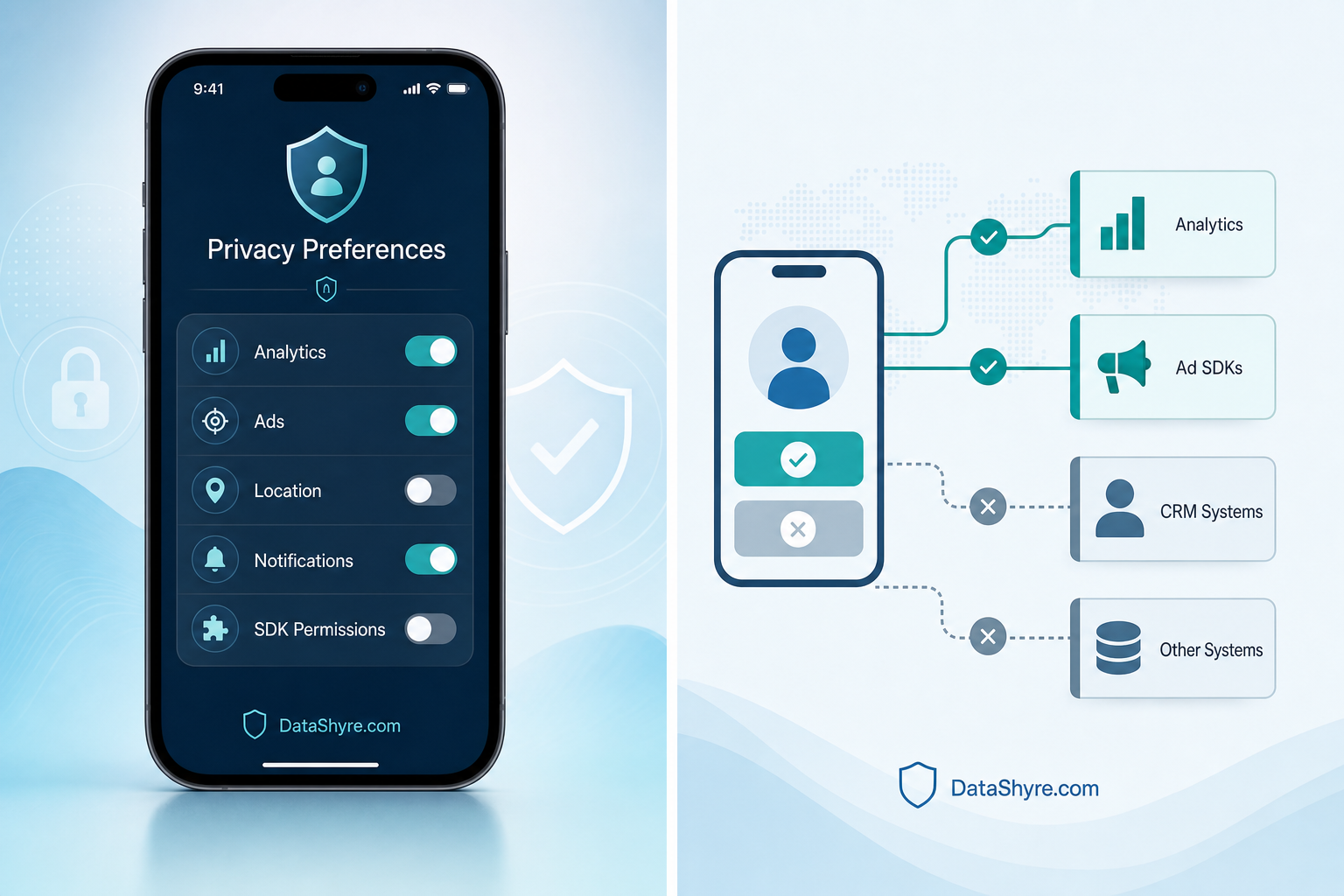
If users can opt in during onboarding but need to hunt through six screens to reverse the choice, the design is telling on itself. Withdrawal should be easy to find, easy to understand, and connected to the same downstream systems you updated at collection time. If you are also using app data for promotions, align that flow with your broader marketing consent rules instead of improvising inside campaign tools.
Why location and tracking still get the most scrutiny
Recent U.S. enforcement keeps circling back to the same issue: hidden tracking plus weak disclosure. In January 2025, the FTC said GM and OnStar collected, used, and sold precise geolocation and driving behavior data without adequate notice and affirmative consent. A month earlier, the FTC’s case against Mobilewalla focused on sensitive location data gathered and used without reasonable steps to verify consent. Lina Khan described the privacy risk as “unchecked surveillance.” For app teams, the message is not subtle. Location, ad IDs, and silent data sharing are still hot zones.
The practical takeaway is simple. Permission screens are not enough on their own, and privacy policies are not enough on their own. mobile app consent only holds up when the notice, the user action, the SDK behavior, and the audit trail all point in the same direction.
Sources
- Apple Developer Documentation
- Apple Newsroom
- Google Play Console Help
- Information Commissioner’s Office
- CNIL
- European Data Protection Board
- Federal Trade Commission