

GDPR Cookie Consent Guide: Requirements, Best Practices, and Implementation
GDPR cookie consent is still one of the fastest places to spot the difference between a privacy program that looks polished and one that actually works. The banner matters, but the real test is whether non-essential tracking stays blocked before choice, whether refusal is as easy as acceptance, and whether the team can later prove what happened.
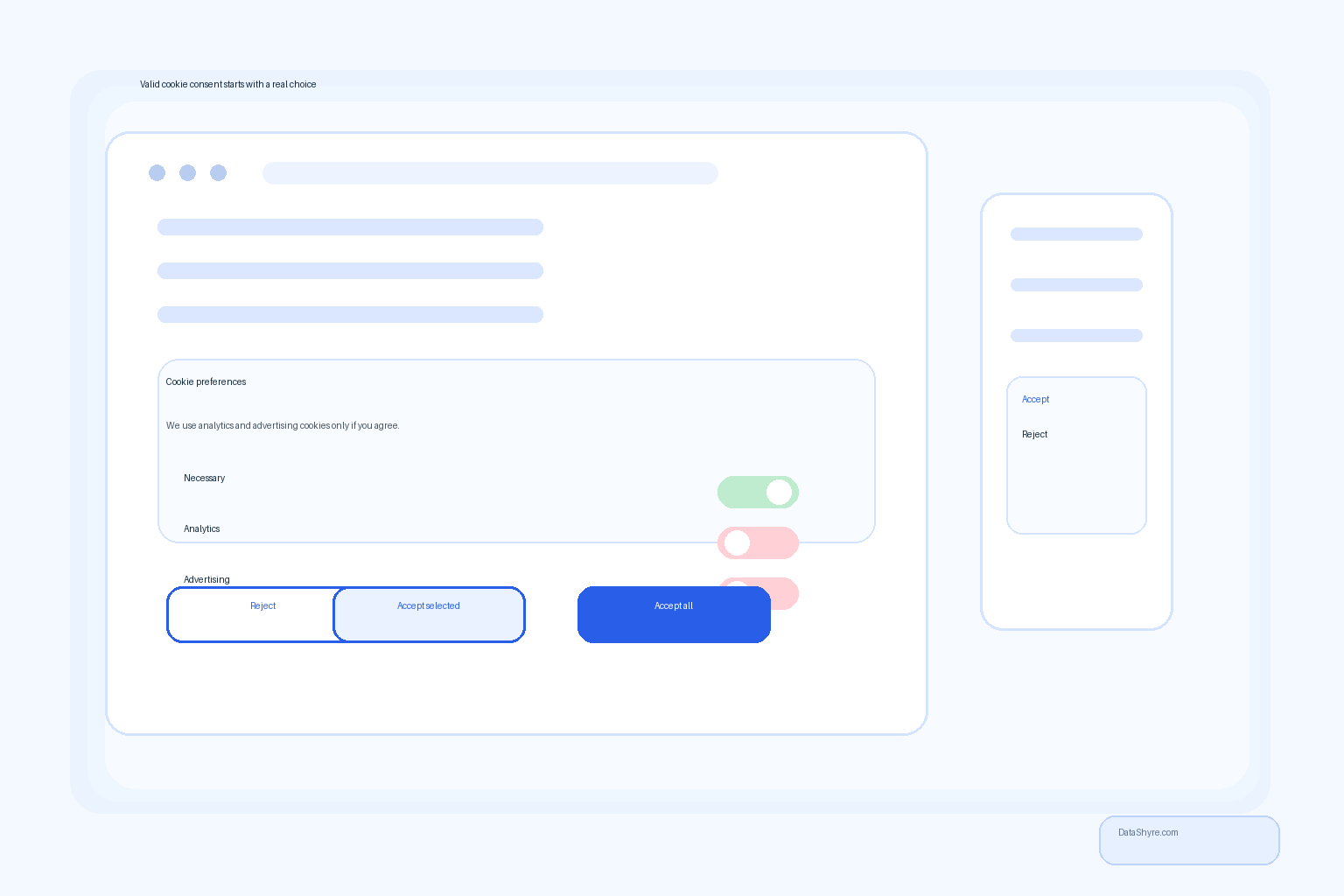
GDPR Cookie Consent: Essential Requirements for 2025
The European Data Protection Board (EDPB) updated its guidelines in October 2024, emphasizing explicit, informed, and freely given user consent. Website owners must distinguish between necessary and non-essential cookies, with strict requirements for the latter.
Key Requirements:
- Explicit opt-in: Users must actively provide consent for non-essential cookies; pre-ticked boxes are not compliant.
- Granular control: Consent mechanisms should let users distinguish between different categories of cookies.
- Prior consent: Non-essential cookies should be blocked until explicit user permission is obtained.
- Easy withdrawal: It should be as easy for users to withdraw consent as it was to give it.
- Transparency: People should receive clear information about the purpose of each cookie before consent is requested.
Understanding Cookie Categories and Their Legal Basis
Under GDPR and similar privacy regimes, cookies usually fall into several categories with different practical requirements:
Strictly Necessary Cookies
- Essential for core website functionality
- Often exempt from consent requirements
- Usually include session handling, authentication, and security features
Functional or Performance Cookies
- Improve the user experience, such as language or remembered preferences
- May require consent depending on how they are implemented
- Should still be clearly disclosed
Analytics Cookies
- Measure behavior and site performance
- Typically require prior consent under stricter EU interpretations
- Need a clear explanation of purpose and provider
Marketing or Third-Party Cookies
- Support advertising, retargeting, or cross-site profiling
- Usually require the strongest form of prior consent
- Need especially clear disclosure and control
Implementing GDPR-Compliant Cookie Consent Banners
Cookie banners should provide clear choices and easy preference management rather than nudging users into one path.
Best Practices:
- Equal Accept and Reject options: Both choices should be easy to find and use.
- Prior blocking: Non-essential cookies should not run before the visitor acts.
- Transparent policy links: The banner should connect cleanly to fuller cookie and privacy disclosures.
- Easy ongoing management: Users should have a persistent path back to their settings.
Examples from real implementations:
Some high-visibility sites now use a simple top-level banner with equally prominent “Accept All” and “Reject All” controls plus a settings option. The visual design varies, but the compliance logic is the same: real choice, clear purposes, and working withdrawal.
Technical Implementation Strategies
Different stacks need different technical patterns, but the compliance goal stays the same: nothing optional should fire before consent, and consent changes should propagate everywhere they need to.
JavaScript-first implementations
- Use a consent layer that can block optional scripts by category.
- Pass consent states into tag managers and analytics tools consistently.
- Keep an audit trail of consent choices and banner versions.
Server-side approaches
- Gate optional scripts, embeds, or tags based on saved consent state.
- Prevent downstream tools from receiving data before the visitor opts in.
- Keep consent logic stable across cached or edge-served pages.
CMS and framework integrations
- WordPress, Drupal, and headless setups all need the same operational checks.
- A polished banner is not enough if plugins, embeds, or marketing tags still bypass the consent layer.
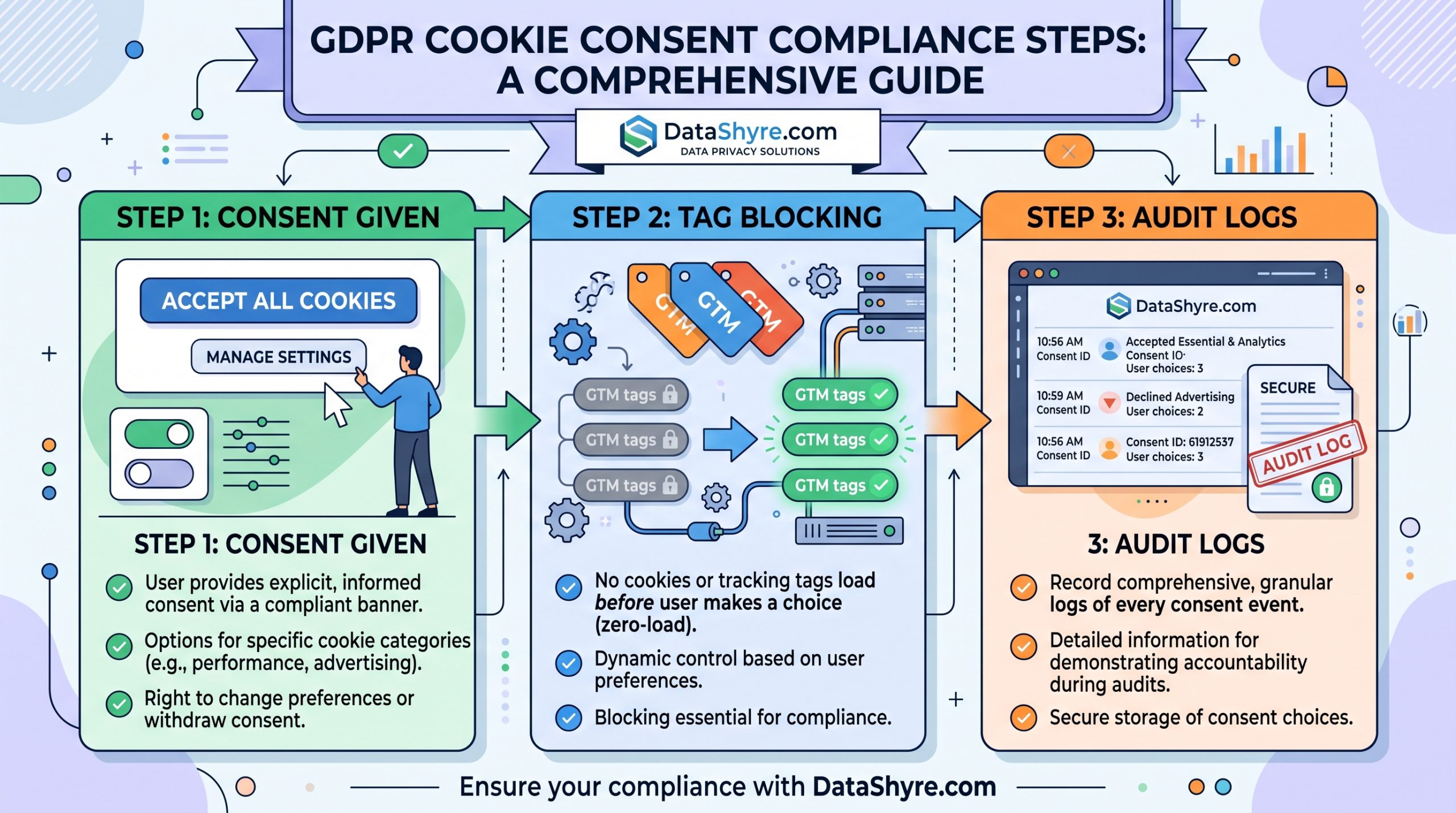
Legal Requirements and Risk Mitigation
Teams usually reduce risk fastest when they review the operational basics regularly:
- Keep disclosures current and easy to understand.
- Record consent choices in a way the team can actually retrieve.
- Honor withdrawal and preference changes across the full stack.
- Re-test after marketing, tag-manager, plugin, or CMS changes.
- Review regional behavior, because requirements and enforcement patterns vary.
Future Compliance Landscape
Privacy teams should expect the cookie-consent landscape to keep evolving, but the practical baseline remains stable: real choice, prior blocking where required, clear disclosure, and a working path to change preferences later.
That means the safest near-term strategy is not to wait for simplification. It is to make sure the current setup behaves correctly under fresh-session testing, rejection testing, and withdrawal testing.
Choosing the Right Consent Management Platform
When comparing consent tools, the useful questions are operational rather than cosmetic:
- Does the tool block optional technologies before consent?
- Can it pass consent states into analytics, ad, and tag-management tools correctly?
- Can users reject as easily as they accept?
- Can your team document what happened if challenged later?
- Can the setup survive real-world site complexity without constant manual patching?
Conclusion
GDPR cookie consent is not just a banner decision. It is a control-layer decision. The strongest setups make refusal easy, keep optional tracking off before choice, document consent clearly, and stay reliable even after the site changes.
For most teams, that is the right standard for 2026: not just a banner that looks compliant, but a consent system that behaves compliantly.
Quick Reference: Cookie Consent Best Practices
- Provide clear “Accept All” and “Reject All” options.
- Block non-essential cookies until consent is obtained.
- Make withdrawal of consent easy.
- Keep usable records of consent decisions.
- Re-test the setup regularly after site changes.