
Consent. Context. Control.
AI governance comes down to three things: policy, visibility, enforcement. Most companies have the first. Almost nobody has the third. DataShyre AI Governance delivers all three — anchored by AI Sentry, the backbone that intercepts prompts, detects PII, and blocks data leakage in real time.
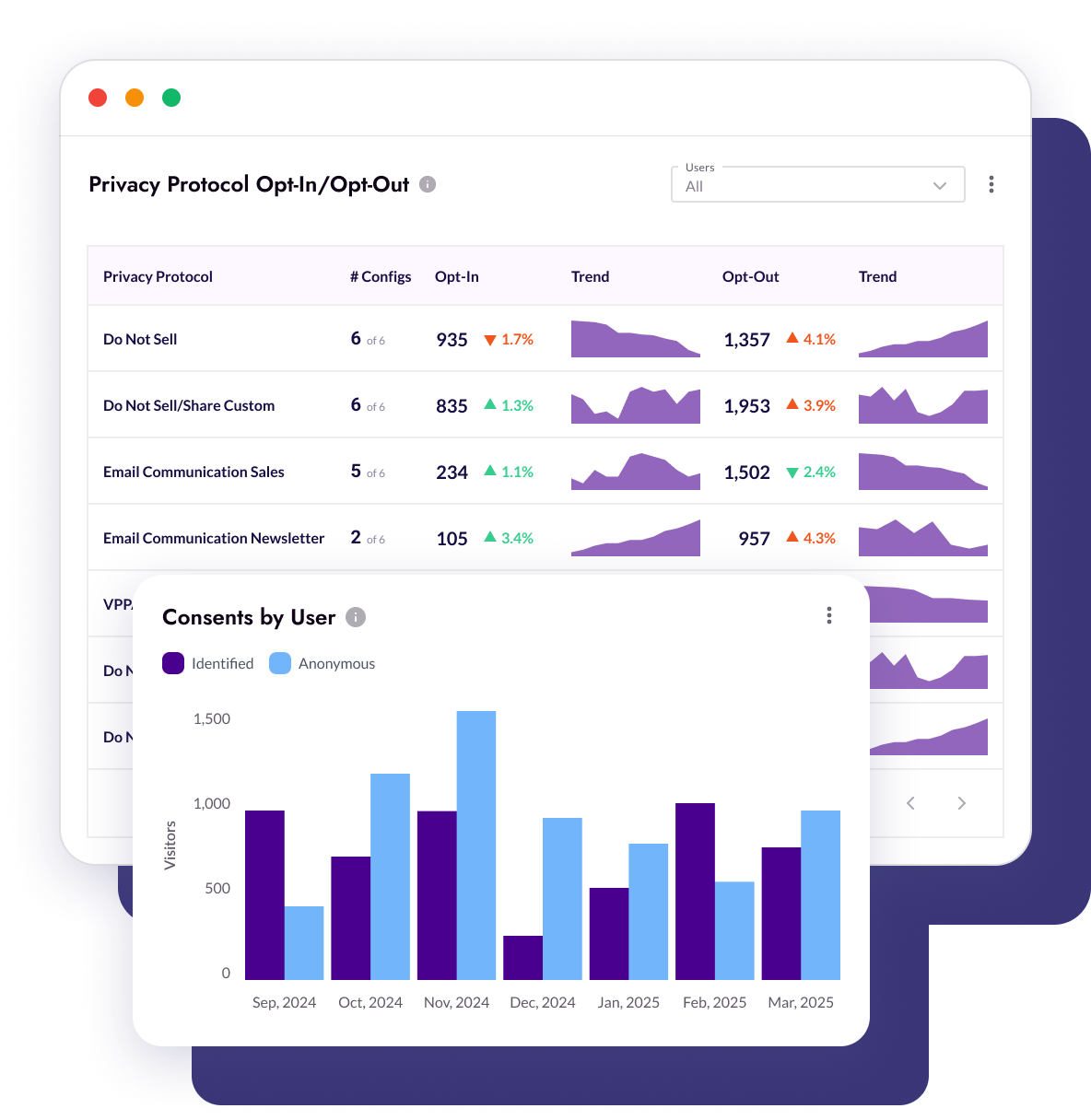
Permissioned data isn't a privacy feature. It's the precondition for AI.
DataShyre's mission is to make sure the data flowing through your organisation — into customer applications, analytics pipelines, and AI models — is permissioned, governed, and accountable at every step. There wasn't a solution for this in the market. So we built it.
Your AI stack has a data problem. Your existing tools can't fix it.
Privacy tools log consent. Data catalogs map what exists. ML Ops monitors models. None of them connect human privacy choices to live AI data flows. That's the gap DataShyre closes.
THE PROBLEM
AI's "dirty data" problem is real, and it's expensive
Unpermissioned data flows into core applications and AI models every day without consent context, purpose limitation, or accountability. When the issue surfaces, the cost isn't just legal. Models get retrained. Datasets get rebuilt. Quarters get lost.
THE GAP
Existing tools weren't designed for this job
Privacy tools log consent. Data catalogs map what exists. ML Ops monitors models. None of them connect human privacy choices to the live data flows your AI initiatives depend on. The permissioning engine doesn't exist in your stack yet.
THE SOLUTION
One operational layer between policy and practice.
A system that captures consent, governs how data is used, enforces those rules at the data layer, and audits every decision — across your frontend, your backend, and every AI surface in between. That's what AI governance has to be.
Real AI governance runs on three layers, not documents.
Companies have AI governance frameworks — policies, assessments, vendor reviews. That's documentation, not enforcement. Regulators are shifting toward a different question: Can you prove how data is used, and can you control it in real time? DataShyre addresses that question with three layers.
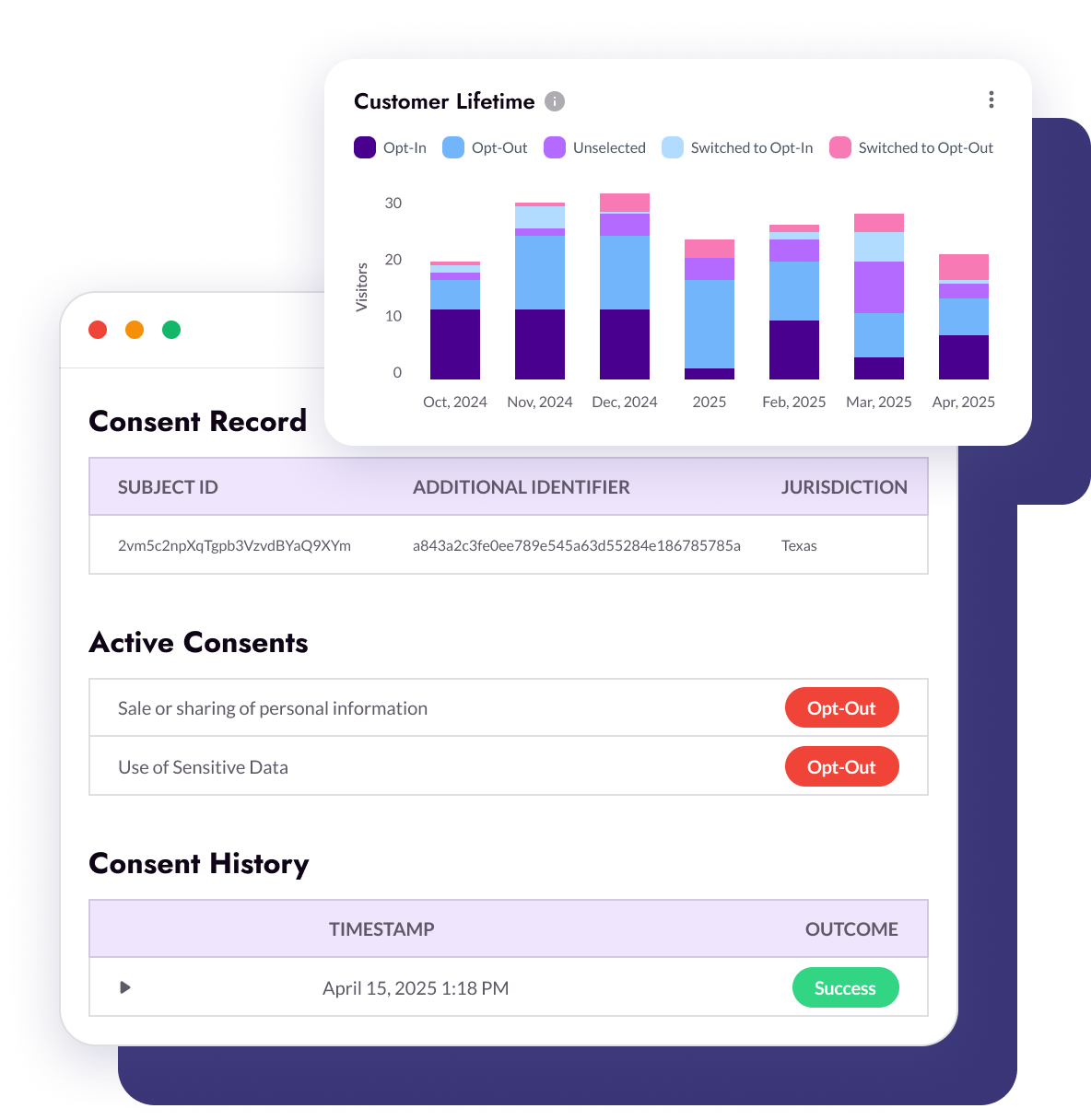
Control what data can be used by AI systems. Govern where it flows. Govern how it's retained. If consent isn't connected to AI processing, it's not governance — it's paperwork.
Learn more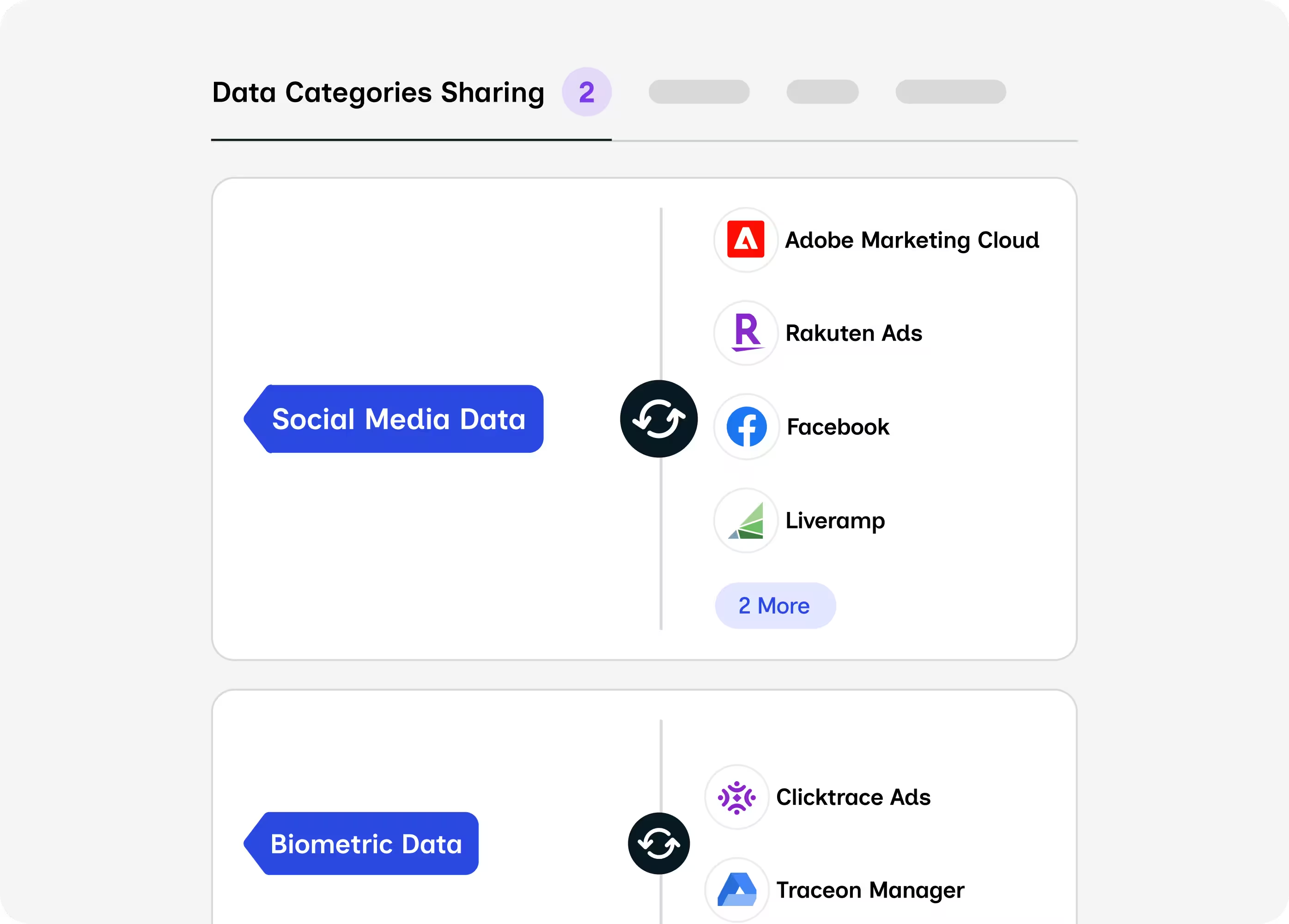
Most teams think they have a data map. It's outdated the moment it's created. Instead of chasing teams once a year to update a ROPA, DataShyre agents continuously map what's actually happening across your systems, including every AI tool.
Learn more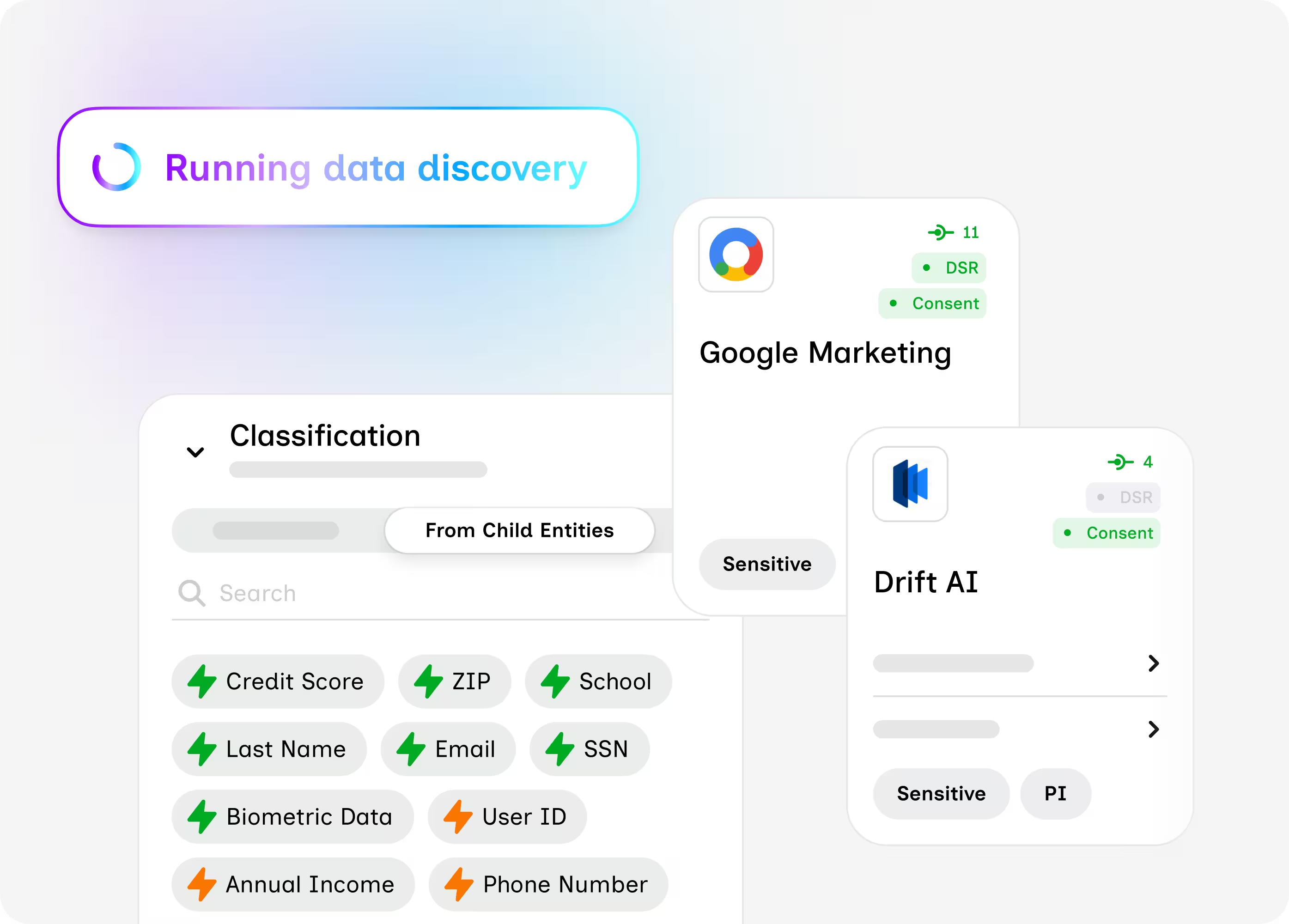
AI Sentry sits directly inside your AI applications. Intercepts prompts before they hit the LLM. Detects personal data leakage. Blocks or redacts PII before it reaches AI systems. Real-time enforcement at the point of use.
Learn more
Don't just see it. Filter it. Block it. Redact it.
Visibility is where AI governance starts. Enforcement is where it has to end. AI Sentry can do more than detect risky data flows — it can stop them, redact sensitive fields in flight, and shape what leaves your environment in real time.
Stop the data that shouldn't move
Sensitive PII in a DSR response. Health attributes leaving your domain to an ad partner. SSNs in a sales agent's prompt. Personalization models reaching for cohorts that didn't opt in. AI Sentry inspects every prompt, response, and outbound transfer and redacts, blocks, or scopes the data in flight. Real-time enforcement at the packet level, not the policy level.
Author privacy policy once, run it everywhere
Define your rules once — "no health data to non-HIPAA vendors," "no PII without consent," "marketing models can never see what only support is permitted to see" — and AI Sentry applies them automatically across every model, every agent, and every inference call. The policy lives in the system, not in a binder. When the policy changes, every surface enforces the new version the same instant.
Prove it, every time, automatically
Every blocked prompt, every redacted field, every allowed query — logged with full context. Who, what, when, why, and the policy that applied. The logs are designed to answer the questions regulators are starting to ask: can you prove how data is used, and can you control it in real time? Audit-ready isn't a configuration option. It's the default state.
AI Governance FAQs
What is DataShyre AI Governance?
DataShyre AI Governance is the operational layer between your privacy policy and your AI stack. It addresses AI governance at three layers: consent orchestration that controls what data can be used by AI systems, agent-based discovery that continuously maps what's actually happening across your systems, and AI Sentry — the real-time enforcement engine that intercepts prompts before they reach your LLMs.
What is AI Sentry, and how is it different from the rest of AI Governance?
AI Sentry is the third layer of DataShyre AI Governance — the enforcement engine. It sits directly inside your AI applications, between the user's prompt and the model. Every prompt is inspected before it reaches the LLM. AI Sentry detects personal data, checks the consent record, applies your enterprise policies, and blocks or redacts PII before it ever reaches the model.
How does AI Sentry handle PII detection and redaction?
AI Sentry inspects every prompt and model call for personal data — names, identifiers, financial details, health attributes, biometrics — all before it leaves your environment. When sensitive fields appear in a prompt that the requesting agent isn't permitted to see, AI Sentry redacts them in flight or blocks the request entirely.
What's the "dirty data" problem, and how does DataShyre address it?
The dirty data problem is what happens when unpermissioned data flows into core applications and AI models without consent context, purpose limitation, or accountability. DataShyre addresses the problem at the source. AI Sentry checks consent and purpose limitations at every inference call, so the data flowing into AI is permissioned by default.
What does AI Sentry log, and is it audit-ready by default?
Every decision AI Sentry makes — every blocked prompt, every redacted field, every allowed query — is logged with full audit context: who made the request, what data was involved, when it happened, why the policy applied, and which policy applied.
Confident AI innovation starts with permissioned data.
With DataShyre.